
How much does a vineyard cost? As much as a million per hectare
The average quotation at national level is 84 thousand euro per hectare but for Brunello, Barolo and Amarone the figures fly;

3' min read
3' min read
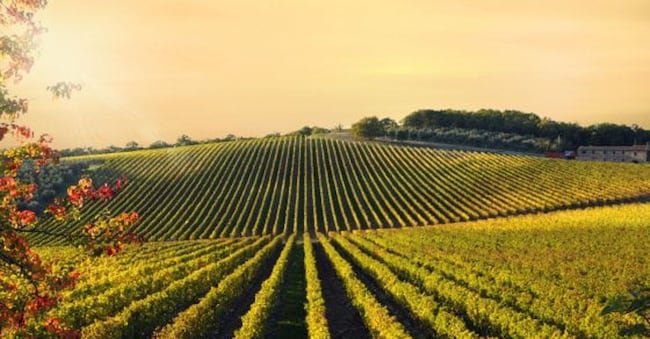
The Italian vineyard is an asset of the country's economy and not only of the agrifood industry. An asset comprising more than 670 thousand hectares and whose value is estimated by the Italian Wine Union Observatory at more than 56 billion euro. This results in an average value of about EUR 84 thousand.
An average quotation that today exclusively reflects the vocation of the terroir to produce wine and quality wine in particular. Only very rarely do quotations also take into account the landscape value of the areas under vine. A significant value for the territories and one that is becoming increasingly evident in recent years thanks to the phenomenon of tourism in rural areas.
Staying on the subject of wine production, it must be said that theestimated average value for a hectare of vineyard in Italy is, however, the result of quotations that also vary widely.
At the top of the pyramid there is a select group of glamorous wine appellations (Brunello di Montalcino, the Langhe with Barolo and Barbaresco, Valpolicella with its Amarone vineyards, Conegliano and Valdobbiadene in the Prosecco DOCG and Lake Caldaro in the province of Bolzano) where, between the appeal of the appellation and the scarce supply, one can see quotations well above one million euros per hectare. Indeed, for some Barolo crus, uncontrolled rumours have circulated in recent months that they are changing hands at prices close to those in Burgundy, where a hectare can fetch as much as 3-4 million euro.
These 'Top' areas are then followed by a second group of territories in which a hectare of vineyard is worth between 300 and 500 thousand euro and which are the basis of consolidated productions (such as Trento Doc, Franciacorta, Chianti Classico, Collio in Friuli or the Nobile di Montepulciano area) to which we must then add some emerging denominations (and among these are certainly Bolgheri in Tuscany, Lugana on Lake Garda or Etna in Sicily).


