
How smart is the new Google Nest Cam Indoor really?

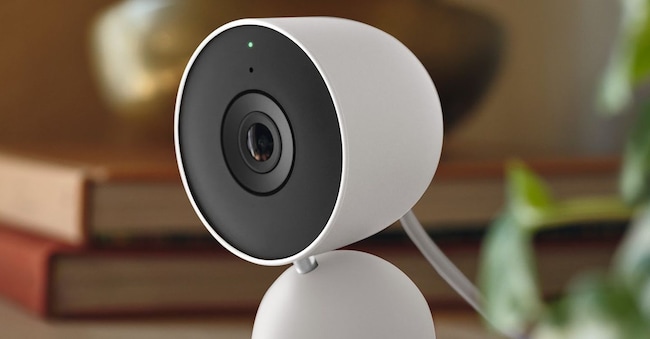
It observes, recognises things and decides what is worth showing me. Inside the new third-generation Nest Cam Indoor there is, of course, artificial intelligence. But the real question is: how smart is it really?
At first glance, it looks like a normal, elegant, discreet, cable-connected indoor camera. In reality, behind that 2K eye with HDR and a 152-degree field of view, a recognition system works that distinguishes people, animals and vehicles. It doesn't just signal 'something is moving', but tries to understand who or what is moving. It is the step that turns a camera into a cognitive sensor, at least in appearance.
Nest's intelligence manifests itself when the algorithm recognises faces or interprets an action. If you enter the house, the system realises it is you. If a cat walks by, it doesn't bother you with unnecessary notifications. And if you subscribe to the premium plan, you can even ask it: "What happened in the living room yesterday afternoon?" and it will show you the exact moment. It's a minimal but real conversation between you and a software.
How it works.
There is, however, a structural limitation. Without a subscription, the video memory is short: only six hours of previews, clips of a few seconds. To have a long history or continuous recordings, you need to pay. What is new is the introduction of the paid Google Home Premium plans from EUR 10 to EUR 18 per month: you can get 30 days of event-based video history, intelligent alerts for faces, parcels and sounds, and help with home automation; with the Advanced plan (EUR 18 per month or EUR 180 per year Even intelligent search and daily summaries live in the cloud, not in the room. And this opens up another issue: all this intelligence depends on Google's connection and servers. If the network goes down, Nest stops 'thinking'.
The hardware does its part. The 2K resolution offers sharp details, HDR corrects light and shadows, night vision is discreet. But every algorithm, however sophisticated, remains a slave to physics: light, position, camera angle. It is not an omniscient eye, it is a very attentive but situated observer.


