
What can be done with Google Glasses enhanced with Gemini's artificial intelligence?
In San Francisco, we attended a demo of Google's glasses and the Android Xr operating system. Here are our impressions
3' min read
3' min read
Android XR is an operating system developed by Google based on Android, specifically designed for extended reality (XR) devices such as visors and smart glasses. It was announced in December 2024, but is scheduled to be launched in 2025. The first product, created in collaboration with Samsung, is codenamed Project Moohan and is an Apple Vision Pro-like visor, which was a half-hearted failure also because of its price. In any case, we will know more about Moohan later this year. Google, meanwhile, is working on bringing Android XR to a wide range of devices and, thanks to the integration with Gemini, their bet is to turn a device like the glasses into the first true AI-driven assistant. If all goes well, instead of walking around with a smartphone in hand, we'll be chatting to artificial intelligence by simply touching the arms of our glasses. The feeling is that this time there is a match.
During a demo for a very small group of journalists in San Francisco, I was able to experience Google Glasses enhanced with Gemini. A preamble: it has been a decade since Samsung and Google launched their respective smartphone-based virtual reality platforms. It has not gone well for them either. Innovations, to become commercial products, need convergence, time and sometimes luck. AI was the element that has been missing so far. What makes Android XR different from any other and previous versions is that it is developed with Google's Gemini assistant at its core. When you activate Gemini in a mixed reality viewer or smart glasses, it will be able to hear and see what you are seeing.
To get an indication of the power of the Google Glass-AI pairing, this video shows Project Astra, the universal assistant designed by Google that is ready to take over our smartphones. The main idea is to create an AI assistant that can understand the real world through the camera of a smartphone or prototype smart glasses and interact with the user in a natural way, via voice and video.
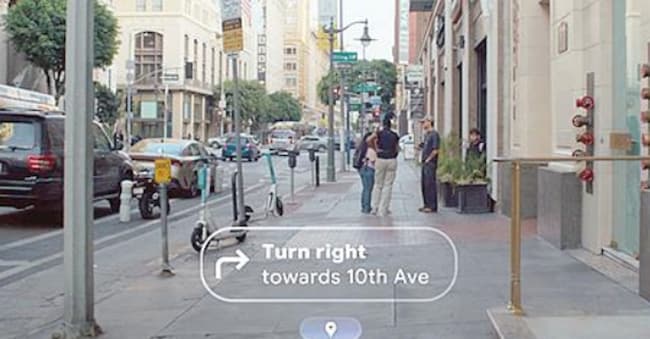
Our test. Android XR is tightly integrated with Google's Gemini AI chatbot. The glasses I tried on are still a prototype. The arms are wide, the lens is square: wearing them, the effect is that of the Christian Democrat politician from the First Republic.
During the demo, they explain to me that there is a camera built into the frame, with an LED that lights up when the camera is active. The processing of the requests we send through the microphones on the glasses reaches the smartphone. This way, by downloading to the smartphone, the autonomy of the device is extended.


