
How to save the European automotive industry? Proposals from Acea's member manufacturers
Ola Källenius, president of the European Automobile Manufacturers' Association (ACEA) and CEO of Mercedes Benz, issues a new rallying cry on the car made in Europe

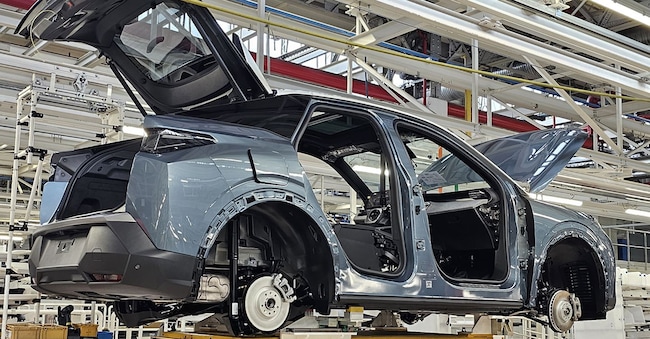
Long gone are the days of European manufacturers declaring themselves ready to convert to 100% electric, to open battery factories in Europe and to radically transform an industry employing over 13 million people. Because if initially almost all the brands on the old continent literally competed to see who would be the first to announce the farewell to the internal combustion engine, today the situation has drastically changed. Not only because sales are exponentially far from what was predicted, but also because producing electric cars that meet customers' expectations and at the same time are economically profitable (without entailing major job cuts) is proving to be anything but easy. Added to all this is the competition with the Chinese car industry, capable in less than five years of catching up with a gap that was unthinkable a decade ago. How to save a ship that keeps taking on water? Ola Källenius, President of the European Automobile Manufacturers' Association (ACEA) and CEO of Mercedes Benz, sent Europe a long letter, which we quote.
Making cars of great value
"This year we celebrate the 140th anniversary of the automobile, an invention born in Europe that changed the world. The car did not replace the horse-drawn carriage because the state imposed it, but because it was simply the best solution, capable of profoundly improving the quality of human life. I firmly believe that this same principle applies to today's challenges: European manufacturers can win by making products that customers choose because they are superior. But product excellence alone will not be enough. Our success will depend on pragmatic regulation, open markets, new infrastructure and market demand, and a solid industrial strategy that supports production in Europe."
Towards a conscious transition
"We remain committed to the transition with electrification at the core and continue to invest in Europe. However, global competition has intensified and supply chains have become more fragile. Protectionism is on the rise while free trade is being challenged. The new geopolitical situation requires a different approach. More than ever, innovation, value chain resilience and, above all, economic growth must be the top priorities. Three objectives remain constant to ensure the strength of our industry and, consequently, the success of Europe. First, the European automotive industry is fully aligned with the EU's ambition for 2026 to strengthen resilience and manage critical dependencies where they create vulnerabilities. Current value chains have been optimised for globalisation over many decades; integrating them will take time and significant investment. But resilience should not be confused with isolation. Despite catastrophic predictions about the end of the free trade era, the EU remains one of the world's most attractive trading partners, as the signing of a free trade agreement with India shows. I hope that this will give new impetus to ongoing trade negotiations with other regions. We also encourage the finalisation of an agreement with Australia and the Asean countries. However, it is crucial that the level of ambition shown by the European Commission in concluding these agreements is reflected in the willingness of Member States and the European Parliament to endorse them. We recognise the political sensitivity of some of these agreements, but there is now a backlog of agreements already concluded that need to be legally ratified. In particular, we urge MEPs to give their consent to Mercosur, for the benefit of European industrial sectors and the economy as a whole."
Reindustrialisation Objective
"We share the goal of generating more value in Europe and preventing deindustrialisation. We understand that there are different ideas on how to address this issue by keeping Europe open for business and building pragmatic partnerships that strengthen our capacities and accelerate the development of the technologies Europe needs. Any policy to strengthen production and investment in Europe should be mainly based on incentives and be part of a broader strategy of reindustrialisation: faster and simpler approvals, lower industrial energy costs, higher labour productivity, predictable support for upfront investments and ongoing operating costs, in particular to expand the production of batteries for electric vehicles in Europe."
Pragmatic decarbonisation
"This brings me to the second goal: pragmatic decarbonisation. Only an industry that remains globally competitive and retains its export advantage can mobilise the necessary investments to decarbonise on a large scale. The task now is to complete the job with a pragmatic 'three-lane' pathway for cars, vans, buses and trucks. This pathway should have ambitious targets but remain flexible and technology-neutral, so that the transition can absorb shocks and factors outside the automotive industry's control. This is not about weakening the climate ambition, but about ensuring that the decarbonisation framework also strengthens Europe's economic security."

