Careers

X-ray of HR departments: priority for inclusiveness and experience (less on Ai)

Cegos survey reveals employees' views on the importance of HR departments and the adoption of artificial intelligence

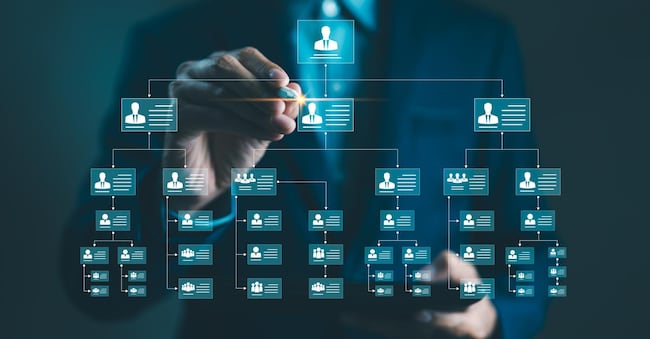
Organization chart and hierarchy structure employees in the company with departments in business. Working process and workflow automation with flowchart. Employee information, mindmap or organigram,

3' min read

3' min read

More than 5 thousand employees and more than 550 HR managers active in public and private sector organisations with 50 or more employees: this is the significantly representative international panel that the Cegos Group used to flesh out the 'Radiography of HR Departments' survey conducted across Europe (including Italy) and Latin America to understand the most up-to-date dynamics in HR management.

So much data was collected and so many insights emerged, starting with the fact that 81% of the employees surveyed held their HR departments responsible for a key role in supporting social development, starting with gender equality in the workplace and policies related to inclusiveness and diversity.

Loading...

The current hot topic of the moment, i.e. artificial intelligence, was obviously the focus of the research, yielding some surprising results. Indeed, 68 per cent of employees recognise that HR leaders strongly support technological innovation, the digital transformation of the workplace and the adoption of tools such as AI, but only 21 per cent of HR professionals consider the integration of algorithms a strategic issue and almost 70 per cent have not yet incorporated them into their daily practices. In contrast, there are 85% of respondents who point out that the HR function has become easier due to the automation of certain tasks and the streamlining of procedures.

The main priorities for HR managers, in short, go in other directions than the need to espouse the Artificial Intelligence verb and concern improving the quality of working life (an item agreed by 60 per cent of the managers surveyed), supporting professional and skills development (55 per cent) and, as already mentioned, attention to diversity and inclusion (54 per cent).

Other items circled in red in the agendas of HR managers and teams are therefore attraction and recruitment of new profiles (cited in 45% of cases), followed, in order, by retention of talent, support for the transformation process and upskilling and reskilling skills development.

Alessandro Reati, HR Business Practice at Cegos Italia, put the above data into context by first of all recalling how, in recent years, HR managers have not had a moment's respite. "After the health crisis that led them to manage teleworking and hybrid work," explained the expert, "they have had to face emerging technological challenges, such as the arrival of artificial intelligence, and new social challenges, such as the rise of Corporate Social Responsibility, the employability of senior staff or pay dynamics, without forgetting the impact on skills of all these trends.

According to the Cegos survey, in short, it is objective that HR managers have been pushed to become key players in the strategic transformation of their organisation, in view of the fact that most of them (80 per cent) have learnt to recognise the role of other managers in human resources management and that a good chunk (42 per cent) have succeeded in increasing their commitment. Now, however, they are called upon, as Reati again emphasised, 'to affirm the position they have achieved'. The difficulties encountered along the way, on the other hand, are not lacking and relate specifically to problems with resolving emergencies (cited by 70% of managers), the need to cope with increasing pressures (68%) and adapting to changes in strategy (66%).

The most important task to which HR managers are called today thus seems to be more related to the social challenges of organisations than to the push adoption of new technologies (although considered a key and strategic step in the evolution of this function). This is indirectly demonstrated by the fact that one out of every two managers is dedicated to promoting a better work-life balance and increasing workers' health in terms of combating stress and psychosocial risks. The experience of HR managers, in this sense, is seen as valuable in supporting the changes taking place in the function, from the greater commitment required in social responsibility issues to the changes in work habits to the different expectations of the new generations. Eighty per cent of the sample surveyed by Cegos have been working in the sector for more than three years, 32 per cent have more than ten years of longevity in the role, 59 per cent have been in the job for several years and 71 per cent expect to keep their jobs in five years' time. A sign, the experts point out, of a long-term approach that is also reflected in the willingness to continue to develop the skills needed to meet the challenges faced by HR leaders, in the form of training and online resources.

Copyright reserved ©
Loading...

Brand connect

Loading...

Newsletter

Notizie e approfondimenti sugli avvenimenti politici, economici e finanziari.

Iscriviti