
Humanoid robots and Ai will improve the safety of 3 million workers in the construction industry
At the Venice Biennale, the Construction Futures Research Lab kicks off, the special project promoted by Ance together with the Filiera Fondamentale representing employers, trade unions and the sector's bilateral bodies, Formedil and Sanedil

3' min read
3' min read
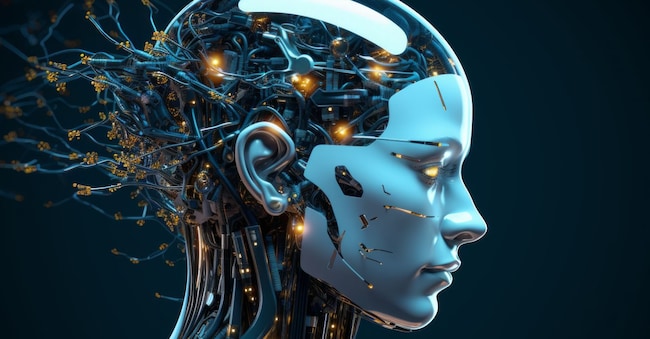
Humanoid robots and artificial intelligence are the new frontiers of safety for the more than 3 million workers who are part of the long construction supply chain that has a total output of EUR 624 billion. The sector, as the latest Formedil data show, is very committed to training on innovation and health and safety. The organisation, jointly set up by Ance, the confederal trade unions, Anaepa, Confartigianato, Cna, Casartigiani, Claai, Confapi, Confcooperative, Agci, and Legacoop Produzione e Servizi, bases its activities on a network of 114 territorial bodies, which operate throughout the country to ensure continuous, specialised and constantly updated training. In 2023, Formedil held 17,892 training courses, trained 176,921 trainees, provided 302,802 hours of training and 38,110 site visits to disseminate and verify the application of good safety practices.
The step forward with the social partners
.The founding parties, however, want to go further, as emerged at the Venice Biennale as part of Construction Futures Research Lab, a special project of the 19th International Architecture Exhibition promoted by Ance together with Fondamentale. Fondamentale represents the main employer organisations and trade unions together with the two bilateral bodies Formedil and Sanedil and has focused on the key role of technological innovation and training to look to the future of the construction sector.
Humanoid robots to improve work
.The president of Formedil, Elena Lovera, speaking on behalf of Fondamentale, emphasised the great gamble of the entire supply chain united with respect to technological innovations: 'Today is our first step, but the path goes forward. The project that sees us here at the Biennale, with the study on the applications of humanoid robots, aims to improve work in construction. Robots will not replace humans, but help them in the most critical and complex situations. And this so that the construction site will be safer, of higher quality and inclusive of transversal skills and knowledge. We are Darwinians and we are convinced that the best way to resist is to adapt to change'.
The debate
Artificial intelligence represents 'the greatest cultural and anthropological revolution of recent decades, comparable in its impact to the advent of writing, emphasising that we should not be afraid of it, because it is an inevitable process, but strive to govern it effectively in our favour,' pointed out Mario Rasetti, who teaches Theoretical Physics at the Turin Polytechnic. Giuseppe Italiano, Professor of Computer Science at LUISS, also emphasised the speed of change brought about by new technologies: 'If cars took 60 years to reach 50 million users, social networks have reached the same numbers in just a few days. If until 10 years ago the richest companies in the world were the oil companies, today it is the digital ones that are leading the way: just think that Microsoft and Apple have the same GDP as the UK'. Antonello Marotta who teaches Design at the University of Sassari described how cathedrals and other works of architecture can be examples of collective intelligence and interaction between man and nature, while Donato A. Grasso, Professor of Zoology at the University of Parma, described the model of organised society of ants, social insects that actually use a system of collective intelligence in their interactions and division of labour. The philosopher and founder of Tlon, Maura Gancitano, on the other hand, spoke about the change of perspective brought about by the advent of new technologies, the risks of which we must also be fully aware of.

