
Hundreds of hires and partnerships in the future of Accenture's Modena centre
Stefano Sperimborgo, manager, speaks.Multinational company on the hunt for skills 'contaminated' with humanistic profiles, among start-ups looks at iGenius

4' min read
Key points
- Becoming the largest centre in Italy
- Technicians are sought, but also psychologists and philosophers. Reskilling needed
- Collaboration with start-ups, eyes on iGenius
- Accenture also bets on Gen Ai Studio
4' min read
Hundreds of hires per year for the next few years, not only in the Stem sector. New partnerships and focus on collaborations with Ai start-ups, such as iGenius, the next Italian unicorn. Collaborations with universities to stimulate the training offer, meeting the professions of the future, for which today there are no skills. Outlining the prospects of Accenture's centre of excellence for Ai and GenAi in Italy, one year after its opening in Modena, is Stefano Sperimborgo, Head of Data & Ai and head of the centre. Born out of Accenture's collaboration with Ammagamma, recently acquired by the multinational, the Modena centre has realised 1,000 implementations of generative Ai in the space of a year. The use cases include the one, for example, created for Intesa Sanpaolo, with the aim of regulating and structuring access to Ai and GenAi services and use cases, and the one created for the Coop. In the latter example, 'we have developed,' explains the manager, 'algorithms that serve to better predict the demand for certain perishable products, such as fresh produce.
Becoming the largest centre in Italy
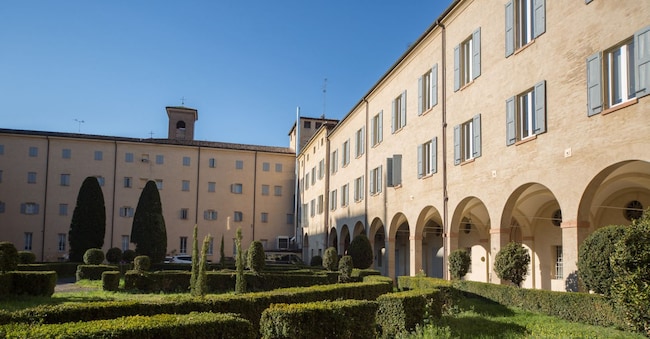
The Modena centre, which is housed in a former nunnery dating back to the 17th century, was established with the aim of becoming a reference point for companies nationwide. Around 400 experts are part of the team, coming from different backgrounds and regions. "The centre's goal,' Sperimborgo continues, 'is to be the largest of its kind in Italy. In order to find the necessary skills, we have contacts with all the universities in Italy, we are forming collaborations with Federico II, the Polytechnics of Milan and Turin, and Bocconi University, to name but a few. Today there is a need to create 'more contaminated' degrees, economic, engineering, but with humanistic profiles as well. In fact, the science of Ai needs humanistic competence because man must always be at the centre. And we need creative people because Ai will increasingly perform the tasks that take so much of man's time away, freeing creativity'.
Technicians are sought, but also psychologists and philosophers. Reskilling needed
In terms of employment, Accenture, present in Italy for 70 years, hires 3-4 thousand people a year, and an 'increasingly significant' part of these numbers will be dedicated to the Modena centre. With a view to finding new talent, collaboration with universities is fundamental: 'The need for employment is split into two parts; on the one hand we need new jobs, people who know the large language model, experts, developers. On the other, in addition to mathematicians, engineers, we are looking for behavioural psychologists, philosophers, who have a mental approach complementary to the technical one. All professions must have this contamination. The world of Ai has changed the paradigm. Generative Ai, for example, needs long questions with good context to work well: it is prompting. It is estimated that, in this field, more than nine million people will need reskilling'.

