
Hungary, government scandals stir up the square against Orban
The sovereignist premier wants to 'occupy Brussels to oust those who have failed' but at home he has to stem the rise of Peter Magyar, one of his loyalists who has become the leader of anti-regime demonstrations

4' min read
4' min read
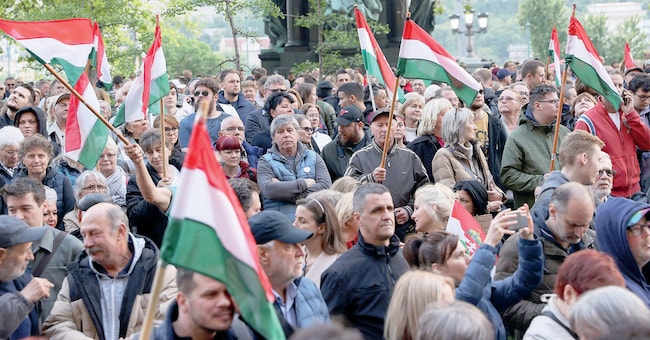
Something is moving in Hungary, the square is agitated as never before since Viktor Orban's sovereignist right has been in power: more than the initiatives of the oppositions, it is the scandals in the coalition that has been ruling since 2010 that are fuelling the protest.
The new element, also in view of the European elections in June, is the very rapid and unexpected rise of a new figure in opposition to the Hungarian prime minister and the governing party, the Fidesz: Peter Magyar, a 45-year-old lawyer, moderate, more centre than right-wing, close to the European Populars, but above all, Orban's loyal advisor until a few months ago. "We must take back democracy and take back Hungary, but we are at the beginning, there is still a lot of work to be done, we are a kind of garage company," Magyar explained coming down from the stage of an event organised in Budapest by the party he intends to relaunch, Tisza, which stands for Tisztelet es Szabadsag, Respect and Freedom.
He repeats that 'the priority in Hungary is democratic values, but also the reconstruction of the health and education system'. And he does not tire of attacking the government and emphasising 'the willingness to cooperate with the European Union'. It was Magyar who organised the protest that brought more than 200,000 people onto the streets of the capital at the beginning of April and again last Friday.
The election campaign is heating up: the country that does not believe in the European Union project, with the government in constant conflict with Brussels, will go to the polls to renew the European Parliament.
Orban agitates his supporters by targeting the model of the 'corrupt liberal democracies of the West' and threatens to 'occupy Brussels to change a leadership that has failed'. Meanwhile, whether by calculation or by who knows what ambition, he continues to hold tightly to his friend Vladimir Putin's ties with Russia in the invasion of Ukraine. And it looks eastwards for new alliances, to China and India, sometimes forgetting that Hungary has been part of the EU for twenty years and is, despite everything, a member of the Atlantic Alliance with the United States.


