Interview

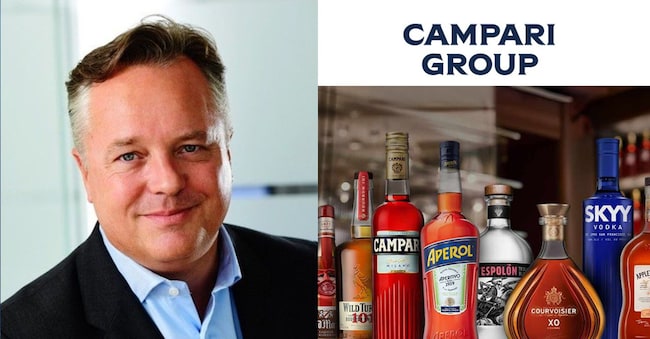
Hunt: 'Campari ready to cut 30 brands'

Group CEO: 'The focus is on working on fewer brands, simplifying and being more disciplined'
by Matteo Meneghello

3' min read

Translated by AI
Versione italiana

3' min read

Translated by AI
Versione italiana

Reducing the perimeter without jeopardising growth. The difficult balance of Campari's new season passes through a path of cleansing and simplification, with 30 brands (out of a total of 72) potentially for sale and an extreme focus on the big ones in the portfolio, the true champions of growth in recent years. 'The focus,' explains CEO Simon Hunt, fresh from the Capital Market day with investors, 'is to work on fewer brands, simplify and be more disciplined.

The third quarter was positive. Can it be said that the group has left the emergency behind?

Loading...

We are proud of our achievements, but I think there is still a lot of volatility. We are showing that we are able to cope with the negative trends, but I don't think we are out of the difficult environment.

The stock remains under pressure: did the Cmd miss the mark?

I don't think anything went wrong, we had positive feedback. We don't think about the share price day by day, we look at the long term.

The investigation into Lagfin does not involve Campari, but do you fear any consequences for deleveraging targets, should the holding company need to recover resources to pay the possible penalty?

I do not comment on the tax situation of a shareholder, that is not my role. Everything that needed to be said was said through official channels.

You have already grounded 50 bps of savings, part of a 200 bps plan. What are the next steps?

The company went through a painful restructuring that also had an impact on people. It has been difficult, but we are on track to make savings that will reach 2026 and even the end of 2027. Now we need to return to growth mode.

Thirty brands were defined as 'without a role' in the portfolio. Are they all potentially for sale?

It is a different way of saying the same thing. If they don't have a role, why keep them? If they don't pay off, why keep them? There are brands we think we can get rid of, others we think we are not sure will have a future; we may be able to find the right buyers for some of these at the right price, although in the current environment it is not easy. Divestments, however, allow us to reduce leverage quickly: we have already gone from 3.6 times to 2.9, now we want to go down to 2.5 as quickly as possible. In addition, divestments allow us to optimise resources on the biggest bets we have.

After Cinzano and Tannico in 2025, do you foresee any other divestments in 2026?

Yes, there are several negotiations going on; I don't know if all of them will end in a sale, but I hope so.

How is the integration of Courvoisier proceeding? Are the difficulties in China and in cognac in general slowing down the road map?

It's a brand that hasn't had any attention for 20 years, so it will take time, but I think that if we are here in 10 years and ask ourselves whether it was a good buy, the answer will be yes. There is a lot of work to be done, also to understand where we want to take this brand. We want to take our time.

Doesn't the stop to M&A operations risk penalising Campari's penetration in certain segments, such as non-alcohol? There is Crodino, but it is the only asset in the portfolio at the moment.

In Italy the brand is well-known and well positioned, but abroad Crodino's growth potential is enormous: in the 6 markets where we launched it, it grew by double digits. For the rest, we have a super research centre, and I don't exclude that in the future we might bring an in-house solution to the market. We have to be disciplined again, and find a new balance.

Copyright reserved ©
Loading...

Brand connect

Loading...

Newsletter

Notizie e approfondimenti sugli avvenimenti politici, economici e finanziari.

Iscriviti