
Hunt for stolen art, artificial intelligence allied to the Carabinieri
Race against time to recover stolen assets. A prize for the use of advanced tools

3' min read
3' min read
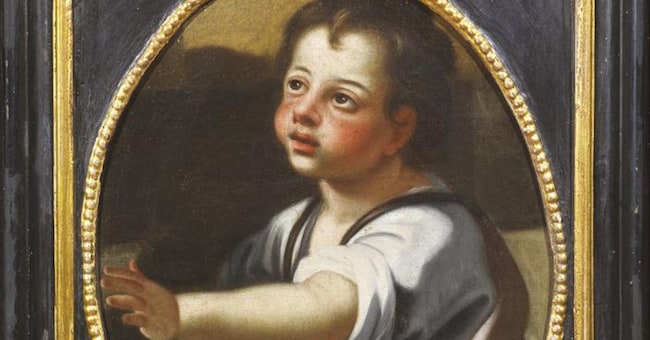
It is 24 September 1993. An altarpiece disappears from the church dedicated to St. Thomas Aquinas in Piedimonte Matese. The Adoration of the Shepherds, well over two metres high, is the work of a valuable late Baroque painter, Nicola Maria Rossi. On 21 November 2023, a Florentine auction house put up for auction a small painting, framed in black and gold, depicting a red-cheeked child. It will be the Carabinieri of the Cultural Heritage Protection Command who discover that this canvas is actually a fragment of the work stolen in Caserta thirty years earlier, thanks to an advanced computer system that identifies the derivation from the original without any possibility of error.
This is one of dozens of successful cases. Although it is certainly no substitute for sophisticated investigations conducted at several levels, the 'bionic' eye implemented by the Carabinieri Tutela Patrimonio, the Carabinieri's specialised unit with early forms of artificial intelligence, promises a leap forward in the countering of illegal trafficking of works of art.
Given the increasing use of telematic channels, the fraudulent trade or export of suspect cultural goods has forced the creation of constantly evolving and improved technologies to speed up the number of checks as much as possible, through automatic search procedures and 'smart' search algorithms.
Speed of intervention crucial factor
."It is often difficult not only to trace the works, but above all to trace the whole chain, from the perpetrators of the thefts and clandestine excavations to the receivers and launderers," says General Francesco Gargaro, who has led the TPC Carabinieri since the end of last year. Speed is a crucial factor. Because the spectre of the statute of limitations always hangs over investigations. In Italy, 'we have quite stringent regulations and unfortunately this is not the case everywhere. Other countries have different regulations, not all crimes we prosecute are prosecuted outside our borders,' Gargaro points out. Similarly, the reconstructed routes of the works are made usable through cultural diplomacy: the Carabinieri also play a primary role in extrajudicial procedures, which are often decisive.
The numbers indicate a remarkable yield from operational activity, with more than 100,000 art objects recovered in 2023 alone for a total estimated value of just under EUR 265 million. The reflection of an excellence established in 1969 even in advance of Unesco's recommendations to all member states, capable of returning more than three million cultural assets to their rightful owners (public and private). Thus contributing to "healing many wounds that have opened over the years in the territories" of origin, "depriving communities of important pieces of their identity", as Culture Minister Gennaro Sangiuliano recalls.


