
Hybrid cars: the differences between mild hybrid, full hybrid and plug-in hybrid
The different types of powertrain electrification

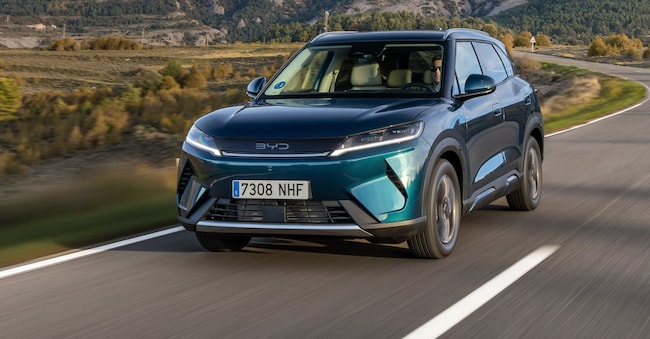
To say hybrid car has no precise meaning. Because if until a decade ago hybrid was synonymous with 'Toyota' with the technology debuted first by the Prius and then by the compact Yaris, today the situation has drastically changed with significantly different technologies.
Mhev (Mild Hybrid Electric Vehicle) systems, often christened 'light hybrids', are the first step in electrification. Although there is no difference in type approval, Mild Hybrid versions have a parallel electric system, powered by 12 or 48 volt batteries working in conjunction with a small electric motor. Capable of recovering energy during braking, the 12-volt Mhev system is not able to move the tyres independently but provides energy during vehicle restart, thus reducing fuel consumption and pollutant emissions. This is different for the 48-volt mild hybrids, which are now capable of moving the car in full electric mode for a few kilometres.
The second step of electrification sees the presence of Hev (Hybrid Electric Vehicle) models, increasingly christened as full hybrids, where the electric motor works together with the Ice (Internal Combustion Engine) and is able to travel 100 per cent in electric mode for more kilometres than 48-volt mild hybrids. The electric motor contributes more to lower fuel consumption and emissions than Mhev systems, but it takes up more space and involves higher costs and weight. The batteries are recharged during braking and thanks to the presence of the heat engine, while there is no power outlet that can connect to charging stations.
For 'plug-in' models, one has to move on to Phevs (Plug-In Hybrid Electric Vehicles) where there is a heat engine and the electric motor is also recharged from the wall socket. When the zero-emission range exceeds 100 kilometres, there is increasing talk of 'super hybrids', where, in addition to larger batteries, the overall range can reach more than 1,500 kilometres. This is the case with the Volvo Xc70 plug-in sold in China and expected in Europe in the future.
Hybrid range extenders are vehicles where the internal combustion engine is only used as a current generator to recharge the traction battery when the charge level is low. Erevs include the Nissan X-trail e-Power, where there is no power plug but the petrol-powered internal combustion engine is only used to generate power to charge the electric motor battery and not to generate traction to the tyres.

