
Hybrid threat, Crosetto's report: 'We are under attack, need 10-15 thousand more troops'
A cyber weapon, also with civilians, of at least 5,000 and a joint command are urgently needed. Increasing incidents in Italy: healthcare and small and medium-sized enterprises most exposed

Key points
One hundred and twenty-five pages on the hybrid threat in all its manifestations (cyber attacks, disinformation, cognitive dimension), the call to prepare for "legitimate and timely reactions", and the call for a significant reinforcement of military personnel, "even of the order of 10-15 thousand units dedicated to the cyber, electromagnetic spectrum and new technologies sectors", with a robust operational branch capable of integrating into multi-domain operations.
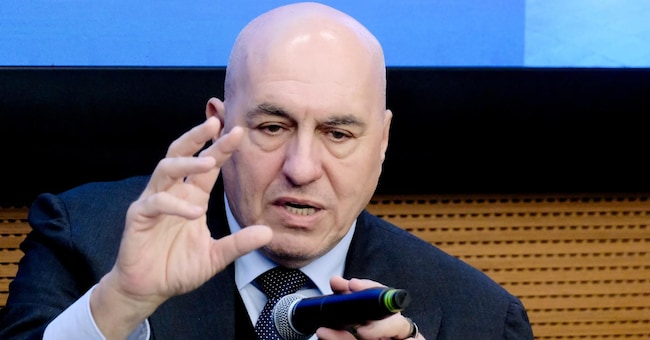
In the non-paper illustrated yesterday at the Supreme Defence Council by Minister Guido Crosetto there is no room for half-measures: 'We are under attack and the hybrid bombs keep falling: the time to act is "now"'.
Systemic and simultaneous crises, 'containment is not enough'
The document is organised starting with the 'what' (definitions, actors and instruments), continues with the 'where' (an analysis of vulnerabilities by sector) and concludes with the 'how', i.e. responses and courses of action.
A section on alliances (NATO, EU and G7) indicates the framework and constraints within which Italy moves. As a case study, there is a focus on the Russian-Ukrainian conflict and in the appendix there is a benchmark of the cyber organisations of Germany, the United Kingdom, France, Spain, the United States and Canada. "Containment is not enough," Crosetto writes in the preface: "We cannot think of overcoming the hybrid threat with a sectoral or one-dimensional approach as the crises generated will be increasingly systemic and simultaneous. We need to mature, with clear tools and rapid timeframes, a capacity for predictive and adaptive action aimed at preventing, deterring and absorbing hybrid attacks'.
From Russia to China, here are the hostile foreign actors
The protagonists of thehybrid threat are 'hostile' foreign actors: authoritarian states - among the main ones mentioned in the report are Russia, China, Iran and North Korea - and non-state organisations acting as agents or proxies that carry out synergetic actions in different domains (diplomatic, informational, military, economic-financial and intelligence).


