The threat

Hybrid warfare: what it is and what would need to happen for a conflict to break out

According to Alessandro Marrone, an expert at the Institute of International Affairs, this is not a new strategy, but it is becoming increasingly aggressive and combines conventional military means with cyber-attacks, disinformation and acts of sabotage

 APN

4' min read

Translated by AI
Versione italiana

4' min read

Translated by AI
Versione italiana

‘To those who still ignore or deny that Russia is waging a hybrid war on the territory of its allies: Leipzig is not an isolated incident, and looking the other way merely rewards the aggressor.’ Admiral Giuseppe Cavo Dragone, chairman of the NATO Military Committee, commented with these words on the growing tensions between Moscow and the European Union, and particularly Germany. But what is hybrid warfare, and what are the red lines that distinguish it from a traditional conflict?

An unconventional strategy

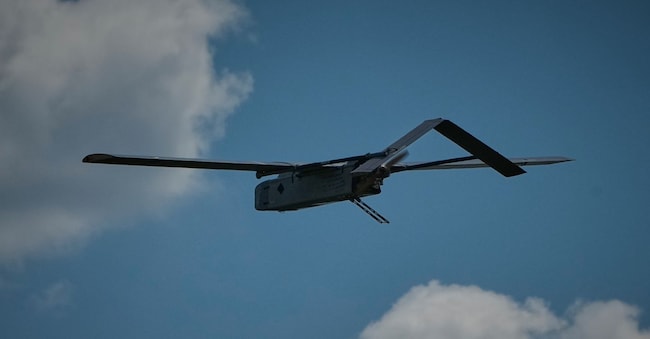
The attack involving explosive drones that struck Leipzig Airport on 4 August has brought the term ‘hybrid warfare’ back to the forefront of public debate, a term used to describe a specific strategy aimed at destabilising the enemy whilst keeping tensions below the threshold of armed conflict, thereby avoiding the risk of a direct military response.

Loading...

Hybrid warfare, as Alessandro Marrone, an expert at the Institute of International Affairs, explained to Adnkronos, is not a new concept, but it is becoming increasingly aggressive, combining conventional military means with actions such as cyber-attacks, disinformation, cognitive warfare, sabotage, the use of drones and ‘shadow’ maritime operations.

The objectives

There are many objectives. First and foremost, attacks of this nature serve to test the reliability of an adversary’s defences and to highlight their weaknesses and vulnerabilities. An offensive such as the one in Leipzig also reveals the response times of a country’s security apparatus.

That is not all. Hybrid warfare can intimidate institutions and citizens, helping to create a climate of constant alarm within the country which, in the long run, could erode a community’s trust and political cohesion.

Possible answers

But what might trigger a direct military response to attacks attributable to a hybrid warfare strategy? According to Marrone, this would probably require ‘a hostile military presence and casualties’. The Atlantic Pact, which established NATO in 1949, “defines the scenario of a conventional armed attack, but recent strategic updates include cyber and space attacks as potential Article 5 scenarios, provided they have serious consequences. ‘The vulnerability of satellites, for example, affects the armed forces, civil aviation and financial systems,’ states the expert.

Even if the attack on Leipzig had resulted in casualties, however, triggering the collective defence provided for under Article 5 of the Treaty would have required the consent of the Council’s member states, which – taking into account the principle of proportionality – would have jointly assessed how to respond. For example, as Marrone points out, the violation of Polish airspace and that of other countries bordering Russia by a number of drones in recent months led to the convening of the North Atlantic Council under Article 4 of the Treaty and to measures aimed at strengthening the Alliance’s eastern flank. NATO’s response in these cases, however, was complicated by the fact that the drones were launched from ‘shadow’ ships or by internal operators.

The Leipzig case

According to Marrone, the hybrid attack on Leipzig Airport marks ‘an increase in the severity of the Russian threat’, confirming a trend that points to ‘an increase in the frequency and severity of incidents’. The incident has ‘prompted a political response and solidarity between the EU and NATO’, the expert added.

However, this was by no means an isolated incident. A report by the International Institute for Strategic Studies shows that between August 2024 and February 2026, 144 cases of European airspace violations by drones were recorded, and incidents occurring in the vicinity of airports disrupted air traffic, likely whilst gathering intelligence and testing Western reactions.

In the face of these threats, ‘the current European framework for countering drones is not yet equal to the challenge, despite the fact that NATO, the European Union and national governments are devoting greater attention to the issue: detection is patchy, legal authorities are fragmented, response options are often disproportionate, and the allocation of responsibilities remains too slow to ensure a timely deterrent’.

Loading...

The Russian threat

Drones are not the only weapon Russia has been accused of using to wage a hybrid war. The sea, as Marrone pointed out, is another key arena for the destabilisation tactics employed by Moscow, involving ‘shadow’ fleets and underwater sabotage.

“Civilian vessels with forged documents,” said the expert, “can smuggle Russian oil, can launch drones towards the coasts of the Baltic Sea and the North Sea, and can cause incidents involving subsea infrastructure (gas pipelines, oil pipelines, internet and electricity cables), whilst keeping the source of the activity obscure. European navies have already intercepted and penalised suspicious vessels in critical areas.”

Our country is among those most affected by attacks linked to hybrid warfare strategies. According to Marrone, ‘Italia has seen one of the sharpest increases in the G7 over the past two years’, whilst ‘long-term disinformation and propaganda are poisoning the debate, generating unfounded perceptions and conspiracy theories, and obscuring Russia’s responsibility’.

At a time when the gradual reduction of the US presence in Europe is under discussion, it will therefore be crucial to ‘move beyond off-the-cuff announcements and adopt a structured, phased approach, avoiding any signs of a disorderly withdrawal. This is not a total withdrawal, but a coordinated reduction. The combined capabilities must remain sufficient to deter Russian escalation,’ concluded the expert from the Institute of International Affairs.

Copyright reserved ©
Loading...

Brand connect

Loading...

Newsletter

Notizie e approfondimenti sugli avvenimenti politici, economici e finanziari.

Iscriviti