
SpaceX IPO, Musk chooses banks: here are the banks
According to the Financial Times, Tesla's founder is reported to have finalised the deal with Bank of America, Goldman Sachs, JPMorgan Chase and Morgan Stanley

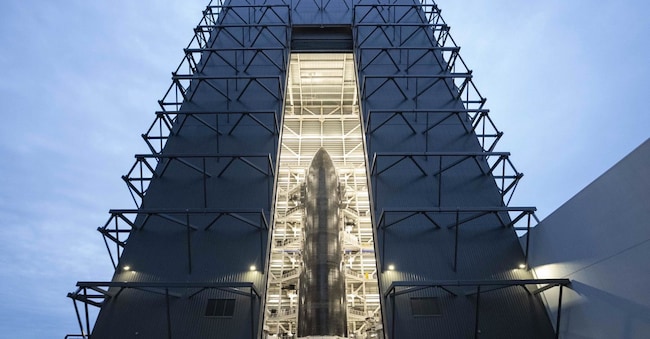
Elon Musk is getting closer and closer to launching his SpaceX rockets on the stock exchange. According to the Financial Times, the aerospace company has appointed a first group of large international banks to lead the initial public offering. A move that reinforces the hypothesis of a listing now not too far off. The front-runners include Bank of America, Goldman Sachs, JPMorgan Chase and Morgan Stanley, according to sources familiar with the dossier. The operation, which should become the largest IPO ever, is structured to raise well over USD 30 billion and bring the group's valuation within a range between USD 1,000 billion and USD 1,500 billion. It has to be said - on closer inspection - that with regard to valuation, there are some disagreements. In this sense, just yesterday, it was reiterated that SpaceX is completing a share sale reserved for internal investors. A programme that values the company at around 800 billion.
Beyond that, on the one hand, it is clear that Tesla's founder is accelerating on the front of SpaceX's IPO - in December, the group informed employees of the 'quiet period'; and, on the other hand, it is likely that further institutions may be involved in the next stages of the listing.
Yes, the listing. The IPO, evidently, will contribute to the capitalisation of the company to cope with further expansion plans. The company, it should be remembered, has progressively won a significant share of US commercial and government launches, also benefiting from a favourable regulatory and contractual framework. So much so that relations with NASA and the US Department of Defence ensure stable revenue streams. That said, however, competition remains high. Blue Origin is a more than effective competitor in the short term, while United Launch Alliance retains a role in institutional launches (albeit with a less efficient cost profile). In the satellite communications segment, then, Amazon Kuiper and OneWeb represent alternatives, despite having incomplete coverage compared to Starlink. In short; operators' expectations are high. Not least because, from the point of view of multiples, it will be interesting to actually see the data of the IPO. Some experts have hypothesised, for example, an Ev/sales of around 25 times. As usual, it will be the market that will say whether the IPO is sustainable over time or not.

