
War in Gaza: 'I call for outrage. Hind's voice must not make one feel comfortable'
Kaouther Ben Hania, author of the Lion-nominated film, speaks out against accusations of having made a blackmail film

6' min read
Key points
- The plot
- The meeting with the director in Venice
- The Kafkaesque protocol of the Red Crescent
- Accusations of the film
- Constructing the images of the film
- Brad Pitt's support
6' min read
Those who say that The Voice of Hind Rajab is not cinema should be asked what cinema is, if not that which keeps the viewer nailed to the big screen for an hour and a half, praying that a miracle will happen and the story will end with little Hind Rajab safely home with her mother and brother, even though they know it cannot.
Cinema is many things: entertainment, psychoanalysis, nightmare, horror, fantasy, romance, investigation. But it is also a political weapon, one of the most powerful weapons of propaganda. The Nazis and the Soviets knew this. Why then do we raise our eyebrows if cinema breaks indifference, moves consciences?
Did anyone perhaps protest when it was All the Beauty and the Pain - All the Beauty and the Bloodshed, Laura Poitras' documentary following photographer Nan Goldin's battle against the Sackler family, owners of the Purdue Pharma pharmaceutical company, held responsible for the opioid epidemic in the US and Goldin's own oxycodone intoxication, that won the 2022 Venice Film Festival? It was not exactly fiction, but then, rightly, no one protested.
The plot
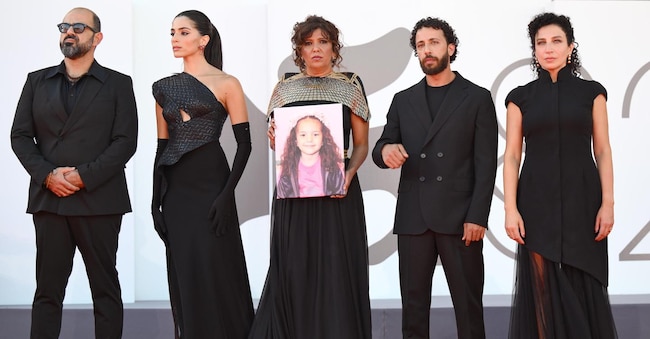
The film is built on the voice of a six-year-old Palestinian girl, Hind Rajab, trapped in a car hit by the Israeli army while trying to escape from Gaza with her cousins and uncles. It is 29 January 2024: the only survivor in the car is her but unfortunately rescue attempts fail and the film documents the death of both the child and all the rescuers. Here is how the tragedy unfolded. An uncle living in Germany puts the little girl in touch with Red Crescent workers, who attempt to rescue her, keeping her company on the phone while they arrange the rescue. Hind is terrified, pleading for them to come and get her. The ambulance is only eight minutes away, but getting it there is very complicated. The film hinges on Hind Rajab's vocal track, recorded by the Red Crescent that 29 January, and revolves around those hours, so many, too many, in which the rescuers try to find a solution. The protagonists are the team leader (Saja Kilani), an operator (Motaz Malhees), the coordinator (Amer Hlehel) and a psychologist (Clara Khoury). Sometimes their recitations overlap with the real recorded voices.
As we get closer to the verdict on the winner of the Venice Film Festival, and as the rumours declare the Golden Lion for Kaouther Ben Hania's film more and more credible, the controversy begins. The film is accused of 'using' a little girl's voice to move the audience to sympathy and to wring the jury's approval.


