
‘I remain a farmer; I respect the unfathomable, and here I have seen the Light’
Lamberto Frescobaldi. A family that has been making wine since the Middle Ages, studies in California, travels all over the world. Tuscan pride and ‘respectful departures’ from tradition

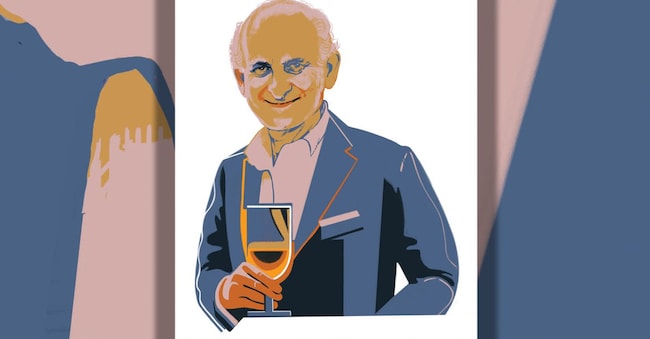
‘The farmer understands the unpredictability of life and of things: here in Montalcino, everyone remembers the frost on the morning of 21 April 1997, and in Castiglioni in Chianti, the hailstorm one afternoon in September 1999. I feel like a farmer. The farmer is measured. He never over-expresses his joys, his fears, his nightmares or his nocturnal fantasies, because by voicing them he fears being swallowed up by them. I am not a businessman. The customer judges you by your product. Especially when they are fickle and unreliable, as is the case with wine. Ferdinand Piëch’s Volkswagen had a rule: an engineer at the head of every department. My first car was a green Fiat Uno 45 S. Vittorio Ghidella’s car. I love motorbikes. In 2000, Ducati, having just been turned round, launched the Multistrada. I went to Borgo Panigale to see the chairman, Federico Minoli, and asked him how they handled marketing. They did nothing. They didn’t even have a dedicated marketing department, because the only marketing that worked was quality, which generated word of mouth. The same thing happens in the wine industry too.”
Lamberto Frescobaldi, together with his cousins, is in charge of the operational and strategic management of the family group, which occupies a multifaceted and complex position within the wine industry (with a turnover of €165 million projected for 2025), crowned by iconic wines such as Masseto and Ornellaia, produced in Bolgheri. We are not, however, in Bolgheri. Today we find ourselves at Tenuta Luce, in the wildest part of the Montalcino hills, with rows of Sangiovese, Cabernet Sauvignon and Merlot vines and eight hundred hectares of woodland comprising holm oaks, pines, arbutus and oaks; the scent of the Mediterranean, forty kilometres away, mingles with the fragrances of the trees and plants all around, in a heady and beautiful blend: ‘I have dedicated my whole life to this project, to this estate, to its wines. It is the thing I feel closest to. As a child, I used to come here with my father, Vittorio. We invested here together with the Mondavi family. I was fortunate enough to work alongside Tim Mondavi, the Californian guru of Italian-origin wine, who was keen to invest in the country of his ancestors, in a project that subsequently continued and developed independently when the Mondavis sold their business. My attachment to this place is both emotional and strategic. ‘I believe very strongly in these wines,’ says Lamberto.
In the kitchen at Tenuta Luce, Lamberto’s instruction to chef Riccardo Cappelli is to focus his attention and creativity on Tuscan rural tradition; the Michelin Guide’s criteria, in their most modernist form, make little sense here. The homemade bread is delicious, with or without oil. The focaccia with fresh tomatoes and a hint of anchovies is equally delicious. Before us, served at the perfect temperature, are the wines produced at Tenuta Luce: Luce Brunello, Luce (50% Sangiovese and 50% Merlot), Lux Vitis (95% Cabernet Sauvignon and 5% Sangiovese), and Lucente. Frescobaldi says, with the same passion and precision that must have characterised the members of the Arte dei Vinattieri in the Florence of the Medici: ‘Luce is the estate’s signature wine and the embodiment of its identity. It is a Tuscan wine born in Montalcino, a pioneering and well-balanced blend of Sangiovese and Merlot. For us, Lux Vitis represents our ability to interpret the unique plots and expressions within the estate. Lucente, on the other hand, is the estate’s ‘pleasure’ wine and is made from Merlot and Sangiovese.”
He pauses. And then he continues with the caution of someone who knows that, especially when it comes to wine, the spirit of the place must be respected: ‘Luce Brunello, on the other hand, represents for us the link with the culture and tradition of Montalcino’. Outside the dining room, this summer’s sweltering heat is tempered by the cool breeze blowing in from the Tyrrhenian Sea, offering moments of refreshing joy to everyone. Inside the farmhouse, the coolness is natural and free from the stifling excesses of air conditioning.
The starter, to be enjoyed whilst sipping the 2023 Lucente, consists of aubergine alla parmigiana with pecorino cream and bread crisps. Lamberto’s description of himself is down-to-earth and reflects a family tradition. His father Vittorio, now 97 years old, studied agriculture. Lamberto followed in his footsteps, first in Italia at the Faculty of Agriculture in Florence and then in the United States at the University of California, Davis, where he specialised in viticulture and agricultural valuation: ‘My family has been producing wine since the Middle Ages. We’ve been merchants, textile entrepreneurs, bankers and winemakers. Our first vineyards were in Val di Pesa. In a letter, Donatello – who rented a flat in one of our buildings in Florence from 1421 to 1426 – writes that he had bought our wine. As is always the case, one’s encounter with the wider world takes place outside the family. I was a bit of a novice, but not presumptuous. One of my mentors was Darrell Corti, the owner of a wine shop in Sacramento. In 1985, whilst I was studying at UC Davis, I worked for him on Saturdays and Sundays; he realised straight away that I knew nothing about wine. On Wednesday evenings, he organised tastings. He introduced me to the great French wines such as Margaux and Lafitte. Australian, Chilean, South African and Georgian wines. As often happens when you’re in your twenties and tasting wine, I drank a lot and spat very little: by the end of the evening I was staggering about. It was brilliant. Napa Valley was fantastic. It wasn’t the posh, slightly snobbish place it is today.”


