Markets

Five-year Treasuries jump above 5 per cent

The market is pricing in another Fed rate rise ahead of the mid-term elections

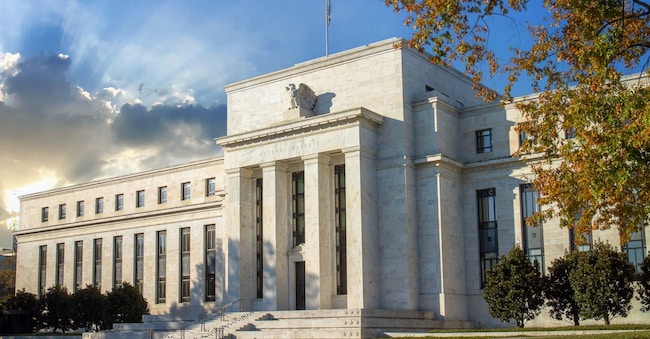
Federal reserve USA (Adobe Stock)

3' min read

Translated by AI
Versione italiana

3' min read

Translated by AI
Versione italiana

The Federal Reserve could raise interest rates once again, following the rate hike a few days ago, ahead of the mid-term elections in November. This would be unusual – because at the meeting preceding this election, the US central bank has historically tended to adopt a wait-and-see approach – but this is what the futures market has been pricing in since yesterday with a significant probability (rising from 50 per cent the day before to 73 per cent) the futures market has been pricing in since yesterday for the meeting on 28 October.

This is because the US economy, rather than slowing down and feeling the pinch of ever-higher interest rates, continues to perform strongly. The composite PMI index compiled by S&P Global for the United States rose from 56 in August to 58.4 in September, marking the fastest expansion since July 2021 and an acceleration in growth for the fourth consecutive month.

Loading...

Growth was driven by the services sector, which recorded its strongest increase in output in over five years; however, another positive development in September was the simultaneous acceleration in manufacturing output, which reached its highest level since April 2022.

Michael Barr, a member of the Fed’s board, stated that ‘further adjustments to monetary policy will likely be necessary’ to keep inflation under control because ‘the risks to achieving our inflation target have increased’.

Against this backdrop, the dollar strengthened by 0.5 per cent globally (with the dollar index at 101 points, its highest level since June), whilst bond prices underwent a correction designed to realign yields with a ‘higher for longer’ scenario characterised by greater resilience.

Two-year bonds – the most sensitive to the central bank’s expected policy moves – surged to 4.95 per cent, pricing in almost five rate rises by the Fed over the next 12–18 months compared with the current cost of borrowing, which fluctuates within the range of 3.75 per cent to 4 per cent.

Yields across other maturities also rose, albeit to a lesser extent than at the short end.

The five-year yield has risen above the 5 per cent mark, the ten-year yield has reached 5.12 per cent and the thirty-year yield 5.4 per cent.

It was therefore not concerns about fiscal sustainability – which, in any case, remain swept under the carpet – that drove the trend, but rather the sharp reflationary move triggered by the strength of the macroeconomic data published by S&P Global.

Real 10-year yields have surged above 2.7 per cent, weighing on real assets – such as gold, silver and Bitcoin – which do not pay dividends and have had a difficult trading session.

Loading...

The stock markets also took a hit. The Nasdaq technology index, which had managed to reach new all-time highs the previous day thanks in part to renewed momentum from the ‘magnificent 7’, fell by around one percentage point.

In Europe, the Eurostoxx 50 index fell by 1.3 per cent (the FTSE MIB on the Milan Stock Exchange limited the damage to -0.21 per cent). Once again, the strength of oil prices did nothing to help the situation.

Brent crude has once again risen above $100 a barrel, and WTI crude, traded in New York, has climbed back above $90 a barrel. Speaking at the United Nations, Trump said that oil prices would plummet after the mid-term elections. Investors clearly do not believe him.

Copyright reserved ©
Loading...

Brand connect

Loading...

Newsletter

Notizie e approfondimenti sugli avvenimenti politici, economici e finanziari.

Iscriviti