International Symposium

AI in the service of health, the crux of the rules

At the Cini Foundation in Venice, the event discussed the risks and potential of new technologies, between ethics and legislation

by Barbara Ganz
3' min read

3' min read

Is there too much or too little artificial intelligence applied to the field of human health? What are the risks of its use and how can they be prevented? In Venice, the Cini Foundation hosted a symposium on the Island of San Giorgio Maggiore with forty world experts on ethics and global health to accelerate the safe and equitable development of artificial intelligence.

The Global Health in the Age of AI. Charting a Course for Ethical implementation and Societal benefit, an international event under the scientific direction of Luciano Floridi, professor and director of the Digital Ethics Center at Yale University and full professor at the Department of Legal Studies at the University of Bologna, addressed the most pressing issues: can the use of artificial intelligence in healthcare increase social inequalities in access to care? Why are people reluctant to trust artificial intelligence when it comes to health? How can data from social media, mobile phones, street and satellite images be used to improve public health and guide government decisions? What are the technical, legal and ethical obstacles? When moving from theoretical models to real patient care in hospitals, what are the concrete possibilities of applying AI? And why can different development rules in different countries create harm instead of benefit?
Loading...

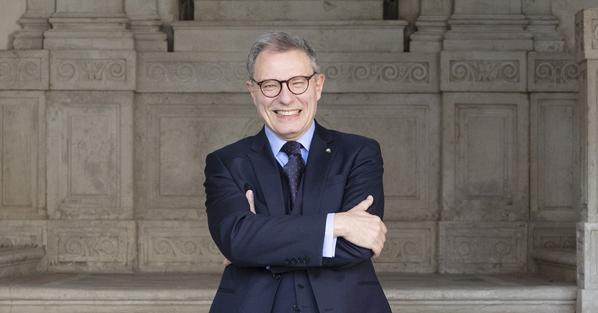
Luciano Floridi

"The most worrying aspect of artificial intelligence is that it can exacerbate existing structural inequalities in health and global health," warned Amalia Fiske, Technical University of Munich.
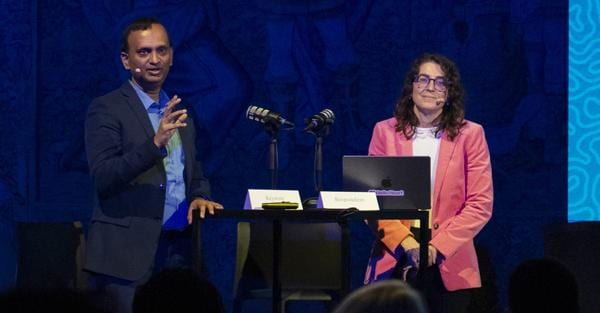
Sandeep Reddy e Esther Bleicher

The challenges

.

'We need to look at different types of challenges,' explains Floridi. 'Firstly, the misuse of AI for discriminatory reasons, for example, perhaps by developing models in countries where there is no adequate legislation and importing valid solutions, but developed in unacceptable contexts. Secondly, we must beware of overuse of new technologies: sometimes huge investments absorb significant costs but do not produce a real benefit, to the detriment of resources that could have been more usefully employed elsewhere'.
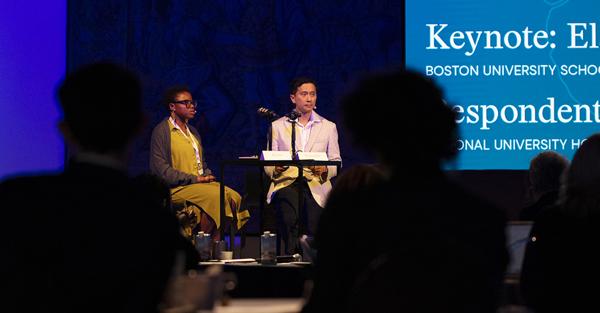
Elaine Nsoesie e Kee Yuan Ngiam

Much less studied is the possibility, equally present, of underutilisation of AI: 'There are already diagnoses and treatments that could be improved, thanks to technology that we are late in acquiring. Just think of the timely analysis of X-rays and other images, but also of therapies for epilepsy, for example. What is lacking is a certain regulatory framework'. The ethical and deontological, legal and moral aspects, in short, remain to be defined.
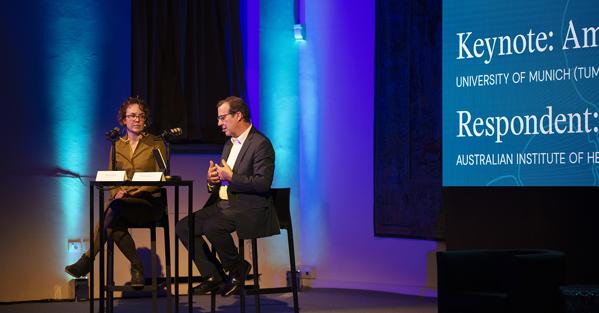
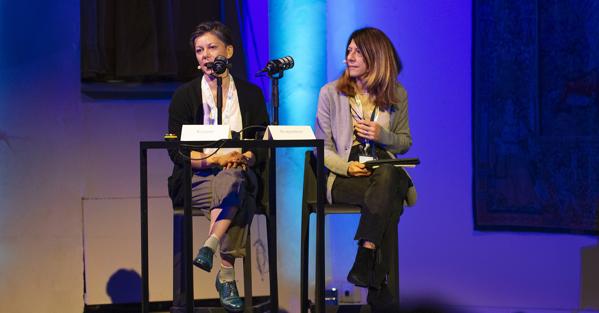
Amelia Fiske ed Enrico Coier

The rules

.

Why do rules of reference continue to be lacking? For two reasons, summarises Floridi: 'On the one hand, there is such a young revolution that we are caught unprepared, immature. On the other, there is great resistance on the part of the companies themselves that produce innovation, and they fear a regulatory environment that could slow them down'. But without rules, innovation is in any case held back: 'Think of medical devices that are implanted in the human body: today they have only one function, but AI could make it possible to create devices equipped with software, with interactions and functions that expand or change over time. What happens if the manufacturing company closes down? Who is responsible? We are talking about tools that already exist, not science fiction,' Floridi concludes.

Angeliki Kerasidou e Federica-Mandreoli

On AI applied to healthcare there remains a problem of 'trust, which is a central issue in the context of data-driven research and innovation, especially when it comes to Artificial Intelligence. From the trust placed in institutions and companies, to the technology itself, a trust deficit in artificial intelligence seems to persist, or even increase,' said Angeliki Kerasidou, University of Oxford (UK). But in any process, trust is the essential element for the acceptability and diffusion of a technology'.

The potential

What numerous studies have now shown is how AI can be used to make the entire range of interventions more effective and efficient: from predicting the onset of a disease to the development of new and more targeted drug treatments, from the drafting of discharge letters to the synthesis of medical research to clinical support for the evaluation of countless parameters from which therapeutic decisions are derived. On paper,' the Venetian event said, 'these capabilities, when combined, could usher in a new era of personalised, predictive, participatory and preventive medical care, enabling global healthcare systems to simultaneously improve outcomes, the experience of care, and reduce per capita costs.

(Copyright Alessandra Chemollo)

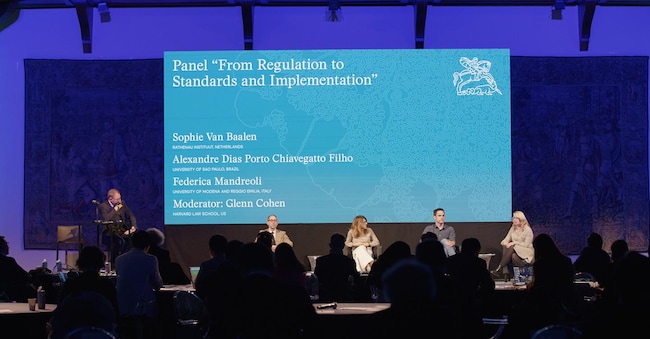
The symposium was attended by speakers from some of the world's leading international institutions selected for the quality of their research and impact factor, such as Swiss Institute of Technology (ETH), University of Pennsylvania, Technical University of Munich (TUM), Australian Institute of Health Innovation, Yale University, Rathenau Instituut, Netherlands, University of Sao Paulo, Brazil, University of Oxford, Boston University School of Public Health, Harvard Law School, National University Hospital of Singapore and many others.


Copyright reserved ©
Loading...

Brand connect

Loading...

Newsletter

Notizie e approfondimenti sugli avvenimenti politici, economici e finanziari.

Iscriviti