Airlines

IAG (BA and Iberia): revenue on the rise, but high fuel costs are holding back profits

The holding company has confirmed its 2026 targets, with a 10 per cent increase in the dividend. Demand remains strong in the fourth quarter as well

3' min read

Translated by AI
Versione italiana

3' min read

Translated by AI
Versione italiana

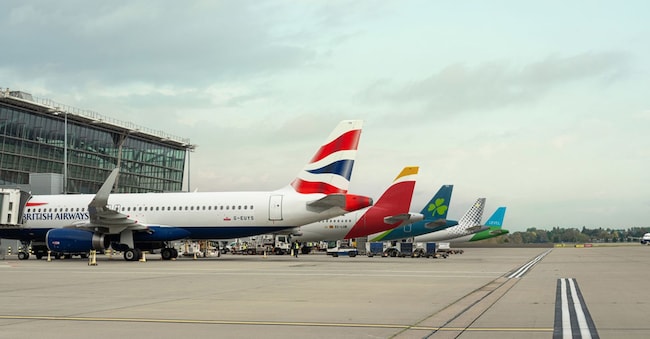
Travel demand remains strong, particularly on long-haul routes, but rising fuel prices and geopolitical tensions continue to put pressure on the profitability of the aviation sector. This is the picture that emerges from the results for the first nine months of 2026 of International Airlines Group (IAG), the group comprising British Airways, Iberia, Aer Lingus, Vueling and LEVEL.

The third quarter, traditionally one of the most important periods in terms of seasonality for the sector, highlighted the pressure on costs. Between July and September, turnover rose by 4.5 per cent to €9.74 billion, but operating profit before exceptional items fell by 15.9 per cent to €1.73 billion, below analysts’ expectations. The operating margin stood at 17.7 per cent, compared with 22 per cent in the third quarter of 2025, and net profit fell by 12.2 per cent to €1.231 billion.

Loading...

The main factor affecting the accounts is the trend in jet fuel prices. In the first nine months, expenditure on fuel and emissions charges reached €6.4 billion, an increase of 18.6 per cent, equivalent to approximately one billion more year-on-year. However, the hedging policy has made it possible to partially mitigate the effects of volatility, generating gains of €1.25 billion in the first nine months.

On the commercial front, the most significant performance came from the North Atlantic market, which recorded an 11 per cent increase in unit revenue in the third quarter, against a broadly stable capacity. All the group’s airlines reported growth in unit revenue on these routes.

British Airways increased its capacity by 2.2 per cent and its unit revenue by 12 per cent, whilst Iberia benefited from the expansion of routes operated with the new Airbus A321XLR aircraft, increasing capacity on the North Atlantic by 11.5 per cent and unit revenue by 4.2 per cent. Aer Lingus also posted a positive performance, with a 0.7 per cent increase in unit revenue.

Good results were also recorded in the South American and Latin American markets, where unit revenue rose by 2.3 per cent, accompanied by a 5.4 per cent increase in capacity. Iberia has strengthened its presence, partly through the launch of new routes to Fortaleza and Recife in Brazil.

The situation in Europe is more complex, influenced by the significant growth in capacity offered by competitors. To safeguard profitability, IAG has reduced capacity in the region by 1.2 per cent, primarily through Iberia and Vueling. The latter has cut capacity by 5.2 per cent, whilst still managing to improve unit revenue by 1.2 per cent.

The reorganisation of the network also affected the Middle East. The suspension of flights to various destinations in the Gulf has necessitated the reallocation of aircraft to alternative markets. British Airways has strengthened its connections with South Asia and Africa, whilst Iberia has redeployed capacity to Japan, Latin America, the North Atlantic and the Spanish islands.

The cargo sector made no positive contribution to the results, with turnover falling by 12 per cent over the nine-month period, in contrast to other airlines which took advantage of the closure of the Strait of Hormuz to expand their cargo operations.

For the full financial year 2026, the target of an operating margin before exceptional items of at least 12 per cent has been confirmed, within the long-term target range of between 12 per cent and 15 per cent. An interim dividend of €0.053 per share has been announced, representing a 10 per cent increase on the €0.048 distributed in 2025.

Loading...

The forecast is based on sustained demand and cost-cutting measures. The group reports that 85 per cent of the bookings expected for the fourth quarter have already been secured and that the outlook for the start of 2027 is positive.

Total fuel expenditure is forecast at €8.9 billion for the full financial year, based on the jet fuel price curve and exchange rates as at 3 November. The group states that it has already covered 45 per cent of its projected requirements for 2027.

Copyright reserved ©
Loading...

Brand connect

Loading...

Newsletter

Notizie e approfondimenti sugli avvenimenti politici, economici e finanziari.

Iscriviti