
Iata, air cargo slumps in March in the Gulf region (-54.3%)
Globally, the sector fell by 4.8%. Traffic in Europe and Asia was good. Rising fuel prices and availability weighed heavily

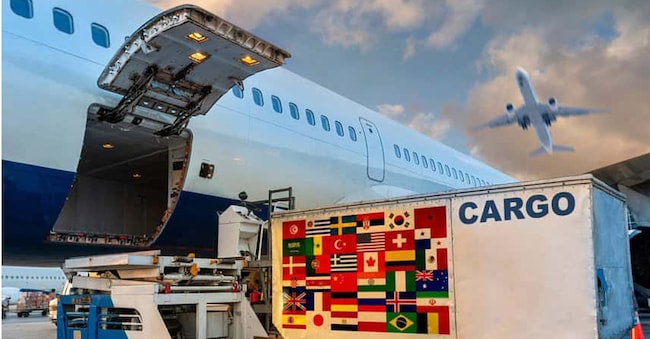
Air cargo traffic collapsed in March in the Gulf countries as a result of the closure of airspace in the aftermath of the start of the Epic Fury, the US and Israeli attack on Iran. In the first month of the conflict, demand for air cargo services fell by 54.3% compared to the same month last year, the lowest level since the Covid crisis. The capacity of Gulf airlines, forced to ground planes for security reasons, also fell by 52 per cent. These are the latest figures published by Iata, the airline association, which notes that in March, global cargo traffic fell by 4.8% after a very positive first two months of the year for the sector.
Demand for the United States is also down 1.2%, while all other areas are growing, starting with Europe +2.2%, Africa +7%, the Caribbean and Latin America +1.8% to Asia +5.4% excluding the Gulf countries.
According to Iata Director Willie Walsh, underlying demand is still strong and there are no signs of a recession in the world economy, while the industry has demonstrated in this downturn 'the necessary capacity to support the global supply chain, which is adapting to geopolitical, tariff and operational tensions. All eyes are on supply and fuel prices,' Walsh continued, 'which are expected to test the industry's resilience.
In the past two months, the crisis that initially seemed limited to the Gulf area spread like wildfire as a consequence of the stratospheric fuel price increase of 106.6% in March on a year-on-year basis, in parallel with a 43.1% increase in crude oil prices and a 320% surge in refining margins.
To this increase in costs we must also add the soaring freight rates on Euro-Asian routes: spot rates from South Asia to Europe have risen by up to 105%, with increases of 87% from Europe to the Middle East and 84% from South Asia to the Middle East, according to Xeneta, the analysis agency specialising in shipping and air cargo. Tensions point to a rapid contraction of available capacity. With the closure of Hormuz, the crisis has shifted to the availability of fuel as around 30% of jet fuel bound for Europe passes through the Strait.


