Who counts in art

Ibrahim Mahama tops ArtReview's Power 100

The Ghanaian artist is the first person from the African continent to reach this milestone. On the list are many committed artists and few gallery owners

by Silvia Anna Barrilà

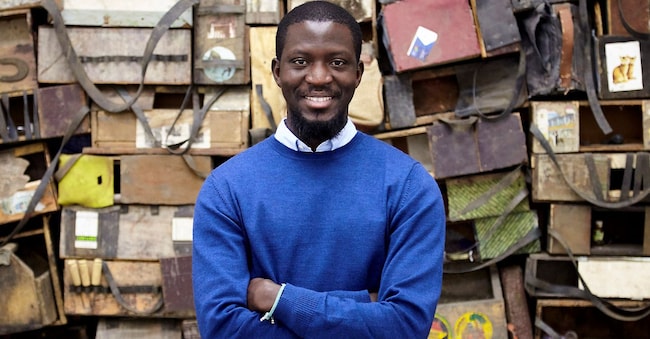
Ibrahim Mahama

4' min read

Translated by AI
Versione italiana

4' min read

Translated by AI
Versione italiana

Artist Ibrahim Mahama is at the top of ArtReview magazine's Power 100 of 2025, the annual ranking of people who have shaped the art world over the past year. At the dawn of the 24th edition of the ranking, Mahama is the first person from the African continent to occupy the top spot in the Power 100, proving that discrimination in the art world evidently exists. Over the past decade, Mahama has made a name for himself with his large-scale installations, which often use jute sacks and discarded textiles, such as those left over from Ghana's cocoa industry, stitched together to form huge fabrics with which he covers entire buildings.

Art and Commitment

The Ghanaian artist is well known in Italy, where he has made numerous installations, from the Venice Biennale in 2015 to the bastions of Porta Venezia in Milan in 2019. Since 2014, he has been represented by the Brescian gallery Apalazzo, which discovered him in 2013 while he was in residence at Gasworks in London, well before he joined the stable of the powerful White Cube, which began working with him from 2015, in conjunction with the Biennale.

Loading...

In recent years, the artist has put together a respectable cv, which is reflected in his quotations. When he started working with Apalazzo, prices ranged from around 3 thousand to 8 thousand euros. Today the values are much higher: photographs that cost 5,000 euro are now worth 15,000 euro; paintings that were worth 8,000 euro are now valued at 80,000 euro. Large sculptures and installations go as high as €600,000. In 2018 at Art Basel Unlimited, a large installation made of crates used for cleaning shoes and other makeshift jobs in Africa sold to a major American museum for 350 thousand euros.

"Ibrahim Mahama is an artist who, when he participates in a Biennale or an exhibition, not only gives a work, but also expends himself personally in workshops and lectures," said his gallery owner Francesca Migliorati of Apalazzo. "On the occasion of documenta in Kassel, he spent weeks sewing fabrics together with students and enthusiasts. Even now, on the occasion of the Kochi Biennial, which opens on 12 December in India, the artist has already spent weeks on site building with people and preparing his installation.

It is precisely this role of his as both artist and creator of infrastructures that help other artists realise their visions that earned him first place in ArtReview's ranking. The artist uses his position in the art world to reflect in a practical way on the issues he addresses in his work, such as labour, extraction and exploitation. He has created educational and artistic institutions and collaborative partnerships, allocating profits from his sales to a number of institutions in his hometown of Tamale: the Red Clay Studio, the Savannah Centre for Contemporary Art (SCCA) and Nkrumah Volini, which host residencies, student projects, children's workshops and exhibitions.

Other artists in this year's ArtReview top ten are also involved in infrastructure creation, or are engaged in curating, going beyond art creation. Egyptian Wael Shawky (at number 4) was hired by Art Basel to curate the new fair in Qatar; Ho Tzu Nyen (at number 5), a Singaporean artist, was chosen as curator of the 16th Gwangju Biennale in Korea. Others in the rankings have founded residency programmes, art centres and schools, such as Mark Bradford (12th place),Yinka Shonibare (14th),Tracey Emin (100th), Wolfgang Tillmans (10th), Theaster Gates (16th), Marina Abramovic (28th), Emily Jacir (48th), Dalton Paula (68th), RAQS Media Collective (76th), There are also collectives engaged in rethinking the dissemination of their work, such as Forensic Architecture (9th), blaxTARLINES (69th) and Cercle d'Art des Travailleurs de Plantation Congolaise (82nd).

wealthy patrons, museums and galleries

But the power of money can also be seen in the list. The second and third places show the growing presence of the Gulf States in the art world, with Qatar's Sheikha Al-Mayassa bint Hamad bin Khalifa Al-Thani in 2nd place, the Emiratan Sheikha Hoor Al Qasimi in 3rd (last year she was first) curator and director of the Sharjah Biennial and founder of the Sharjah Art Foundation, and Saudi Arabia's Minister of Culture Badr bin Abdullah Al Saud at 21st, thanks to the enormous resources they are pouring into art and culture to shine the national brand. Recognition for curators and museum directors comes often and not only from countries far from the West:Diana Campbell (15th), curator and artistic director of the Samdani Art Foundation and curator of the Bukhara Biennial,Beatrice Ruf (19th) curator and director of the Hartwig Art Foundation, Eugene Tan (24th), director of the National Gallery Singapore and the Singapore Art Museum, Bonaventura Soh Bejeng Ndikung (26th), director of the HKW and most recent curator of the Bienal de São Paulo, Suhanya Raffel and Doryun Chong (30th), director and chief curator of Hong Kong's M+ Museum,Mami Kataoka (33rd), director of Tokyo's Mori Art Museum, and Naomi Beckwith (35th), artistic director of the forthcoming Documenta 16, among others.

The crisis of galleries, above all, in traditional art centres also emerges. In fact, compared to past lists, there are far fewer gallery owners. Among those who remain are:Jose Kuri & Mónica Manzutto (53), Hauser & Wirth (57), Prateek Raja & Priyanka Raja of Experimenter (59), Andrée Sfeir-Semler (63),David Zwirner (67); Liza Essers of Goodman (71), Monika Sprüth & Philomene Magers (73),Emmanuel Perrotin (87), Jay Jopling (91).

L'Italia delle donne

And Italy? Patrons Miuccia Prada and Patrizia Sandretto Re Rebaudengo have maintained their presence for years, at 32nd and 36th place respectively, both gaining positions. Figures that had been included in the past continue to be missing, such as Cecilia Alemani, Lucia Pietroiusti, Massimiliano Gioni, the Continua trio. But there is a new entry: Eugenio Viola, who in Colombia successfully manages the Mambo in Bogotà and this year has been called upon to curate the XXIV Bienal de Arte Paiz, a very important event for Latin America, held in Guatemala City and Antigua Guatemala from November 2025 to February 2026. Still no Italian artists on the list.

Copyright reserved ©
Loading...

Brand connect

Loading...

Newsletter

Notizie e approfondimenti sugli avvenimenti politici, economici e finanziari.

Iscriviti