
IC and PAC help make contemporary Italian art competitive in the world
From 2017 to 2024, around 17 million euros were allocated to the 13 editions of the Italian Council, 13.5 million for the four editions of the PAC

4' min read
Key points
4' min read
12 October is the Day of the Contemporary, the event dedicated to contemporary art that involves the whole of Italy. Now in its 21st edition, this initiative, promoted by Amaci (Association of Italian Contemporary Art Museums), is realised with the support of the Directorate General for Contemporary Creativity of the Ministry of Culture and in collaboration with the Directorate General for Public and Cultural Diplomacy of the Ministry of Foreign Affairs and International Cooperation. Since its genesis in 2005, its aim has been to bring contemporary art to the general public and this year, thanks to the support of the Maeci diplomatic network, embassies, consulates and Italian cultural institutes will also be involved, extending the event abroad.
The Artist for Contemporary Day
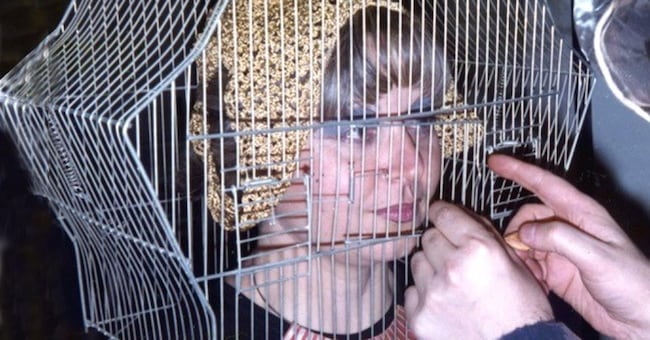
Like every year, Amaci, the association of contemporary art museums, decided to entrust an artist with the creation of the guiding image for the event. The image for the 21st edition is the work "Woman in a Cage" (1975 - 2024) by Tomaso Binga, an Italian artist born in Salerno in 1931. Alter ego of Bianca Pucciarelli Menna, Tomaso Binga is a poet and artist, a leading exponent of Italian phonetic-sound-performance poetry. The image is taken from a performance in 1974 that denounced gender inequality and forms of control masquerading as protection. In Amaci's choice, "the canary cage thus becomes a barrier, not only physical but also metaphorical, on the inaccessibility to freedom as an inalienable right and to all the tools and possibilities that can bring each of us to a condition of greater awareness and emancipation. And precisely accessibility, in its broadest sense, is the theme of this Contemporary Day.
Investing in the art of the present
In Italy, much has been done to conserve and enhance the heritage of the past, but very little to enhance and support the contemporary, above all, in the last seven decades there has been a lack of constant and accurate investment in the art of the present. In the past, in the allocation of public resources, the protection of historical heritage prevailed and only as of 2017 did something change with the establishment of the'Italian Council (IC) by the Ministry of Culture with the General Directorate for Contemporary Creativity with the dual purpose of, on the one hand, making a direct contribution to creative production and, on the other, offering artists, curators and critics - as well as cultural institutions active in the contemporary, public and private - the opportunity to create international networks aimed at the knowledge and dissemination of Italian art in the world, contributing to the development of careers with similar international realities.
From 2017 to 2024, 13 editions of the Italian Council were held and approximately 17 million euro in funding was allocated. For an emerging or mid-career Italian artist 'winning' the Italian Council represents an important achievement not only in terms of the possibility of seeing one's own project funded, but also in terms of institutional recognition and international visibility.
Promoting Italian creativity abroad
Over the years, the Italian Council has, in fact, become more and more inclusive, supporting more strongly the promotion of Italian art in the world. For this reason, every project must necessarily include collaboration with international cultural realities and a promotion phase abroad.

