
I'd like a litre of red wine in a can and some white wine on tap
Hexagonal bottles, tins, wine by the glass and even paper containers. Wine is embracing a lighter aesthetic too, in order to reduce its environmental impact and resonate with the younger generation’s green sensibilities.

The adage ‘don’t judge a book by its cover’ has rarely been heeded in the world of wine. Prestigious packaging, artistic labels, cardboard or wooden boxes: this luxurious, opulent and elaborate packaging conveyed the impression of valuable contents. Today, however, things are changing, and the new trend towards lighter drinks – which are seeing double-digit growth in the non-alcoholic and low-alcohol segments – is now extending from the contents to the containers themselves.
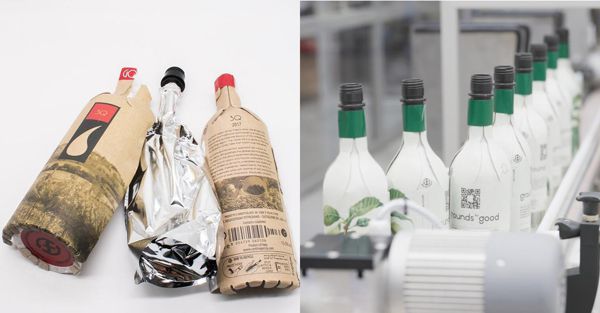
This is also to meet the demand for sustainability from younger generations, who are increasingly seeking quality combined with environmental awareness. Because packaging carries weight – both literally and in environmental terms: glass, for example, accounts for between 30 and 70 per cent of the supply chain’s carbon footprint; which is why the Slow Wine Fair launched a call to action as early as 2025 to make bottles lighter, asking that still wines not exceed 450 grams. And the wineries taking action are no longer just activist or experimental operations. In South Tyrol, for example, Elena Walch has introduced, for her ‘Selezione’ range, a 395-gram Burgundy-style bottle – 21 per cent lighter than the previous 500-gram version – resulting in an estimated reduction of 64 tonnes of CO₂ per year. Less glass means less energy required to produce it, less weight to transport and greater logistical efficiency: solutions that have long been adopted in international markets. Champagne, where the bottle has become part of the legend, is perhaps the most striking example. Here, due to the effervescence, the glass must withstand pressures of up to six atmospheres, so it cannot be as thin as that used for a still white wine. Reducing the bottle’s weight from the usual 900 grams to today’s 835 – the maximum permitted by technology to date – may seem a modest achievement, but given the production volumes of France’s most famous wine-growing region, which currently stand at nearly 300 million bottles, it allows for a 20 per cent reduction in the carbon footprint. Outside France, alternatives are multiplying, even extending – and sommeliers will just have to get used to the idea – to the paper bottle. Frugalpac has developed one, made from 94 per cent recycled paper, with an environmental impact up to six times lower than that of glass.
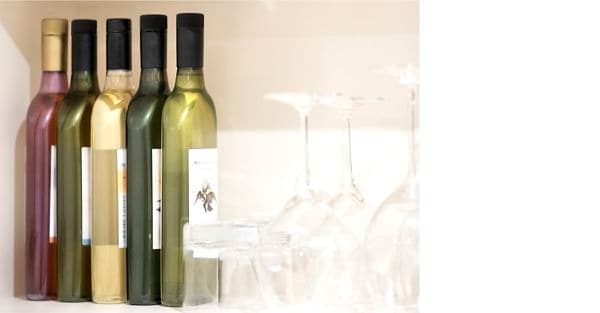
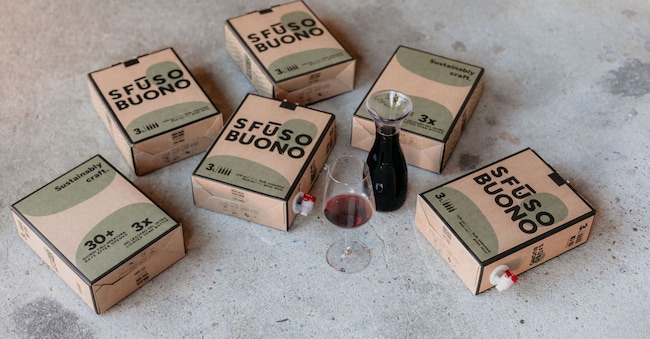
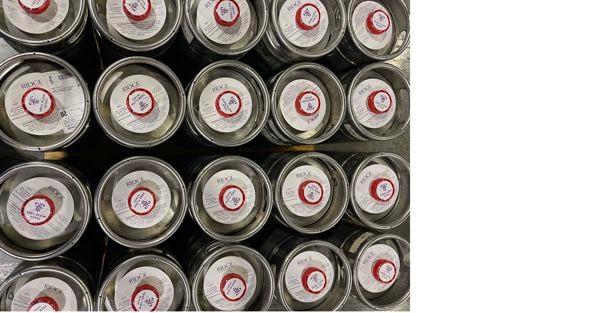
The first planet-friendly wine sold in packaging, in 2020, was Italian: the Umbria IGT white wine from Cantina Goccia, and the winery has recently unveiled new machinery capable of producing up to 14 million bottles a year to meet growing demand. New materials, but also new shapes. Packamama, an Anglo-Australian company, is working on flat bottles: flat, lightweight, designed to optimise weight, space and transport and, they claim, perfect for fitting into letterboxes too. In Napa Valley, entrepreneur and winegrower Kia Behnia, CEO of Neotempo, has launched the hexagonal bottle, with the aim of rethinking the entire logistics system. A traditional pallet holds around 56 crates; with the hexagonal prototype, this figure would rise to around 80, with an estimated 39 per cent reduction in shipping costs. Meanwhile, bag-in-box packaging for bulk wine is making its own modest social climb. Whilst in Europe – particularly in France and Germany – there has never been any stigma attached to it, with businesses such as Jenny and François Selections distributing their excellent wines from estates in the south, near Avignon, in Italia it has for years been the format for everyday wine, without any pretensions. Today, however, start-ups such as Sfusobuono are working with small producers, selecting high-quality, natural, organic and biodynamic wines, and transforming the box from an anonymous container into an urban, practical, recyclable and zero-waste solution, given that it keeps the wine in excellent condition for up to a month after opening. It’s been such a success that the small online business is now expanding into the high street: after the summer, it will open a wine bar in Milan, serving exclusively wine on tap. Wine on tap is the next frontier, one that is also being explored by the restaurant sector. Leading the way are businesses such as Sixty Vines, which offers, as the name suggests, sixty different choices of high-quality tap wines from all over the world through a network of restaurants across various states. On this side of the Atlantic, there’s the British company Uncharted Wines, which supplies wine in kegs – 20-litre kegs, just over 26 bottles – to venues such as Canton Arms, Blacklock, Crispin and Coombeshead Farm: not classic fine dining, but sophisticated, cultured, contemporary dining, where quality no longer needs to come in a bottle to be credible. ‘Each keg, which is fully recyclable, eliminates 16 kilos of glass, 26 capsules, labels and corks, and 1.6 kilos of cardboard,’ they explain.
Whilst maintaining high quality, with carefully selected bulk wines sourced from the most renowned regions, such as Burgundy. The can, on the other hand, remains the most controversial format, but also the one most favoured by the younger generations. In the United States, it is already established as a category, with companies such as Maker, which selects and distributes dozens of premium Californian wines from small producers in this format. In Italia, the first signs are emerging, for example with Perla del Garda, a well-known and multi-award-winning winery that has recently launched a 25-centilitre canned wine made from Turbiana grapes, designed for aperitifs and mixology. It cannot be called Lugana DOC, even though the grapes are the same, because the appellation regulations do not (yet) cover this format. A technical detail, certainly, but also a symbolic one: innovation moves faster than the rules. Recyclable containers, ease of transport, less oxidation, less waste, and a trendy serving style appreciated by new consumers. All that’s missing is the endorsement of a Michelin-starred restaurant to definitively legitimise these new wine formats: bets are on as to who will be the first to take the plunge.

