
The ID.Polo marks a new direction for Volkswagen: a reassuring design and affordable prices for this small electric car
After years of waiting and second thoughts about the name, Volkswagen’s first high-volume EV has become a reality. The manufacturer is rectifying the mistakes made with the ID range, such as the all-touch dashboard controls and a design that doesn’t align with the brand’s DNA. The key points
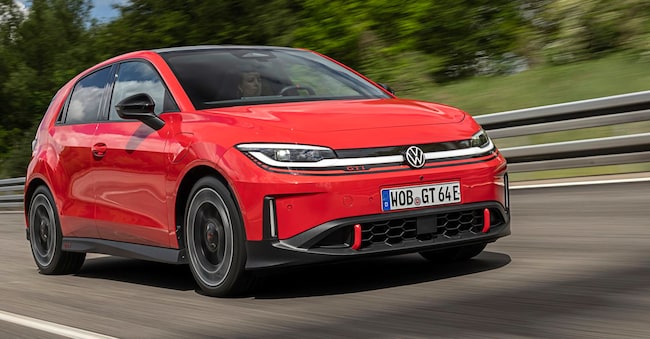
From the ID.2 All to the ID.Polo. The electric compact car is once again a true Volkswagen, offering industry-leading features starting with the MEB+ modular electric platform with front-wheel drive, shared with the Cupra Raval, Škoda Epiq and Volkswagen ID.Cross.
The ID. Polo is the first production model to embody Volkswagen’s new ‘Pure Positive’ design language, featuring a reassuring style that marks a departure from the design of the ID. range. The seventh generation of the model is instantly recognisable as a Polo and, above all, as a Volkswagen, with a C-pillar reminiscent of the first-generation Golf.
Built at the Martorell plant in Spain, the ID.Polo is powered by the new App290 electric motor, where ‘App’ stands for ‘Axial Parallel Position’ and ‘290’ refers to the maximum torque in Nm. There are three power levels: 116 hp, 135 hp and 211 hp. The ID. Polo GTI, available in 2027, will deliver 166 kW (226 hp). The single-speed gearbox and the newly developed pulse-width modulation inverter are connected to the motor housing.
All versions are equipped with the Volkswagen Group’s newly developed unified-cell battery, in a cell-to-pack configuration with different capacities depending on the power output. The 85 kW and 99 kW versions will debut as standard with a 37 kWh (net capacity) LFP (lithium iron phosphate) variant of the new high-voltage battery. This battery can already be charged at DC fast-charging points with a maximum power of 90 kW. The ID. Polo with the 37 kWh battery will be able to travel up to 329 km between two charging stops, according to provisional estimates. The 155 kW and 166 kW powertrains are powered by an NMC (nickel-manganese-cobalt) variant of the Group’s new standardised cell. This battery boasts a capacity of 52 kWh (net value), offers a range of up to 455 km (provisional estimate pending WLTP certification) and can be charged at DC charging points with a power output of up to 105 kW. Projections for DC charging from 10% to 80% at 90 kW estimate a charging time of around 27 minutes, whilst at 105 kW and with a particularly flat charging curve, this figure drops to around 24 minutes. Vehicle-to-load technology is also on the way, capable of charging external devices.
On getting in, we appreciated the work done by the German engineers, thanks to the high standard of quality evident in choices such as the return to physical buttons, as demonstrated by the many controls on the door panel, steering wheel and centre console. The dashboard layout is horizontal. The digital instrument cluster and the central display are positioned on the same visual plane. The Digital Cockpit measures 10 inches, whilst the infotainment touchscreen measures 13 inches. Among the features on offer is also a ‘retro’ instrument cluster display, a nod to VW’s past, with the speedometer on the left and the power gauge on the right. Worth noting is the ample space on board for passengers and luggage, thanks to the use of the MEB+ platform. This gives passengers 19 mm more space than in the standard Polo, a feature that is particularly evident in the rear compartment. The width of the cabin and headroom have also increased. Furthermore, boot capacity has grown by 24%, rising from 351 to 441 litres.

