
Icop: ‘With an OPE for Trevi, we would be competitors on a global scale’
Interview with CEO Piero Petrucco. “I see our proposal as a possible way of implementing CDP’s objectives”, one of the leading shareholders in the Romagna-based company

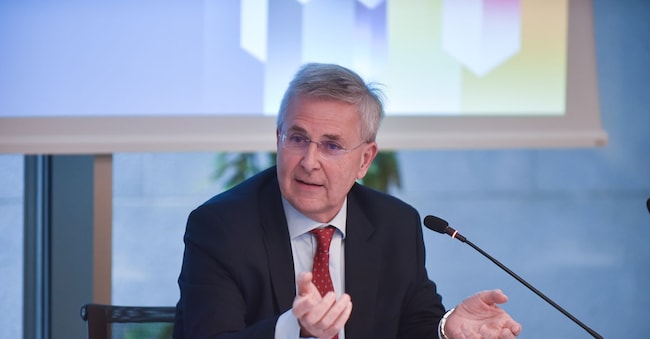
(Il Sole 24 Ore Radiocor) – “The aim is to merge two medium-to-large companies to create one large one, that is, on a par with the three or four global competitors” in underground engineering. This is how Icop’s chief executive, Piero Petrucco – in an interview with Radiocor – summarised the industrial rationale behind the full public exchange offer (OPA) for Trevi (with subsequent delisting), announced on 28 June, and which was “not agreed” with the target company. A transaction with a total value in the region of 273 million euros, which would create an entity with pro-forma revenues in excess of one billion euros, and a combined order book of over 2 billion.
“We have analysed the deal in the belief that we can achieve significant synergies,” says the CEO. “We are two companies operating in the same sector,” but there is also geographical complementarity: “A point we see as a major strength,” he maintains, and one that “would give us the opportunity to undertake very significant projects”. As in the US, where Icop has established a presence in recent years by acquiring Atlantic GeoConstruction Holding: “We operate in the data centre market and with major private operators, whereas Trevi” operates “with major public sector clients, primarily the USACE” (United States Army Corps of Engineers), explains the CEO, who cites the “opportunity to integrate different market shares and segments” in the country.
Giacomo Petrucco, director and investor relations officer at Icop, who represents the fourth generation of entrepreneurs at the helm of the Friuli-based benefit corporation, shares this view. Icop’s main shareholder is in fact Cifre, the Petrucco family’s holding company, which holds 78.4 per cent of the share capital. According to the board member, the opportunity lies in ‘increasing productivity by focusing on processes and innovation, not just in the race to cut costs. A model where you have the scale to drive innovation directly using proprietary technology boosts efficiency’.
CDP, a major shareholder in Trevi
The other key player in the operation is Cassa Depositi e Prestiti (CDP), one of Trevi’s main shareholders with a 21 per cent stake. In a statement issued a few months ago, Cdp had suggested that Trevi could act as a “consolidator of highly specialised companies”. “I see our proposal as a possible manifestation of that objective, because ultimately we are talking about bringing entities together to create a strong organisation capable of operating across the full range of services,” comments the CEO of Icop on the matter. “I believe all the pieces are coming together in an interesting way; I hope this is recognised and interpreted for what it is,” he added.
“The OPS framework is specifically designed to ensure the equal sharing of synergies. We are firmly convinced that, through the OPS, there will be substantial collaboration between the shareholders of the two entities as the group moves forward on this path,” notes Giacomo Petrucco. The comments of Federico Freni, Undersecretary at the Ministry of the Economy, also appear to point in the same direction; in recent days, he stated: “I would be very pleased” if the deal were to go ahead, “it could give rise to a major global player with a deeply rooted Italian contribution”. From an economic perspective, Icop recorded revenues of 428.3 million in 2025 (+135 per cent); as for Trevi, during the same period, turnover stood at 624.017 million (-5.9 per cent).


