
If Italian art does not even make it to Venice

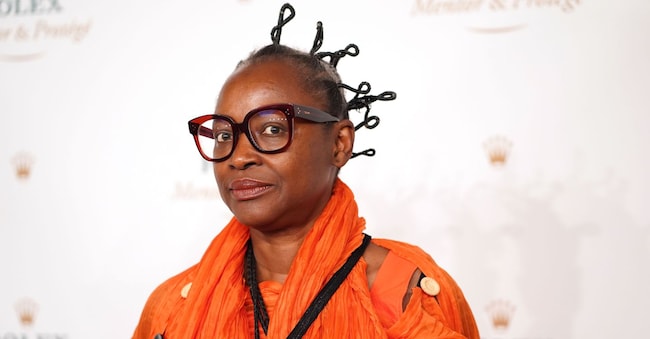
The names of those invited to the Venice Biennale 2026 have been announced. One hundred and eleven artists called to represent the world In minor keys as indicated by the curator Koyo Kouoh, before leaving us prematurely. No Italians among them. This is the news.
If only because - with the exception of the particular 1999 edition curated by Szeeman, in which the international exhibition and the Padiglione Italia merged - there are no other examples of such a blatant and evident absence in the century-long history of our most prestigious cultural institution. In the past, even curators who had shown genuine disinterest in Italia (as was the case with Ralph Rugoff), yielded to that minimum of diplomacy that brought two highly respected artists, Favaretto and Carbotta, to the Lagoon.
Not this time. Italia is not there. All the responsibility for representing us lies on the shoulders of Chiara Camoni in the national pavilion (we must be glad that at least this one has not been eliminated!). I wish her the best of luck.
But the fact remains that in the international exhibition there is no artist from our (host) country for the first time in history.
At this point, we could accuse the curatorial team that brought Kouoh's initial design to fruition of being rude, uncaring of the diplomacy that has always gone into the Venetian review. We might also note that at the very moment when, in Italia, the 'sovereignists' are in government, they fail in the elementary task of avoiding such a humiliation of their own country. We might also note that while the curators argue about how, for the fourth consecutive time in Venice, marginal territories, underrepresented artists, and areas of the world harassed by history should be looked at, they then hand over almost 30% of the participation to the United States of America. As many as 28 artists against the two or three representing countries such as France, Belgium, Germany, but also Lebanon, Kenya, Senegal or Ghana. If we calculate, however, that several names from 'lesser keys' countries also live in the US, actively participating in that cultural scene, the stars and stripes presence (including the three artists from Puerto Rico) rises to dizzying proportions. This is to say that it is OK to play minor keys but always provided the piano is provided by the most powerful producer. Philosophy, it is important for the statement, but the market is a serious thing.

