Opinions

If you want to go fast, run alone. If you want to go far, go together
by Bernardo Bertoldi*

4' min read

Translated by AI
Versione italiana

4' min read

Translated by AI
Versione italiana

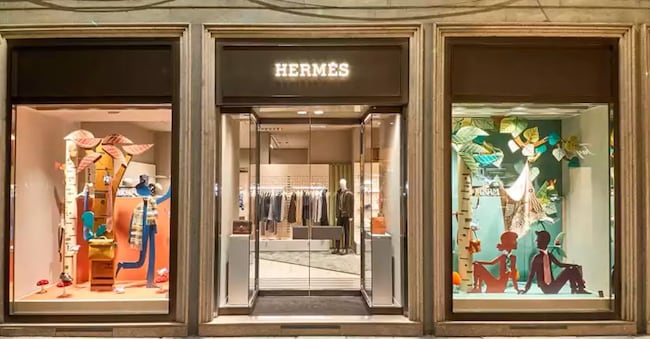
familyandtrends has recently used Hermès as an example to understand the principles of ownership and to explore the link between the stock exchange and the liquidation of a family branch; in both cases, H51, the holding company created to defend itself against a hostile takeover by LVMH, was mentioned: this may be useful to explore whether it is worthwhile for an individual family member to contribute his or her shares in the family holding company.

In the early stages of business start-up, shares are seldom included in a corporate structure, and when the time comes to contribute them to the holding company, it is never easy to convince all the family shareholders. The motivation is understandable, owning a company directly is different from owning a holding company that owns the company, you give up some 'freedom of manoeuvre'. In the words of Nicolas Puech, the main family shareholder of Hermès, who refused to give his 6% stake in H51: 'To tie our shares in a holding company would deprive family shareholders of their individual power of control over the management of the company... the freedom of each shareholder is the best way to guarantee our unity in the long run'.

Loading...

Holding a controlling interest in a holding company is, however, an advantage for the entrepreneurial family shareholder, the entrepreneurial family being the institution made up of all family members.

A first fact that should convince family members who think like Puech is that in the case of wanting to sell the company, together they get a better price, due to the majority premium that can vary between 20% and 40%. To explain this logically, one can use an example that Brandenburger, the inventor of the theory of value, the one used by many super-advisors to justify not contributing to the family holding company and which instead is the basis of why one should contribute, usually gives in his first lecture.

Brandenburger says: 26 students have a red card and the professor 26 black cards, outside the classroom the rector will give $100 for each pair: how much is the value that can be created? 2.600$. Who gets the value? Logic suggests, and usually a brief classroom debate confirms this, $1,300 to the students ($50 each) and $1,300 to the professor (who has 26 cards). How could the professor capture more value? By tearing up two black cards before starting the negotiation with the students: this way the students know that two of them will be left without a dollar and will be willing to sell their card for less than $50. In the classroom, the average price of red cards usually drops to around $35/40: in this way the professor captures $1,440/1,560 while only handing over 24 pairs to the rector [24x(100-40) or 24x(100-35)]. It is sufficient to replace the students with the individual members, the professor with the buyer. It thus becomes clear that only those family members who sell before the buyer reaches a majority will get a good price, those who remain will be irrelevant.

When you are alone, you are also weaker and being weak with a certain amount of wealth can be dangerous, as the story of Nicolas Puech shows.

The Puechs are, with the Dumas and the Guerrands, one of the branches of the family that owns Hermès; Nicolas was the first shareholder in Hermès with a stake of around 6%, worth around 13 billion, until in February 2025, after signing a commitment to sell part of his shares to the Emir of Qatar, he had to withdraw from the deal because he could not find his shares. Where had they gone?

Puech had transferred them from France to Switzerland in 1999 with the help of a financial advisor, Éric Freymond. Being bearer shares, anyone owning them could dispose of them. Gradually, Freymond gained confidence by having power of attorney to manage and dispose of the assets; in the words of Nicolas Puech: 'It was to make my life easier. He took care of everything that needed to be paid'. Everything went well until Puech, astonished that Jadil, his servant, had not thanked him for a million euro transfer, was told by Freymond that he was probably embarrassed about the money and did not feel like talking about it. Jadil's wife Maria heard the exchange from the room next door and took care to warn Nicolas that the money had never arrived. In 2023, Puech sued Freymond for mismanaging his assets.

The family had started to worry in 2014 when Nicolas, after joining the Hermes board in 2012 and attending all meetings, had thinned out his attendance until resigning after never attending in 2014. In 2016, Henri-Louis Bauer, manager of the family holding company, recounted that he had joined Nicolas in Spain with a lawyer and a psychologist and had talked and analysed some documents. The same evening he called him back as agreed, but Nicolas did not answer and his number was switched off the next day. From then on, Freymond advised Nicolas to stay away from family members.

Today, the shares have disappeared, Freymond has died by suicide, Nicolas lives on helped by his family trying to obtain justice, the AMF, the French stock exchange authority, has declared him responsible for more than half of the first share of Hermes shares accumulated by LVMH in the 2010 takeover attempt.

Admittedly, Nicolas's story is extreme, but it has some traits in common with many others: experienced and trusted financial advisors, little exposure to the family and its institutions, little attention to the value of money and the role that capital plays in the duty of every shareholder to take care of the family business. It may be that Nicolas had it right when he stated 'Binding our shares in a holding company would deprive family shareholders of their individual power...' but if you want to go far, go together.

(*) Lecturer in Family Business Strategy - University of Turin

Copyright reserved ©
Loading...

Brand connect

Loading...

Newsletter

Notizie e approfondimenti sugli avvenimenti politici, economici e finanziari.

Iscriviti