Weekend ideas

The right to nature: visiting Italy's great gardens

Not just open and accessible parks, but new urban areas converted to green. Stroll among ancient trees, orchards and areas designed according to the principles of biodiversity and microclimate.
by Laura Taccari

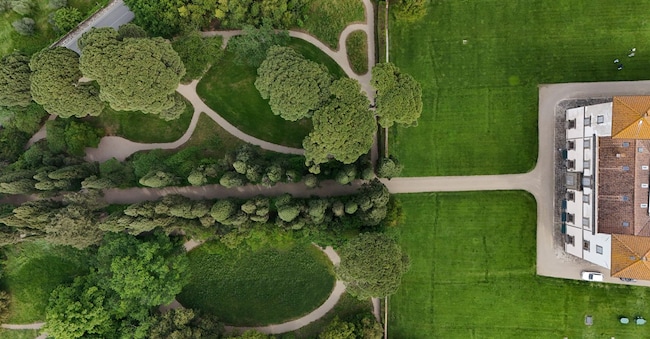
Villa Le Corti a San Casciano Val di Pesa nel Chianti. Nel parco si alternano specie mediterranee e lunghi sentieri tipici del giardino romantico, il viale dei cipressi, un giardino all’italiana, l’orto e il pomario. Non mancano corbezzoli, allori e viburni, accanto ad antichi e altissimi pini domestici. Degno di nota il prato che funge da tetto per lecantine, una sorta di giardino pensile ante litteram.

6' min read

Translated by AI
Versione italiana

6' min read

Translated by AI
Versione italiana

The history of the European landscape can also be read through that of its gardens. From the geometric design of the Renaissance parterres to the compositional freedom of the 19th century and contemporary naturalistic experiments, each era has built its own idea of nature in the green. In Italia, where the garden has been a refined form of cultural expression for centuries, the heritage is experiencing a new season of attention. Not only thanks to the restoration and opening of historic parks and the rediscovery of residences immersed in greenery, but also with interventions that rethink the role of plants in the daily life of cities. The new edition of the guide by Grandi Giardini Italiani, the network founded in 1997 by Judith Wade and now led by Bianca Passera, brings together some 150 gardens, all of which can be visited. "The project selects those that share rigorous quality standards in botanical, artistic and historical terms," explains the president.

Historic gardens as well as vegetable gardens and vineyards in an interweaving of art, landscape, history and biodiversity to which Ca' del Bosco in Franciacorta, the Limonaia del Castèl in Limone sul Garda and Villa La Quiete in Treia, in the Marche region, have been added this year. "Grandi Giardini Italiani is the first private network to bring gardens closer to the horticultural tourism market. We help owners by offering services to increase visitors including promotion, on and offline communication and digital ticketing," Passera continues.
Loading...

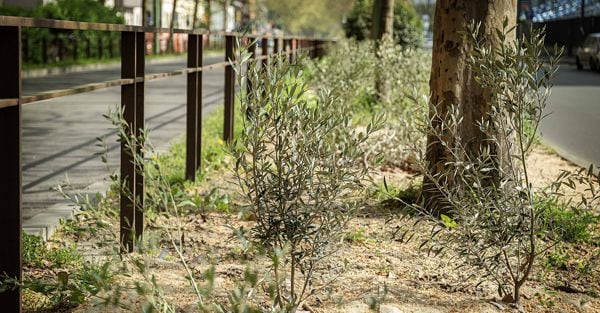
Progetto Milano Green Circle 90-91 con il sostegno del Gruppo Armani: qui la scelta delle specie arboree è stata dettata dalla volontà di aumentare la biodiversità e migliorare il microclima. ©Forestami

Even cities are rethinking their relationship with trees. In Milan, the Milano Green Circle 90/91 project is transforming the trolleybus loop into a long urban ecological infrastructure. The initiative involves the City of Milan with the collaboration of Forestami, a format conceived by architect Stefano Boeri with the support of the Armani Group. "It is not only an ornamental intervention, but also a functional one," explains agronomist Laura Gatti, who is leading the project. "We want to create a botanical corridor to increase biodiversity and improve the microclimate. For the former, given the intense traffic conditions of the routes, there is a combination of hardy plants, including shrubs and perennial trees, such as Elaeagnus x submacrophylla Compacta, an evergreen that flowers in late autumn, when there is little else for bees. Then, among those that act as a filter against fine dust, there are plants with small leaves and dense foliage or very broad leaves, but with accentuated veins or trichomes,' concludes Gatti, listing the most useful: 'Phlomis fruticosa, Teucrium fruticans, Cotoneaster franchetii and Rosa rugosa.
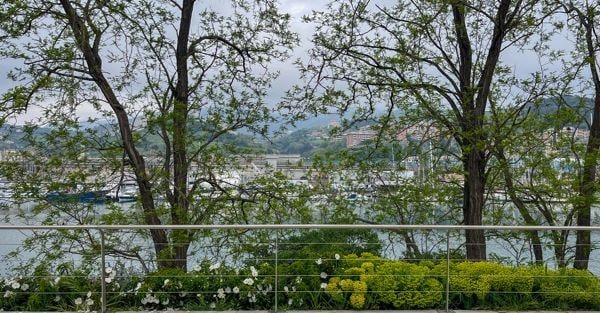
Qui e sotto, Il Parco delle Dune di Genova con specie mediterranee: lentisco, fillirea, corbezzolo e cisto, capaci di adattarsi bene al clima. Ottimi per frangere i venti dal mare, lecci, pini o carrubi. ©MARTINA SANTIMONE

In Genoa, the Dune Park, along the Pra' coastal stretch, created by AG&P greenscape, was inaugurated a few months ago. "The park gives people back something that had been lost here: the relationship with the sea and nature. The project introduces a new landscape made up of dunes, Mediterranean vegetation and paths by the sea. The principle that guides all our projects is The Right to Nature, which is also the title of our latest book," explains Paolo Palmulli, landscape architect and partner of the studio. The Park, selected for the Italia Pavilion at the last Biennale Architettura, develops along a sequence of bays with different identities. The inspiration is Mediterranean, with typical maquis species such as mastic tree, phillyrea, strawberry tree and cistus, able to adapt well to the climate, wind and saltiness. "Some trees, such as holm oaks, pines or carob trees, are ideal when the goal is, in addition to shade, to break the winds from the sea and create a resilient, low-maintenance ecosystem," Paolo concludes.
In the Emilian countryside, the Romantic Park of the Magnani-Rocca Foundation (the scene, for the record, of a very recent theft) in Mamiano di Traversetolo, Parma, recently underwent restoration work as part of the National Recovery and Resilience Plan: twelve hectares of historic park rethought by a team composed of landscape agronomist Elisa Marmiroli and architect Alberto Bordi with three different visions: a landscape park, an Italian-style garden and a more contemporary one. "Three ways of imagining the relationship between man and nature, which today can also become sources of inspiration for private gardens," explains Elisa Marmiroli of Studio Arbora. "The landscape garden, called the English garden because it originated in England between the 18th and 19th centuries, requires space and breathing space. We work on the sinuosity of the paths, create small groups of trees instead of regular rows and design a sequence of green rooms to be discovered while walking. Another typical element is water, which today can be interpreted, for example, with a bathing bio-lake built for us by Umor Acqueo.
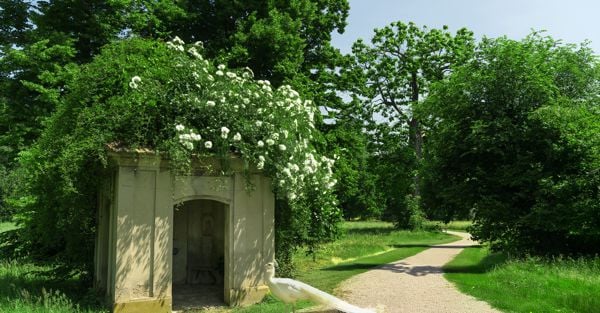
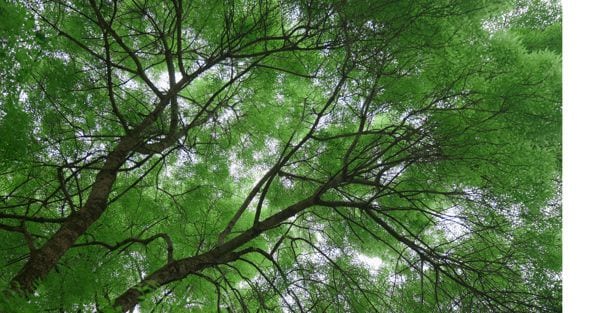
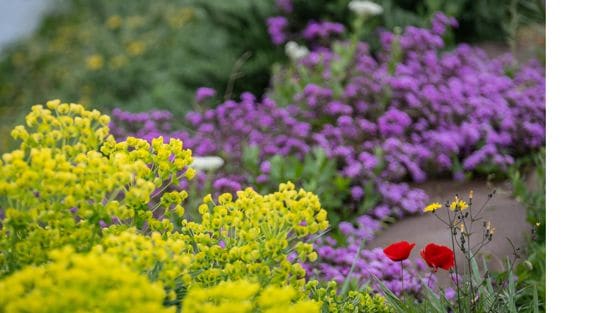
Qui e sotto, il Parco Romantico della Fondazione Magnani-Rocca a Mamiano di Traversetolo, Parma, che riunisce tre diversi modelli di giardino, all’italiana, all’inglese e contemporaneo. Quest’ultimo è il primo esempio in Emilia-Romagna di “New Perennial Movement” secondo i principi di Piet Oudolf, il designer dei giardini ella High Line di New York e del museo Hauser & Wirth nel Somerset.

The evergreen hedges that design the flowerbeds today can be reinterpreted in a contemporary way, with seasonal blooms and perennials, capable of enriching the garden with colours and scents throughout the seasons". In the Magnani-Rocca Italian-style garden, the evergreen flowerbeds have been enriched with a border of hydrangeas (Hydrangea paniculata, Great Star and Limelight) and a collection of fifteen pastel-coloured iris varieties. The contemporary garden, which did not exist before the renovation, was created with more than 6,500 plants belonging to 20 different species of herbaceous perennials (including Echinacea purpurea, Persicaria amplexicaulis, Salvia nemorosa, Sesleria argentea, Stipa gigantea and Briza media), as well as around 200 bulbs. "The goal here is to design in accordance with the natural processes of an ecosystem and to create plant communities that are beautiful, resilient and capable of evolving over time," Marmiroli concludes.

The garden of Villa Le Corti, in Chianti, has also reopened to the public after a restoration promoted thanks to the Pnrr. The property, residence of Clotilde and Duccio Corsini, was designed in the early 1600s by Santi di Tito, one of the most famous architects of the time. Among the park's highlights is an electro-culture garden, an agricultural practice that uses the natural energy of the atmosphere and the earth's magnetic field to stimulate the growth and health of plants, without the use of fertilisers. But also worth mentioning is the lawn that serves as a roof for the cellars: "A roof garden ante litteram," Marco Battaggia, the landscape architect who oversaw the project, defines it. "The successful health and splendour of a lawn depends on it being very well drained," he explains. "One of the recurring mistakes is planting a tree in the middle, especially those with superficial roots that, seeking water from irrigation, rise up creating huge protuberances." The avenue of cypresses, in this case Cupressus sempervirens, is one of the symbols of the area. Battaggia recommends planting them in September; the first year they require a lot of irrigation because they have tap roots that point deep into the ground. "The geometric design is achieved with box hedges. In order to always have flowers, the garden is divided into zones; one houses several varieties of roses, old and fragrant, which bloom in May, such as Rosa Cornelia, Cecile Brunner, Lady Hillingdon and Ophelia. Emerocallis, peonies and settembrini are found in the perimeter beds and bloom in late summer, while in the centre grow two diosperas, commonly known as persimmons (Diospyros kaki), a flowering apple tree and an olive tree, and outside, along the perimeter, a pear tree and a pomegranate tree.

Le rose del giardino all’italiana di Villa Le Corti a San Casciano Val di Pesa nel Chianti.

We now fly to Sicily, where the Planeta family, one of the region's leading wineries, is paying homage to the agricultural landscapes of the Selinunte Archaeological Park on the occasion of the 30th anniversary of its Chardonnay. The project involves the creation of an itinerary immersed in the park's rural landscape, curated by landscape architect Giuseppe Barbera, with the collaboration of Tiziana Calvo and the advice of Manlio Speciale, scientific consultant of Radicepura Horticultural Park. A long and magnificent promenade - this is the name of the initiative, which takes its cue from an article by Cesare Brandi, published in 1966 in the Corriere della Sera - flanks all the monumental complexes of the site, up to the Antiquarium housed in the Baglio Florio and arriving at the mouth of the Modione river, next to the sanctuary of Demetra Malophoros. Five kilometres of intervention carried out with respect for history and nature,' explains Barbera. The principle is that of a natural garden. "We acted as a local farmer would have done. It would never have occurred to the Sicilian farmer to plant a jacaranda tree next to the house. There is an old saying that Sciascia often quoted, according to which farmers do not like useless trees, so they would have chosen a carob tree, which is extraordinary both for its fruit and its shade'. Alongside, the typical aromatic plants of the maquis, such as myrtle, rosemary, lentisk. And then fruit trees, such as apricot, mulberry, pomegranate and fig. In each of the three areas stands a date palm, a sort of signal that guides the visitor from afar along the promenade.

Copyright reserved ©
Loading...
Loading...

Newsletter

Notizie e approfondimenti sugli avvenimenti politici, economici e finanziari.

Iscriviti