
Il Sole 24 Ore tops the reliability rankings for Italian newspapers in the Digital News Report 2026
Digital News Report Italia 2026: *Il Sole* enjoys a 64% trust rating among readers, on a par with *SkyTg24* and second only to *Ansa*. But the relationship with the news is becoming more fragile: overall trust is falling, whilst social media, online platforms and news avoidance are on the rise

Key points
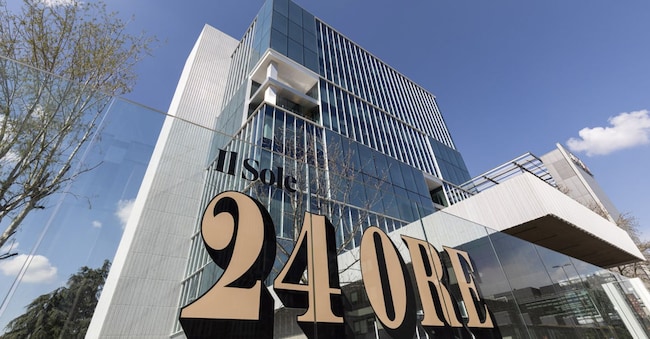
Il Sole 24 Ore is Italy’s most reliable daily newspaper. In the new Digital News Report Italia 2026, compiled by the “Giorgio Bocca” Master’s in Journalism at the University of Turin using Italian data from the Reuters Institute at the University of Oxford, Il Sole retains its ranking from the previous year and achieves 64% positive ratings for trust in the news it publishes. This is essentially the same level as SkyTg24 and just below ANSA, which remains in the lead with 74%. Behind them come the general-interest newspapers: Corriere della Sera at 59%, Repubblica at 55% and La Stampa at 54%.
This is a telling statistic, as it comes against a backdrop that is far from easy for the news industry. Trust in the news in general has, in fact, fallen again, standing at 32% – four percentage points lower than the previous year. The Italian paradox remains intact: Italians trust the news less and are less passionate about it, yet they continue to keep themselves well informed. Fifty-seven per cent check the news several times a day, one of the highest figures among the countries surveyed, second only to Finland when compared with the reference markets.
TV as the primary source
The research thus reveals an audience that has not disappeared, but has become more sporadic. Less loyal to the traditional rituals of newspapers, TV and radio, and more exposed to the constant stream of digital platforms. Online media has strengthened its lead among sources used at least once a week: 69% compared to 62% for television. But when asked which is the main source, TV still leads at 48%, with online now close to 45%. The old duopoly of newspapers and TV news is no longer enough to explain news-seeking habits: social media, search engines, aggregators, newsletters, apps and now even AI chatbots make up an increasingly fragmented news diet.
The influence of brands
The data on trust in individual publications, however, tells a different story: journalistic brands still matter. Indeed, when they are perceived as authoritative, neutral and competent, they fare better than general trust in the news. Il Sole 24 Ore stands out precisely in this top tier of reputation: the leading national daily, on a par with SkyTg24, particularly strong among high-income readers, where it reaches 76%, and among the most educated audiences. This is consistent with the newspaper’s profile: economic news, reporting, data and analysis of current affairs.
Social media: the main source of information for young people
The report also highlights the flip side of the coin. Social media is once again on the rise as a source of information: it was used by 45% of Italians in the previous week, six percentage points more than in 2025, and has become the main source for 22%. However, trust in news encountered on social media remains very low: just 15%. Trust in AI chatbots is slightly higher, at 16%. Search engines, on the other hand, maintain a level closer to general trust, at 30%.


