FIFA World Cup

The World Cup trophy belongs to Italia (even without our national team)

It has passed from the hands of Diego Maradona to those of Fabio Cannavaro, and from those of Zinedine Zidane to those of Lionel Messi. Whoever wins the FIFA World Cup will be holding a piece of ‘Made in Italy’.

by Angelica Moschin - Photo by Claudio Moschin
4' min read

Translated by AI
Versione italiana

4' min read

Translated by AI
Versione italiana

Every four years, it is raised in front of billions of people, photographed by thousands of cameras and celebrated as the symbol of sporting victory. Yet the FIFA World Cup has its origins far from the stadiums and the spotlight. Its story begins in an unassuming warehouse on the outskirts of Milan, in Paderno Dugnano, where one of the most recognisable objects on the planet has been taking shape for over half a century.

It is produced by GDE Bertoni, a long-established Italian company specialising in the manufacture of trophies, medals and decorations, founded by Eugenio Losa and now run by his daughter Valentina. These workshops also produce other symbols of international football, from the UEFA Champions League to the Europa League, but the real treasure tucked away amongst the shelves, moulds and workbenches is the trophy destined for the world champion national team.
Loading...

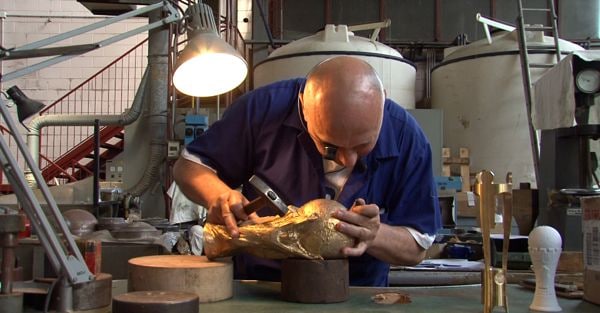
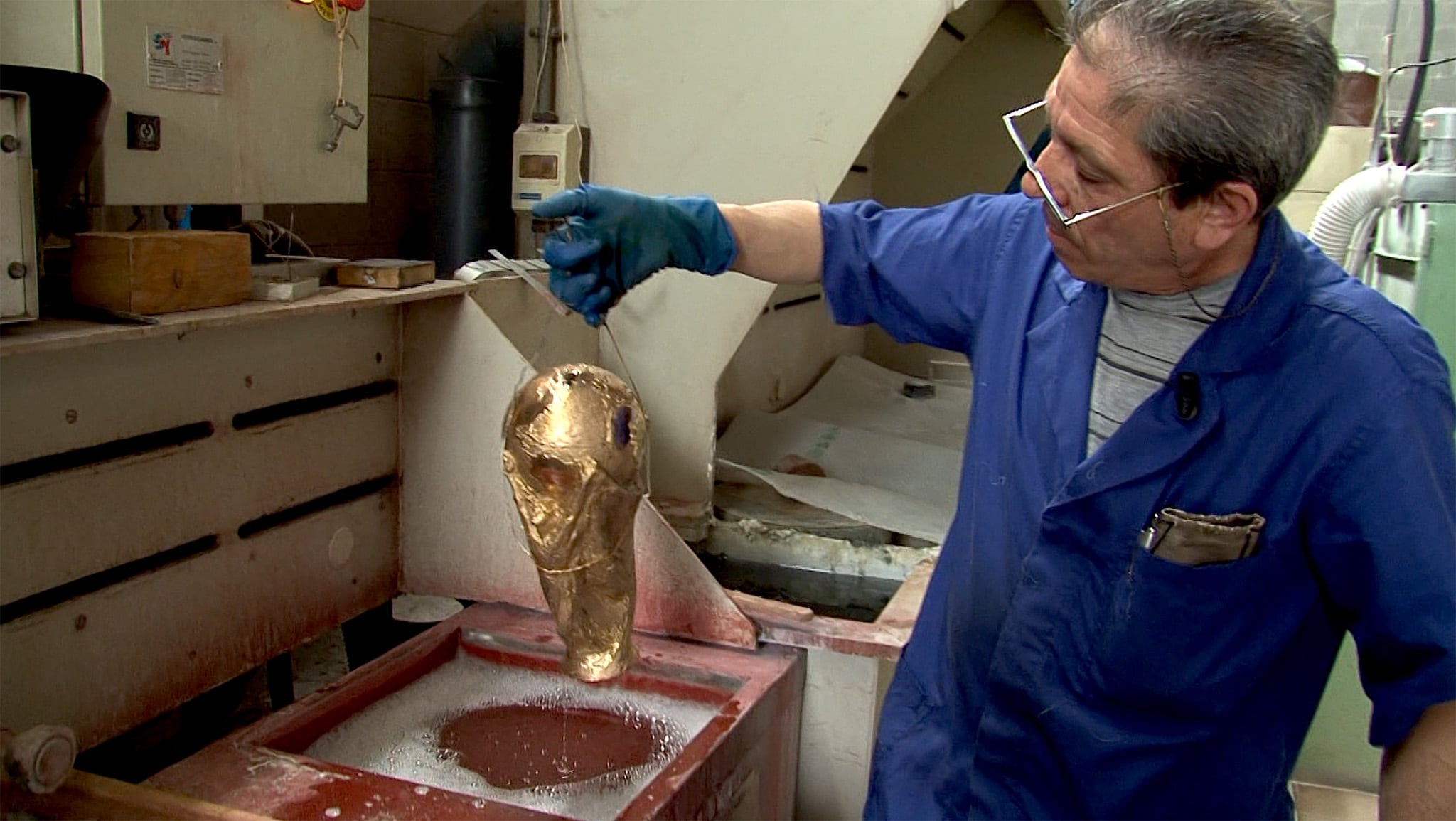
Qui e sotto le fasi di lavorazione e realizzazione della FIFA World Cup. ©Claudio Moschin

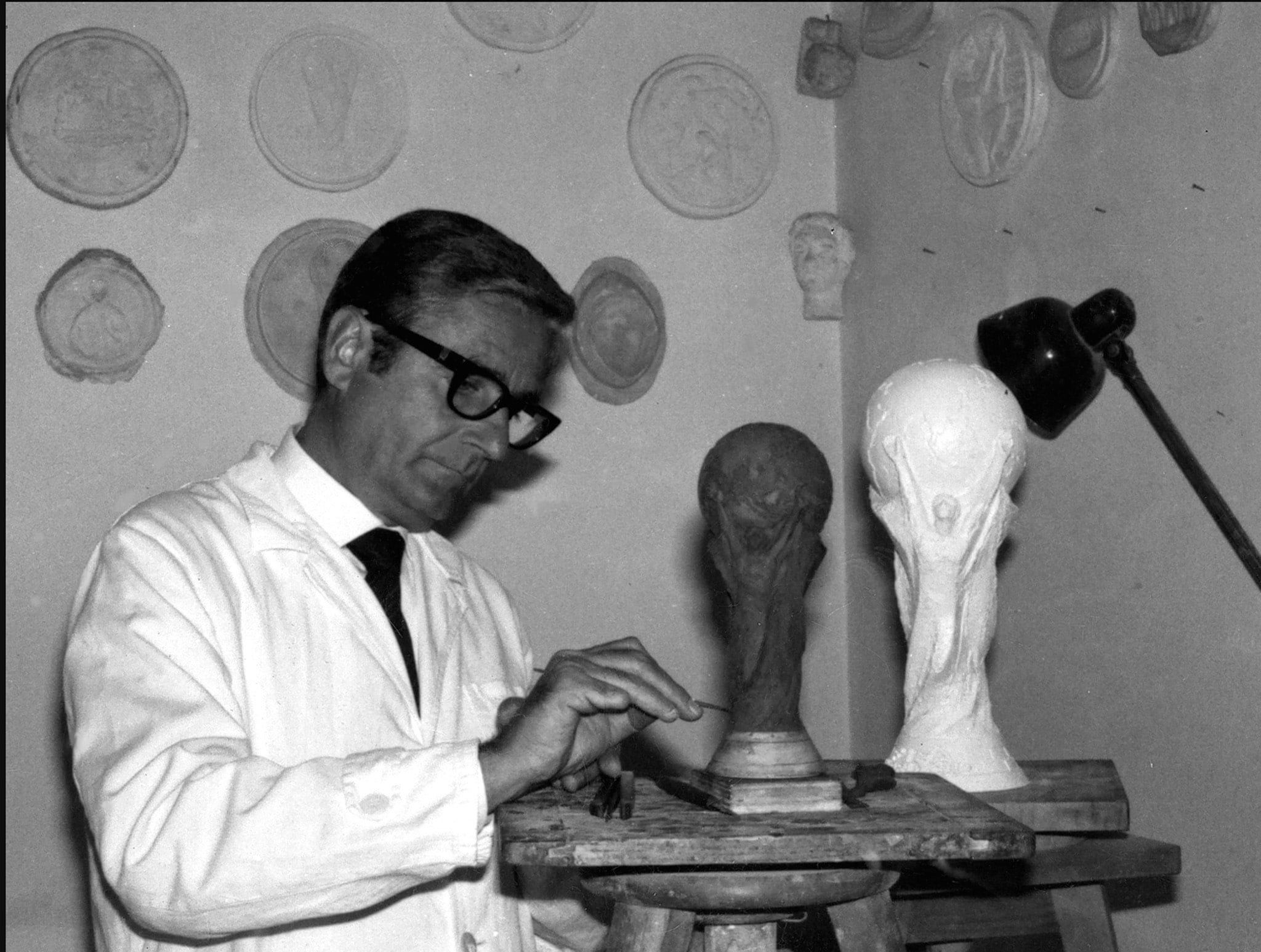
Its history began in 1971, when FIFA launched an international competition to replace the historic Jules Rimet Cup. Brazil had been awarded the trophy permanently the previous year following their third World Cup victory, and a new symbol was needed to represent the most important tournament. Fifty-three designs were submitted from seven different countries. The commission was won over by the design submitted by Silvio Gazzaniga, then artistic director at GDE Bertoni.
©Claudio Moschin

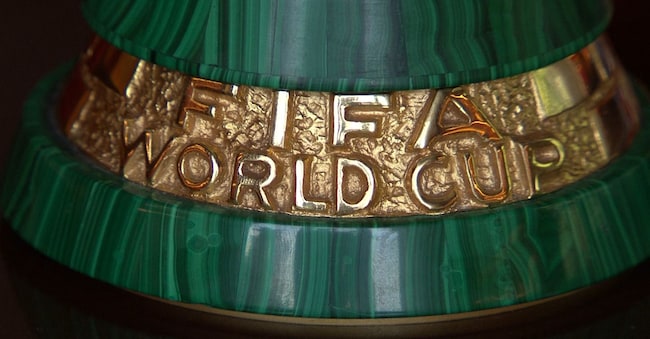
Gazzaniga, who passed away in 2016, said on several occasions that he did not want to design a simple cup, but the very image of victory. The result is one of the most successful icons in the history of sport: 36.8 centimetres tall, crafted from 18-carat gold, hollow inside yet weighing over six kilograms, with two bands of green malachite at the base that lend it the elegance of a work of art rather than a trophy. Two human figures soar towards the sky, holding up the globe in a dynamic composition which, more than fifty years after its creation, remains instantly recognisable.

The trophy was first presented in the summer of 1974, when Franz Beckenbauer lifted it in Munich following West Germany’s victory over the Netherlands. Since then, it has passed from the hands of Diego Maradona to those of Fabio Cannavaro, from those of Zinedine Zidane to those of Lionel Messi, spanning over half a century of football history and becoming one of the most photographed objects of our time.
©Claudio Moschin

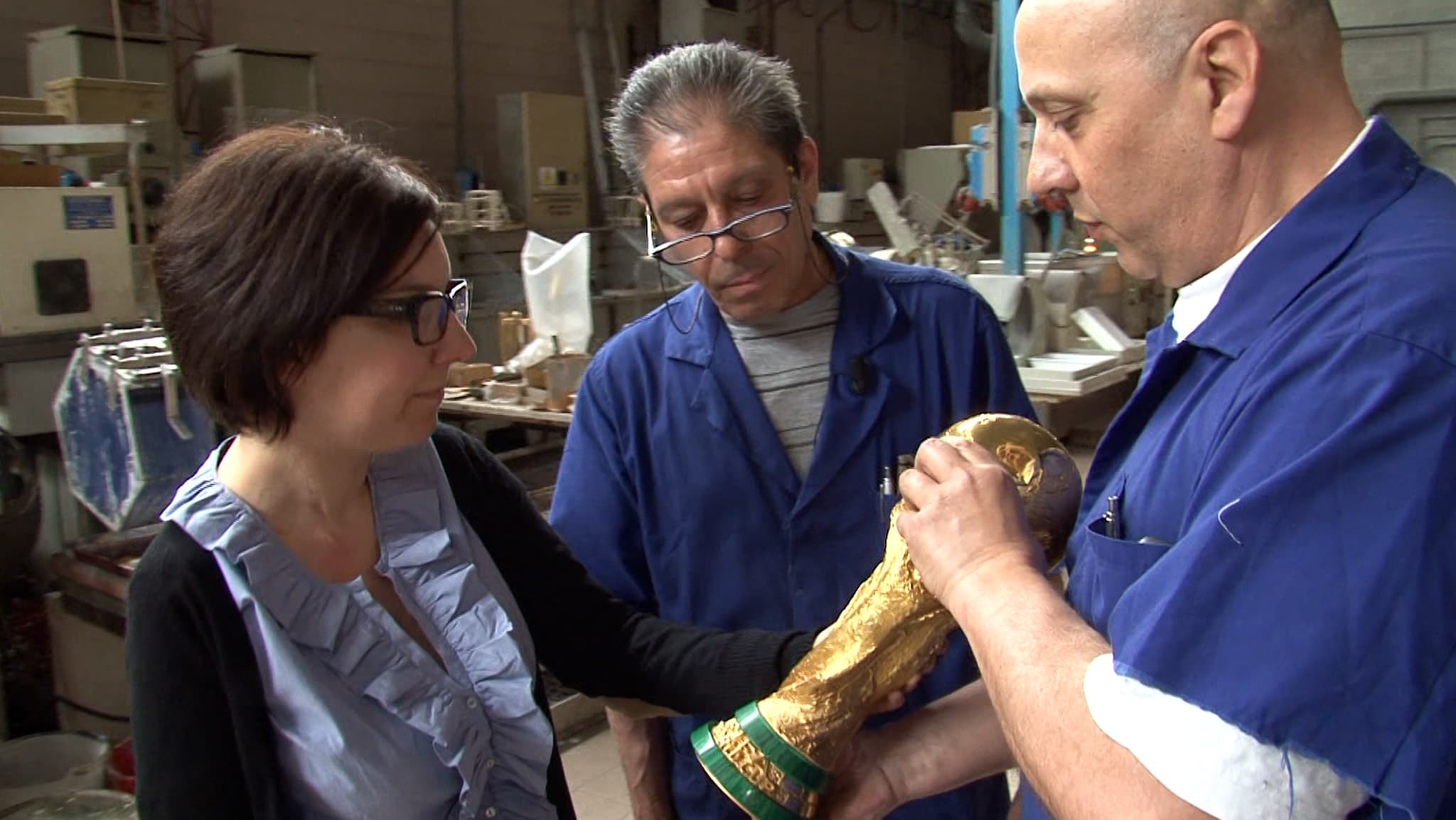
Visiting GDE Bertoni today is like stepping into a place where time seems to have stood still. Amidst tanks for chemical treatments, hammers, jigs, moulds and shelves brimming with components, highly specialised craftsmen still go about their work, preserving skills passed down through the generations. In an age dominated by automation, much of the work continues to rely on the experience of the craftsman’s hands and the precision of his eye.

Once it leaves here, the FIFA World Cup leads a life that is anything but peaceful. During the award ceremonies, it is passed quickly from one person to another; it is lifted, clutched, kissed and sometimes even dropped amid the general euphoria. When time, travel or enthusiasm have taken their toll, the trophy returns home. In Paderno Dugnano, the cup returns periodically to be inspected, restored and polished. This is a privilege that FIFA continues to reserve for the company that created it over fifty years ago.

Today, however, the original trophy is kept in much safer hands than in the past. Until 2006, the winning national team was allowed to keep it until the next edition of the tournament. However, the numerous dents it had accumulated over time and the costly restoration work convinced the international federation to change the rules. Since then, the authentic trophy has been handed over to the world champions only for the official ceremony and for a few hours afterwards. It then returns under strict security to Switzerland, where it is kept by FIFA. The winning federations, on the other hand, are presented with an official gold-plated replica, also produced by GDE Bertoni. No copies may be made without specific authorisation from the international federation.

Silvio Gazzaniga, 1971.

However, the history of this Milan-based company does not end with the World Cup. Over the years, GDE Bertoni has produced thousands of medals, honours, decorations and trophies for sports federations and institutions all over the world.

There is an almost invisible detail which, however, tells the story of the trophy’s fate better than any other. Beneath the base, hidden from public view, a gold plaque bears the names of the winning national teams since 1974. It is a sort of archive of the history of world football. After the 2014 World Cup, the layout of the engravings was redesigned in a spiral pattern to make enough space for future generations of champions. No one knows for certain when that gold will run out of space for new names. It will depend on the future winners – and even on the length of their names.

Valentina Losa fra (da sinistra) la Champions League, la Fifa Cup e il trofeo dell’Europa League. ©Claudio Moschin

Until then, the history of the FIFA World Cup will continue to be written in a workshop on the outskirts of Milan, where football – before becoming a global spectacle – is still a matter of materials, craftsmanship and vision.

Copyright reserved ©
Loading...
Loading...

Newsletter

Notizie e approfondimenti sugli avvenimenti politici, economici e finanziari.

Iscriviti