
Ilaria Salis: 'I want to be tried in Italy, in Hungary I would be persecuted'
"I hope that the Italian authorities will intervene as soon as possible in order to protect a fellow citizen".
3' min read
3' min read
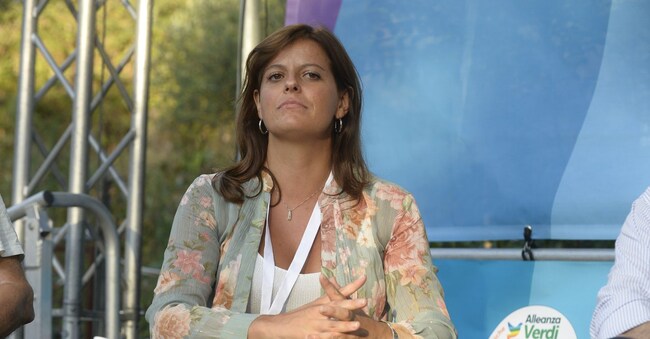
Avs MEP Ilaria Salis reiterates 'forcefully' that she wants to be tried 'in Italy' for the alleged crimes she is accused of by the Hungarian authorities. "The protection of my parliamentary immunity," said the MEP at a press conference in Brussels, "is essential not to evade justice, but to protect me from Hungarian vengeance, an unfair trial and inhuman prison conditions. 'Ever since those days when I was in prison in Budapest,' he added, 'I have always asked for the trial to take place in Italy. I reiterated this also in a hearing, behind closed doors, before the members of Juri, and I reiterate it publicly today with force: I hope that the Italian authorities will intervene as soon as possible, in order to protect a fellow citizen and to ensure that her fundamental rights are respected'. She continues: 'My request is clear: I want to be tried in Italy, not in Hungary. A trial with democratic guarantees is impossible in that country: everyone knows this and denying it means being in bad faith. For a political dissident or anyone perceived as an opponent of the government, justice in Hungary is political, ideological justice. It is revenge and propaganda. The legal instruments to open proceedings in Italy exist and it is up to the Italian authorities to activate them,' he concludes.
EPP: 'In Hungary I would be subjected to merciless persecution'
If Ilaria Salis were to be returned to Hungary she would be subjected to 'ruthless persecution' by the Hungarian government, which continues today at the hands of Prime Minister Viktor Orban, who continues to 'defame me, calling me a terrorist'. This was emphasised by the Avs MEP herself, at a press conference in Brussels, after yesterday's vote in the Juri committee, which voted by a narrow majority against the removal of her immunity. For Salis, 'without a shared democratic basis, every procedure inevitably loses meaning and validity. Parliament's 'Juri Committee' 'recognised what is obvious to anyone who observes without prejudice: in Hungary the rule of law is seriously compromised and the judiciary is no longer independent, as the European Parliament itself has repeatedly pointed out'. And 'I, in such a context, would be subject to certain and merciless persecution. This persecution,' she emphasises, 'is not a hypothesis: I have already been a victim of it during my 15 months of preventive detention, spent in inhuman conditions, on the basis of specious accusations that have never been verified'.
For Salis, 'the doggedness, motivated by ideological reasons, has never ceased. On the contrary, it continues to this day: the Hungarian government, through the mouth of Orban himself, does not stop defaming me, calling me a terrorist and threatening to throw me in jail. All this without even the decency to wait for a verdict, thus violating the elementary principle of the presumption of innocence, which is the basis of any rule of law worthy of the name'. Rule of law that, 'evidently', he continues, is not 'the basis of an illiberal democracy, as Orban smugly defines it. It is not the basis of a democracy, as political scientists define it. Since I was elected to the European Parliament,' she notes, 'the regime's hatred towards me has intensified further'. For the MEP, 'it is no coincidence that the request to waive my immunity was sent the day after my speech in plenary, right in front of Orban. It is no coincidence that when I take the floor in plenary, I am attacked with insults and defamation by the Patriots group, especially by Hungarian Fidesz MEPs. And it is no coincidence that Orban's spokesman," Zoltan Kovacs, "has repeated over and over again that my place would be prison, not Parliament. All this shows a precise will to discredit me as an MEP, through the method of defamation and threats,' he concludes.

