
I’m manipulating you, but I’m only doing it for your own good
Manipulation is morally acceptable when it promotes our long-term well-being

Whether I’m taking part in a public debate or involved in an argument with a friend, a useful tactic is to accuse my opponent of being a manipulator. ‘You’ve manipulated us!’ My opponent has no choice but to try to shake off that label: ‘That’s not true at all! I was just trying to…’. If they fail to do so, then that’s a point for me. The reason is that ‘manipulation’ is an ethically charged concept: it refers to a form of influence that one person can exert over others, but it also carries a negative moral judgement.
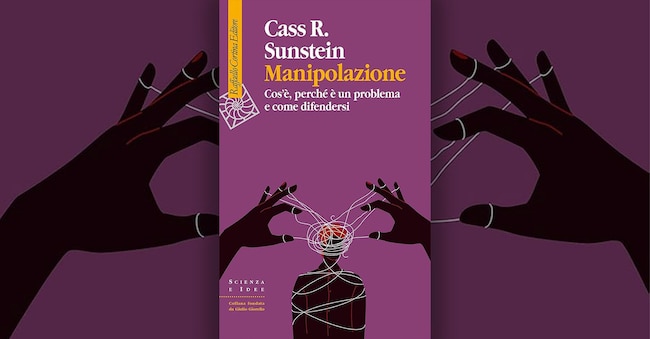
And yet, are we sure that all forms of manipulation are always to be condemned? In this book, in which the eminent Harvard legal scholar engages in a head-to-head debate with a concept so central to our discussions and fears, Cass R. Sunstein demonstrates that some forms of manipulation are morally neutral, whilst others are even beneficial. According to Sunstein, manipulation occurs when deception is carried out through a deliberate disregard for another person’s capacity for reflective and deliberative choice. Yet, when we display photographs of lungs damaged by smoking on cigarette packets, what are we doing if not exactly that? Indeed, in 2012, a US federal court of appeal struck down a regulation issued by the Food and Drug Administration that required cigarette manufacturers to include such images on their packets, on the grounds that the government has an interest in promoting forms of communication that are ‘purely factual and non-controversial’, whereas when it comes to messages aimed at the public’s non-reflective cognitive processes (the ‘System 1’ described by Kahneman and Sunstein), a higher level of justification is required. In fact, those graphic photographs are designed to frighten us, not to convince us: they manipulate us. And yet, many of us agree that this shocking display should continue. If tobacco companies were to replace them with accordion-folded double-page spreads full of sophisticated arguments about how irrational it is to take hundreds of puffs of smoke containing carcinogens every day, more people would die.
So, perhaps manipulation is morally acceptable when it promotes our long-term well-being. Or perhaps the reason for its acceptability runs deeper. It is not enough that it is for a good cause: what makes it tolerable is the fact that, in cases such as these, we end up interpreting it as a form of self-restraint. By recognising how vulnerable we are to our biases and our lack of self-control, we accept that institutions should help protect us from ourselves, just as Odysseus asked his companions to tie him to the mast of the ship so that he would not succumb to the sirens’ song. It is still manipulation, but a form of manipulation that we endorse at a higher level of reflection.
But what about those forms of manipulation that do not fall into these categories and which we nevertheless do not regard as morally reprehensible? Take flirting, for example. It often has a manipulative element. Those who flirt deliberately appeal more to our intuitive and emotional side than to our reason. Yet we do not think it would be morally more correct for them to approach us with a list of arguments about how rational it would be for us, all things considered, to stop looking for better partners and accept this one (if a suitor were to whisper in our ear that we ought to let ourselves be seduced because we are unlikely to find anyone more attractive overall, it would, if anything, be rational to run away).
The range of morally acceptable forms of manipulation therefore seems wider than we tend to think. Sometimes, moreover, behaviour that appears manipulative is not actually so. If tomorrow my son is performing in the annual dance recital and pleads: ‘You absolutely must come! You can’t let me dance in front of your empty seat!”, this is not only not morally wrong – even if it is a bit over the top – but it is not manipulative either. In fact, when a decision I make has consequences for the emotions of the people I love, in order to choose rationally what to do, I need information about how these people will feel; and part of this information may come from observing how willing these people are today to elicit certain emotions in me – such as guilt – in order to guide my decision-making. Inducing emotions to guide decisions is sometimes manipulative (Iago manipulates Othello), but sometimes it is not. And even when it is, it is not necessarily morally wrong.

