Aesthetic medicine

Imcas 2026: Innovation, ethics and new clinical challenges

by Monica Melotti

4' min read

Translated by AI
Versione italiana

4' min read

Translated by AI
Versione italiana

In a field where innovation is racing ahead - including advanced biostimulation, artificial intelligence applied to dermatology, exosomes and advanced lipofilling devices - the CongressFor three days, Paris returned to the centre of the global debate on aesthetic and regenerative medicine. The Imcas 2026 Congress posed a key question: how to reconcile industrial acceleration with academic rigour. The editorial signed by scientific directors Hugues Cartier and Sébastien Garson highlighted the tensions running through the sector: on the one hand, an industry investing heavily in research and development, multiplying the solutions available; on the other, a medical community called upon to assess with solid parameters the real efficacy of treatments often supported by strong media pressure.

Scientific evidence and clinical independence

Loading...

Particular attention has been paid to procedures that are still in the process of scientific consolidation, such as enriched lipofilling and applications of exosomes. Caution in these areas remains essential to prevent the physician from being turned into a mere technological intermediary. In the face of these tensions, Imcas claims a line of operational independence. Through instruments such as the Imcas Fund, the congress finances academic hospital studies in a transparent manner, free of commercial interests, reinforcing the centrality of scientific evidence. Projects such as CELT and EXOCOMPARE are designed to provide solid comparative data and objective evaluation tools to support clinical decisions.

The new regenerative frontier

Among the central themes of this edition, regenerative medicine emerges as one of the most dynamic and evolving frontiers. Today, the approach to ageing no longer focuses only on correcting visible signs, but looks at a broader strategy: strengthening tissues, preventing their deterioration and stimulating the body's natural repair mechanisms. Treatments such as PRP (platelet-rich plasma), extracellular matrices and exosomes are mentioned as promising prospects. In the context of regenerative aesthetics, IBSA has consolidated its position as a key player. The company presented a new scientific narrative centred on tissue regeneration, alongside a portfolio of advanced solutions. Of particular note was the nomination of PROFHILO® STRUCTURA for the Industry Innovation Awards, indicated for the restoration of facial adipose tissue and developed with NAHYCO® technology. The device acts on the superficial adipose compartment by supporting skin volume, structure and hydration. Clinical evidence shows a significant increase in tissue thickness and a 95% satisfaction rate at three months, opening up a new category in regenerative aesthetics, with global expansion expected in 2026.

Ozempic Face, the impact of rapid slimming on the face

The Congress also devoted space to the Ozempic Face phenomenon, a side effect observed in those who use semaglutide and tirzepatide to achieve rapid weight loss. These drugs, which were created to treat type 2 diabetes and obesity, are also increasingly used by overweight people who want to lose weight quickly. Rapid weight loss can result in a less supported face: loss of tone, hollowed-out cheeks, more tired features. Into this scenario comes Thermage FLX by Solta Medical, a non-invasive monopolar radiofrequency treatment that, in a single session and without downtime, firms tissues and redefines the oval. Professor Paolo Giovanni Arca, a specialist in regenerative aesthetic medicine, has used it in Ozempic Face cases, observing a progressive improvement in skin quality. The technology acts in depth by stimulating collagen neosynthesis, with a natural and harmonious lifting effect.

The structural glow that improves skin quality

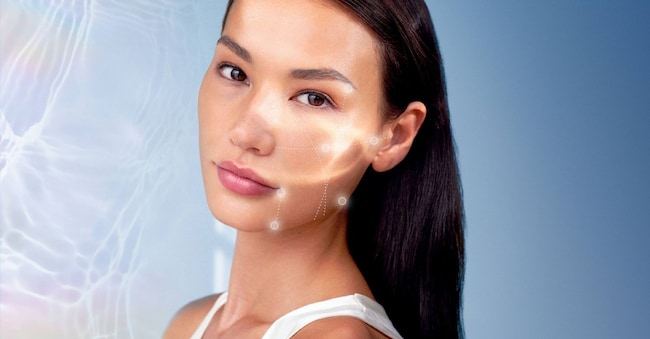
In the panorama of aesthetic medicine, there is a growing demand for treatments capable of improving the quality of the skin without changing its features. Responding to this demand is babyGLOW™, the new protocol signed Teoxane, designed to restore light and freshness in a natural and progressive way. The new protocol, based on free hyaluronic acid associated with a dermo-complex with amino acids, antioxidants, vitamins and minerals, is designed to improve radiance, hydration and skin quality. Inspired by contouring and highlighting techniques, the treatment involves micro-injections into 8 strategic points of the face to optimise light reflection, soften shadows and gently redefine contours. Results are visible from the very first session, with minimal downtime. The data show high satisfaction: more than 98% of professionals are satisfied, 97% report an improvement in skin quality and 95% of patients report no downtime.

Multidisciplinary approach to women's intimate health

Within the Congress space was also given to women's health with a session entirely dedicated to the menopause, organised in collaboration with the World Society of Cosmetic Gynecology (WSCG). A moment of scientific discussion that focused on Genito-Urinary Syndrome, a condition that is still too underestimated, but which significantly affects the quality of life of millions of women. Dr. Monica Baldessin, a specialist in general surgery with a master's degree in functional gynaecology, presented a lecture entitled 'Ladylift laser, clinical applications', focusing on the recognition of symptoms of Genito-Urinary Syndrome and the personalisation of treatments through the use of new-generation medical devices and carboxytherapy. The MyGyna project was also presented, an initiative of Dr. Baldessin that stands out for its multidisciplinary approach and its desire to provide women with concrete answers to disorders that are often underestimated.

WOMA is born: female leadership in European aesthetic medicine

The Congress was also an opportunity to launch WOMA - WOmen of Medical Aesthetics, a new European network founded by female leaders in the field with the support of Solta Medical, to strengthen the representation of women in aesthetic medicine, dermatology and surgery. The initiative starts from the realisation of a paradox: although women are widely present as patients and professionals, they remain underrepresented in the scientific debate and in decision-making roles. The aim is to reposition aesthetics as a medical discipline oriented towards quality of life, longevity and long-term care by promoting female leadership and scientific dialogue.

Copyright reserved ©
Loading...

Brand connect

Loading...

Newsletter

Notizie e approfondimenti sugli avvenimenti politici, economici e finanziari.

Iscriviti