
IMF sounds the alarm over public debt: ‘Record levels – we can’t put it off any longer’
Managing Director Georgieva: all the pressures of this delicate phase are being felt in fiscal policy and are forcing difficult choices. The outlook for growth depends on “our ability to successfully address three key factors: the rapid spread of artificial intelligence, energy prices and high public debt”.

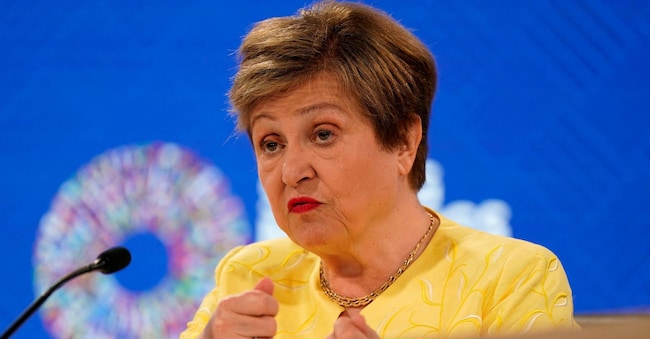
It is no longer possible to postpone the consolidation of public finances, particularly in advanced economies and at high levels of debt. The IMF’s Managing Director, Kristalina Georgieva, warns that all the pressures of this delicate phase of energy shocks, inflation and rising yields are taking their toll on fiscal policies and forcing governments to make difficult choices. According to the IMF, bringing public debt back under control can no longer be postponed.
Three key factors
Georgieva’s remarks were made in Singapore, where on 7 October she delivered the customary speech ahead of the annual meetings of the IMF and the World Bank, scheduled for next week in Bangkok. As always, we will have to wait for the publication of the IMF report on Tuesday 13th for growth forecasts and a review of previous estimates. Georgieva, however, outlines the direction in which the global economy and those of individual countries are heading. Discussions will centre on the rapid spread of artificial intelligence, energy prices and, indeed, record levels of public debt. The prospects for future growth depend on “our ability to successfully address” these three factors, Georgieva warns.
In its July update, the IMF had forecast global GDP growth of 3 per cent in 2026 and 3.4 per cent in 2027, broadly in line with the April forecasts, but below the average of 3.5 per cent recorded in 2024–25. In this challenging year of 2026, “the global economy,” says the Fund’s chief, “is being pulled in two opposite directions: the negative shock to energy supply and the positive shock to demand, driven by artificial intelligence”.
And then there are the wars. Georgieva anticipates that the new growth forecasts will show more negative figures for countries ravaged by conflict, in Ukraine and the Gulf. Milder effects are also observed in other vulnerable economies – those that depend on fossil fuel imports and lack sufficient fiscal buffers to cushion the blow (the list is very long and includes Europe).
Artificial intelligence
Higher growth figures are likely to be seen in the countries leading the way in Artificial Intelligence. The IMF estimates that AI hardware and related technology products account for more than a tenth of global trade in goods. This trade drives the economies integrated into its value chain. So, says Georgieva, the United States, China and India – which import hardware and build the infrastructure needed to become key AI suppliers – Alongside them are five of the other seven economies in the top 10 – all of which are Asian – supplying everything from high-end microprocessors to memory chips, chip-making machinery and robotics.


