
Immersive reality sees better with smart glasses and Ai
Globally available solutions mark the maturity of the offering between new vision technologies and native Ai-based products
Key points
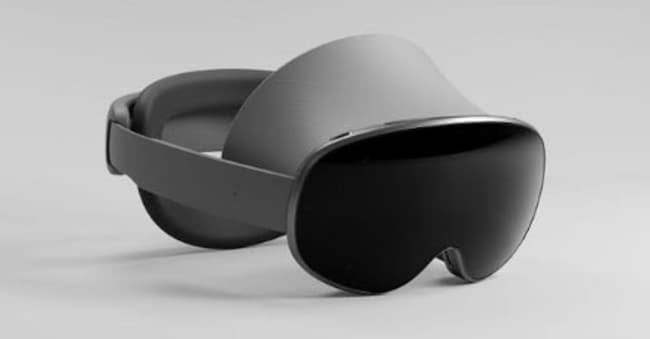
Some call it a breakthrough year: 2025 saw the launch of 17 new models of Xr technologies, bringing the total available today globally to 93. This growth is more qualitative than quantitative, the experts point out, because Ai has changed the face of the offer: while in the recent past virtual and mixed reality visors dominated, today more everyday-oriented solutions such as smart glasses prevail (11 debuted last year, compared to 6 traditional visors), reflecting a sector that aims to intercept broader application scenarios.
The first Ai-native device
In the hardware sphere, one of the most significant announcements was the Samsung Galaxy Xr, the first 'AI-native' device, in which artificial intelligence is an integral part of the device's architecture to manage sensors and content in real time, significantly increasing the fluidity and level of customisation of interactions with immersive applications. On the software front, however, the arrival of the Android Xr operating system opens up horizons towards greater interoperability. "Currently," explains Claudio Conti, Director of the Xr Technologies & Immersive Experience Observatory of the Politecnico di Milano, "the ecosystem is fragmented, with multiple platforms and devices that are not always compatible with each other. The consequence is that companies fear strong lock-ins or high costs of porting a solution from one device to another. If Google's system became the dominant standard, it could reduce this fragmentation, facilitating the deployment of extended reality applications on a wide range of products'.
The feeling is that, as has happened in other digital contexts, the number of operational reference platforms will be extremely small (2 or 3 according to Conti) while the increased standardisation will still expand the number of device makers and developers involved.
Conservative companies, B2C prevails
The question that recurs among insiders is: how many companies will be able to turn experiments into structured projects and integrate Xr technologies into operational models? Apart from the fact that about half of the initiatives are not publicly declared, the company demand is proceeding cautiously. From 2020 to date, 735 experiments developed by Italian companies can be counted, of which 290 in the B2B/B2E (Business to Employee) sphere and 445 in B2C. In the business world, there are 48 new projects registered in 2025 (7% more than the previous year), ranging from support to the workforce in the field to prototyping, and mainly concern three sectors: manufacturing concentrates 30%, followed by healthcare (18%) and utilities & energy (11%).
The impact of immersive solutions
In consumer terms, on the other hand, the 71 new projects of the past year mark a decrease of 9% and maintain a predominantly experimental character, often linked to marketing and engagement. Yet, where Xr technology has been adopted, the results are tangible: 86% of the companies that have implemented immersive solutions declare that they have fully or largely achieved their objectives, 66% expect a significant impact on processes in the next three years and more than half intend to develop 'proof of concept' within twelve months.

