
In 2025, Flixbus expanded routes to medium-sized towns and historic villages
Strengthened routes to major hub airports
by Enrico Netti
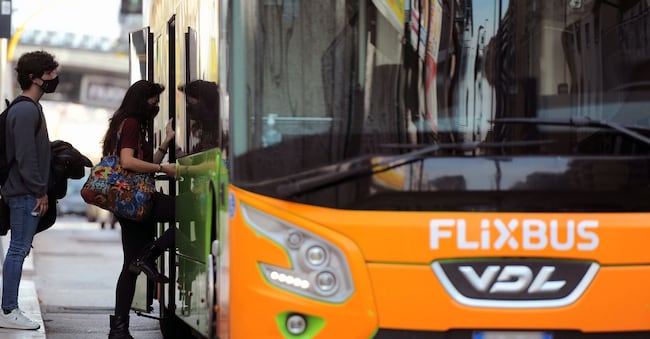
Towards towns rich in art and history and towards what in the recent past were called borghi, minor destinations on the Peninsula. These are the ones on which Flixbus last year focused its activity thanks to the expansion of its network: the growth of medium-sized Italian cities compared to the large traditional destinations, coupled with the increased competitiveness of the bus even on routes covered by high-speed trains, driven by new investments. Thus in 2025 FlixBus also recorded an increase in demand on routes such as Milan-Bologna (+7% compared to 2024), Milan-Genoa (+12%) or Rome-Naples (+10%),
Thus in Tuscany, bookings for Lucca increased by 30% in 2025, while the flow of passengers to Florence remained constant. A similar situation occurred in Emilia-Romagna - where bookings for Reggio Emilia grew by 16%, against stable demand for Bologna - and in Campania - where demand for Benevento grew by 8%, against 2% for Naples. The bus plays a crucial role, as demonstrated by the growth in demand from places such as Oulx, in Val di Susa (+19% compared to 2024), or the historic villages of Muccia, in the Marche (+10%), and Candela, in the Monti Dauni (+33%).
Loading...
there has also been the strengthening of FlixBus routes in particular to the major airport hubs of Italy: an effort that has been amply rewarded over the past year, not only by the residents of these cities who have been able to count on a direct connection to return home, but also by foreign tourists who have landed at the airports in question. From Fiumicino, journeys to Macerata (+10%), L'Aquila (+19%), Chieti (+93%) and Taranto (+74%) increased. In the north, for example, the Milan Malpensa-Reggio Emilia (+24%), Bergamo Orio al Serio-Ferrara (+21%) and Venice Marco Polo-Udine (+21%) routes have grown. Finally, in the south, Naples Capodichino-Andria stands out, with passengers more than tripling, and Catania Fontanarossa-Agrigento (+28%).
Then there is the commitment to villages and routes such as the Via Francigena travelled by pilgrims, with which an agreement has been renewed, providing discounts to reach 30 stages of the route in Italy, including several little-known locations. Today FlixBus reaches a total of around 300 destinations in 19 Italian regions. About 40 per cent of its stops in Italy are in municipalities with fewer than 20,000 inhabitants and since its arrival in Italy it has been used by more than 50 million passengers.
Copyright reserved ©


Brand connect
Loading...
