
Derelict buildings: in 2025, there were almost 630,000 – an increase of 129 per cent compared with 2011
According to Giorgio Spaziani Testa, president of Confedilizia, the deterioration of the housing stock must also be addressed by politicians

Key points
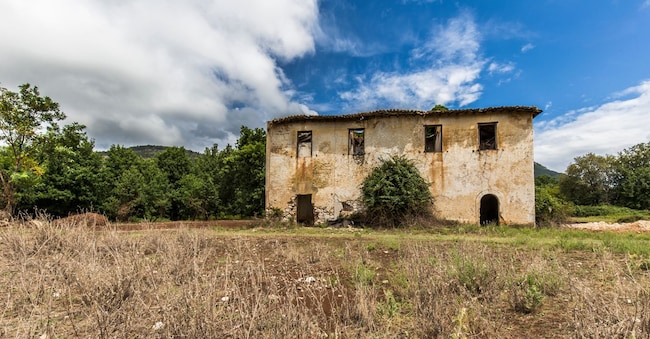
There are 635,754 thousand in Italia dilapidated properties, that is, buildings in a state of total ruin belonging to cadastral category F/2. This figure, relating to 2025, represents a 1.1 per cent increase compared with the previous year: in 2024, there were 629,022 such properties. This is revealed in the report ‘Cadastral Statistics 2025’ compiled by the Italian Revenue Agency. Confedilizia points out that when the IMU was introduced in 2011, the number of derelict buildings stood at 278,121. Compared with that time, the increase has therefore been 129 per cent.
The IMU issue
In 90 per cent of cases, these arebuildings owned by private individuals and, as the Confedilizia statement goes on to say, they often fall into disrepair not only due to the passage of time, but also as a result of deliberate actions by the owners. The IMU, explains the Italian Confederation of Property Owners, also applies to properties declared ‘unfit for use or uninhabitable’ until they are classified as dilapidated properties. Measures such as removing the roof can therefore exempt the building from property tax. According to Giorgio Spaziani Testa, president of Confedilizia, the deterioration of a significant portion of Italia’s property stock must also be addressed by policymakers, taking action on several fronts: from infrastructure to urban regeneration, from redevelopment to the revitalisation of local areas. Furthermore, Spaziani Testa adds, ‘it is also essential to tackle the issue of the IMU, a property tax which, by being levied annually on properties that are often unprofitable, contributes to accelerating their deterioration rather than promoting their restoration’.
The situation in Italia
Overall, according to the Revenue Agency’s report, by the end of 2025 the Italian property stock consisted of over 79 million properties or parts thereof. Over 68 million properties were registered in the ordinary and special cadastral categories, with an assigned rental yield. More than 3.8 million properties, on the other hand, belonged to category F, which comprises units unable to generate income, even if only temporarily. Around 7.2 million, on the other hand, were non-registrable common properties – that is, jointly owned properties that do not generate income – or units still under construction (approximately 64,000).
Around 90 per cent of Italia’s housing stock is owned by private individuals, whilst 10.8 per cent belongs to non-private entities and only 0.2 per cent consists of communal property. Compared with 2024, the total housing stock has increased by 465,000 units, representing a rise of 0.6 per cent.
The total cadastral income in 2025 amounts to over 39 billion euros, of which approximately 61 per cent relates to properties owned by individuals. The remaining 39.4 per cent is held by non-natural persons. Compared with 2024, the income has risen by almost 263 million euros, representing an increase of 0.7 per cent. On average, the income stands at 570 euros, but falls to 385 euros for properties owned by natural persons. For non-natural persons, however, the average rental income is almost €2,200 and around €310 for taxable communal properties.

