
Stable consumption in 2026 and inflation at 3%

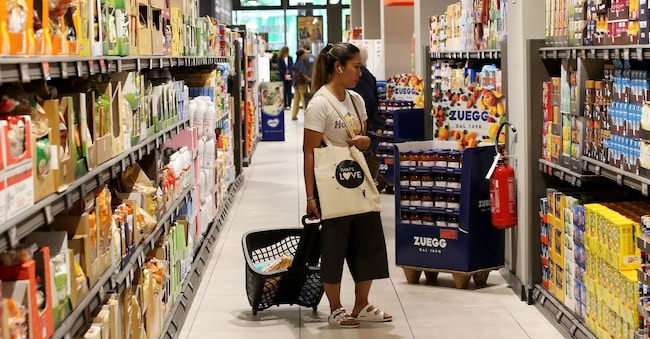
Stagnation in consumption and rising shelf prices, with possible price increases of at least 3% for the current year. "After a positive 2025 in the first four months of 2026, the trend of sales in the large-scale retail sector remained positive, with stable volumes and slightly rising prices," Enzo Frasio, managing director of NielsenIQ, told Il Sole 24 Ore yesterday on the first day of the 41st edition of Linkontro, a discussion event held at Forte Village near Cagliari. More than 700 managers from 245 large-scale retail and FMCG companies took part in the event.
The picture could worsen in the second half of the year when the industry's price lists could be adjusted for higher energy costs and raw material price increases due to Operation Epic Fury and the closure of the Strait of Hormuz. "A 10 per cent increase in energy costs leads to a 1-1.5 per cent increase in shelf prices, which comes after 3-6 months," explains the CEO. "The current energy price increases are even higher than 10 per cent but are not yet reflected on the shelves. It is a complex and articulated picture'. This dynamic was observed by the multinational in 2023, comparing price changes after Russia's invasion of Ukraine.
NielsenIQ data show a discrete start to the year with a first four-month period that in value terms sees +2.6% on total sales and +1.9% for consumer packaged goods. Consumer electronics and durable goods suffered with a -1.2% despite a +2% in March.
On the price front, NielsenIQ data recorded a decrease in April (-7.4%) for extra virgin olive oil and butter (-4.8%). On the other hand, increases were recorded for chocolate bars (+13%), ground beef (10.7%), fresh filled pasta (+10.2%) and eggs (9%). Price lists that make Frasio say: "the picture is complex and articulated"
In the first months of the year, compared to the same period in 2025, there was an increase (+4%) in value sales of fresh produce, which drove growth. The trend was good for fruit and vegetables, butchery and poultry (+6.8%) and fresh packaged products (+3.7%). Packaged food is slowing down (+1.3%) while cured meats are losing 2.6%. In short, fresh food, to be consumed within a few days, is being chosen. Moreover, the consumer reaction is to go in pursuit of maximum convenience. The trolley becomes lighter, families with less spending power buy the bare essentials and increase their purchasing frequency as an anti-waste strategy.

