
In Abruzzo in Santo Stefano di Sessanio where with Sextantio Cucina the stories of the village become dishes
The recovery of the small centre was started more than 20 years ago, a few months ago Dino Como's food and wine project started

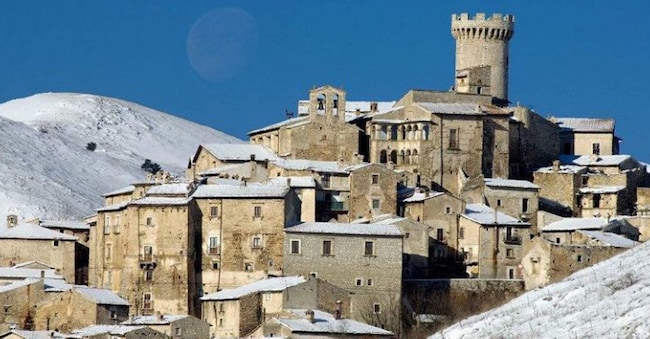
Last May, the Accademia dei Lincei in Rome hosted a conference dedicated to synaesthesia in its magnificent premises in Via della Lungara, two days in which they discussed how this literary artifice has also been recognised as a neurological condition. It seems that the ability to simultaneously perceive sensory stimuli from different sources belongs to less than 4% of the world's population, but occurs significantly more often in artists. However, there are places that can sharpen this sensitivity even in the least inclined souls. One of these is undoubtedly Santo Stefano di Sessanio: in Abruzzo, in the Gran Sasso and Monti della Laga National Park, at an altitude of 1250 metres, stands this austere medieval fortified village, saved from oblivion - a fate unfortunately common to many of its peers in inland Italia - by the Sextantio project.
Daniel Kihlgren's project
It was entrepreneur Daniele Kihlgren, some 20 years ago, who gradually recovered some of the many abandoned peasant houses and turned them into the rooms of a hotel (which he himself does not like to define as 'diffuse') of peculiar charisma, where everything, from the hand-woven blankets to the 19th-century furnishings recovered in the cellars, was capable of authentically recounting the life of the past. He therefore turned to the Museo delle Genti d'Abruzzo in Pescara, with anthropologist Annunziata Taraschi slavishly following each stage of recovery and reconstruction. Where is synesthesia to be found in all this? The answer is obtained by sitting at one of the tables of Sextantio Cucina, the new restaurant opened in Santo Stefano, a pure gastronomic declination of the hospitality experience. Like the furnishings, the recipes of the past have been recovered through meetings and interviews, and have thus been protected from extinction just like the village.
A tale of flavours
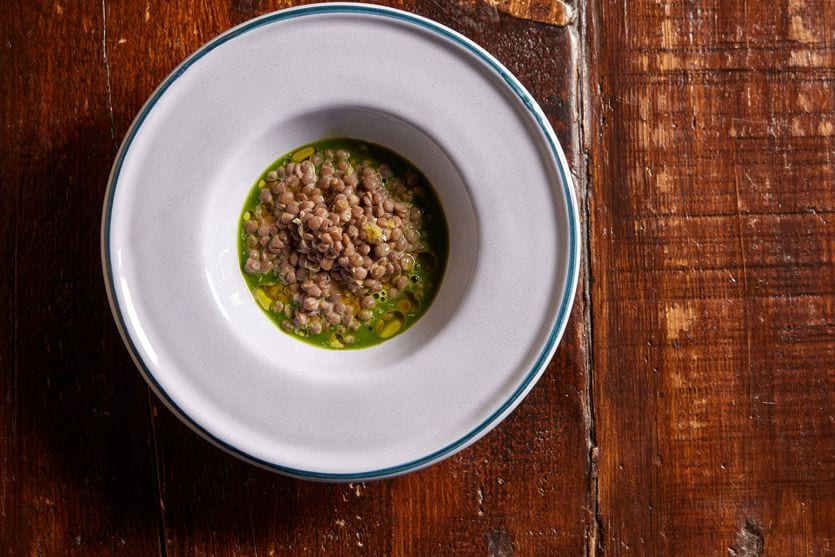
Signing this tale of flavours is Dino Como, a 36-year-old chef, also from Abruzzo, who lives the project as a mission. To devote himself to Sextantio Cucina, he left Niko Romito's Reale in Rivisondoli, the tristate-starred chef whose sous chef he was for 10 years. First of all, the context: the restaurant is set up on the ground floor of an old wool dyeing factory, which was once the wealth of the village, owned by the Medici who, before becoming bankers, built their fortune precisely with the prized fleece of local sheep (the protagonist of another recovery project being conducted in the area thanks to Pnrr funds). Tables and chairs are salvaged furniture from the late 19th century, the ceramics produced by local craftsmen. The fabrics come from wooden looms and are dyed with natural pigments. Then, the menu: Taraschi's interviews resulted in a collection of about 70 recipes, in which ingredients and procedures are defined by the seasons, the calendar of agricultural activities, festivals and needs. Como has developed two routes, 'Roots' and 'Evolution', the former following tradition in a more didactic way than the latter. Synaesthesia brings Sextantio's philosophy to the plate: hints of smoke and bitter tones dominate, generated by barbecuing and in which echo the existences sustained by fire, an element whose traces have been preserved on the dark walls of the rooms. Vegetables and pulses come from the vegetable garden, and an ancient orchard is being planted. Among the proposals not to be missed, an absolute balsamic of bay leaves that envelops the small local lentils, the hen broth that restores reassuring intensities of yesteryear, the chestnut ravioli in an intense cabbage and nutmeg broth. Surprising is the radicchio with carrot and cinnamon, unfailing is the goat, but with oxidised lemon, and the roast sheep that leaves no room for waste. For dessert, a reinterpretation of the bread&sugar of pre-summer childhood and lettuce leaves that with vanilla and lemon become custard, like those little treasures that poor cuisine knew how to magically create.


