
In ancient Aragon is Zaragoza, land of wine and history
The city is recognised as the world capital of Garnacha, a grape variety that bears witness to the territory and its thousand-year-old traditions

5' min read
5' min read
It is the region of Aragon that holds the essence of ancient Spain. A land that echoes in history texts evoking kingdoms, conquests, cultures and peoples, and that has been able to preserve a strong and authentic identity. A glorious past whose flavour can even be tasted thanks to Garnacha, an indigenous grape variety with roots stretching back over the centuries. The journey to Aragon starts from its capital Zaragoza, the ideal starting point to discover the historical, scenic and gastronomic treasures of a region to be experienced and savoured. Because today Zaragoza is also recognised as the world capital of Garnacha, witness to the region's relationship with this intense and ancient wine. Strategically located between Madrid and Barcelona, Zaragoza is easily accessible from Italy with direct flights.
Discovering Aragonese Baroque Art
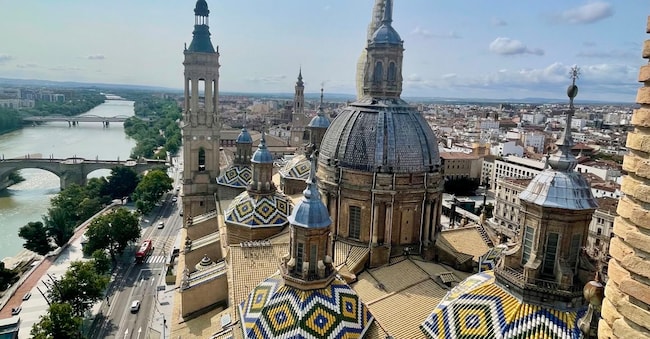
.Zaragoza reveals itself as a city of harmonious contrasts, always accompanied by the whispers of the cierzo, the famous wind blowing from the north-east, and the flow of the Ebro river. Founded by the Roman emperor Caesar Augustus, who gave it his own name, Caesaraugusta, in more than two thousand years of history it has been a place where four cultures - Roman, Muslim, Jewish and Christian - have coexisted, giving rise to its monumental heritage, a variety that has made it a dynamic and welcoming city. To grasp the soul of Zaragoza, it is essential to reach the emblematic Plaza del Pilar on which stand two cathedrals: the Basilica of Our Lady of Pilar and the Seo, the Cathedral of San Salvador. The former, an imposing treasure of Aragonese Baroque art, is linked to Our Lady of the Pilar, a pillar about thirty-five centimetres tall that tradition says came from Jerusalem on 2 January 40 AD. Considered an international centre of Marian pilgrimage, the basilica experiences the greatest popular participation every 12 October with the offering of flowers to the Virgin of the Pilar, a procession in which people have to dress in the traditional clothes of their Spanish region. The basilica houses magnificent frescoes by Francisco de Goya and, from the top of one of its four towers, panoramic views of the city and the Ebro river can be admired. Older, however, is the nearby cathedral of El Salvador, also known as La Seo, which stands on the remains of the ancient Roman forum and Muslim mosque. Today, this building, Zaragoza's first Christian cathedral, is an example of different artistic styles ranging from Romanesque to Baroque, from Mudejar - the 14th century style resulting from the coexistence of Muslims and Christians - to Gothic and Renaissance, and boasts a rich heritage including the spectacular Mudejar exterior wall, made of bricks and glazed ceramics, of the adjoining Parroquieta de San Miguel Arcángel. The journey through the different historical eras that have characterised Zaragoza continues in the Aljafería, the Palace of Joy, the current seat of the Parliament of Aragon, an 11th-century fortress in which the city's thousand-year history and architecture can be rediscovered.
Wine and gastronomic tradition
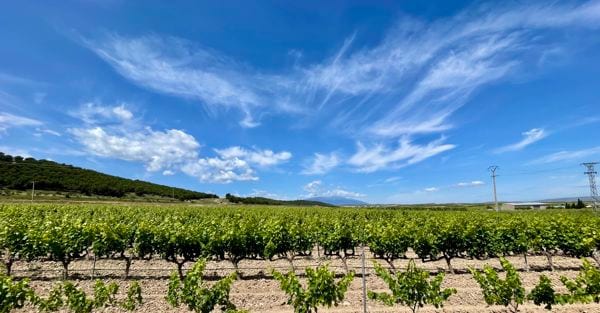
.In Zaragoza, historical and cultural fascination is combined with the enogastronomic theme of Garnacha wine, one of the five most popular grape varieties in the world. An ancient native Aragonese grape variety that is best adapted to the low rainfall and very windy climate, this wine has become one of the pillars of Aragon's excellent gastronomic panorama, which boasts four wine designations of origin, the first three of which are located in the province of Zaragoza: Campo de Borja, an area of vineyards at the foot of the Moncayo, the highest mountain in the Sistema Iberico chain, where a visit to the Bodegas Aragonesas winery is recommended to taste excellent wines; Cariñena, one of the wine-growing areas richest in tradition; Calatayud, which stretches across hills and plateaus up to a thousand metres; and Somontano. Zaragoza, recognised as the World Capital of Garnacha, has become a point of reference for this wine, whose cultural heritage it enhances by organising themed events - the first edition of the Garnacha Festival was held from 30 May to 8 June; visits to wineries and vineyards; food and wine experiences; and the creation, in the heart of the city, of the ornamental Garden of Garnacha vineyard. Aragon is also revealed through the flavours of its cuisine, which combines all the excellence of its territory. In addition to the prized Garnacha wines, Aragonese Ternasco lamb, Teruel ham, oil from Lower Aragon and the Sierra del Moncayo also have the denomination of origin. Among the tastiest and most special products are borage, black truffles, saffron from Jiloca and a wide variety of local cheeses. Zaragoza is known for the Tubo, the tapas tasting area, the central market, and restaurants that skilfully combine traditional flavours into avant-garde culinary experiences, such as at La Clandestina or La Flor de Lis. The city is also famous for its chocolate-making tradition, it was in 1534 that the monks of the Monastero de Piedra received the first cocoa; among the local delicacies is Frutas de Aragón, candied fruit covered in chocolate, the authentic one can be bought in the historic Fantoba confectionery.

Hospitality
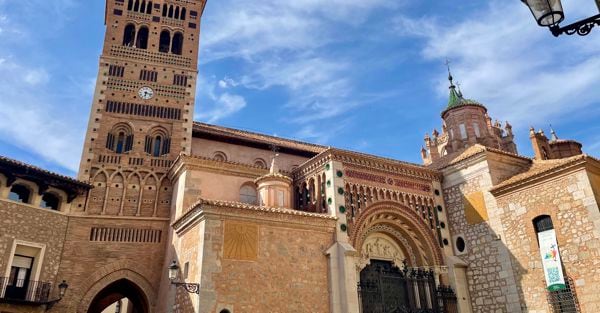
For a charming stay in the heart of Zaragoza there is the boutique hotel Avenida. The journey into Aragonese culture and gastronomy continues in the province of Zaragoza with a visit to the Monasteiro de Veruela, the first Cistercian monastery in Aragon, which now also houses the wine museum. Famous for the popular Cipotegato festival celebrated on 27 August, the town of Tarazona invites you to visit its historic centre and the Cathedral of Santa María de Huerta, a unique example of Gothic, Mudejar and Renaissance heritage. For a special stay in the area there is the Belbuente Castle, a fully restored 10th-16th century palace-castle rich in history, where guests meet Spanish writer Luis Zueco, who runs the establishment. Leaving Zaragoza, the journey continues to another province of Aragon, that of Teruel, where culinary excellence tells ancient stories. Such as that of the Sierra de Albarracín cheese factory, which has been producing delicious, award-winning artisanal cheeses since 2006, following the tradition of local shepherds. It is also thanks to this product that one discovers Albarracín, one of the most beautiful villages in Spain, a medieval and Muslim architectural legacy of great charm; for a gourmet stop in this village there is the restaurant El portal. Before leaving Aragon, the suggestion is to go as far as Teruel to admire again the incredible heritage of the Mudejar style that, in this town, is expressed through its exceptional towers and the precious coffered ceiling of the Cathedral of Santa María de Mediavilla, but the town also enchants for the legend of its lovers, to whom a mausoleum is dedicated that is worth visiting. A journey through beautiful stories, tasty flavours and the intense perfume of Garnacha.

