In Arles, photography reveals new narratives
At the Rencontres the focus is on shots by Japanese women artists

4' min read
4' min read
In the age of images created with artificial intelligence, the Rencontres de la Photographie festival in Arles aims to create an audience capable of looking at photography with a critical eye. Founded in 1970 and now in its 55th edition (until 29 September), it is one of the most important events for the medium of photography internationally and a milestone in an artist's career. Every year it attracts visitors from all over the world: 145,000 last year, who contribute through ticket sales and merchandising to keep the event alive. More than 50% of the total budget of €7.5 million comes from these two items; another 30% is public money (state, regional and municipal) and about 17% comes from partnerships. These funds are used to organise a rich programme of more than 30 exhibitions spread over historic sites in Arles, such as the Church of Saint Anne, where there is an exhibition dedicated to graffiti culture, with names such as Bruce Davidson or Jamel Shabazz, or the Cloister of San Trofimo, where there is an exhibition by the French Vasantha Yogananthan, born in 1988, who since 2000 has been portraying Provence and its inhabitants in an intimate and poetic way (on Artsy The Photographers' Gallery in London sells her works from 1.500 a 6.000 €). The well-known artist Sophie Call has chosen to exhibit in the Roman Cryptoporticus, a damp place, unsuitable for exhibiting photographs, where she has decided to make one of her works, already damaged years ago by mould and therefore destined for destruction, disappear for good, or 'die'.
Japan
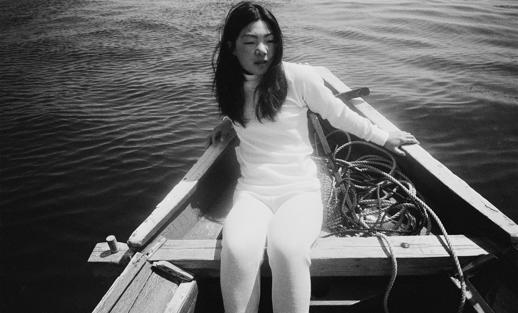
."Following a line already started, we have given space to women in photography," commented the festival director, Christoph Wiesner. "After the Northern European countries in 2023, this year a major exhibition is dedicated to Japanese women from 1950 to the present. Many of them were active at the same time as the great masters such as Daidō Moriyama and Nobuyoshi Araki, but they did not have the same visibility. From Shima Ryū, one of the pioneers of the late 19th century, to Mari Katayama, born in 1987, seen at the Venice Biennale 2019 with her self-portraits that sublimate physical disability, the exhibition includes 25 female photographers among whom only Rinko Kawauchi had already been seen in Arles and is supported by Kering. The same French luxury group awarded the Women In Motion Award to another Japanese woman, Ishiuchi Miyako, born in 1947, for her moving portraits of her late mother through objects that belonged to her, taken between 2000 and 2005 and presented at the Venice Biennale in 2005. "I had never thought about my mother's body, and now I was discovering it in detail, thanks to photography," said the artist. "Taking a photograph means making visible the invisible things that lie beneath the surface". And it is from this statement that director Christoph Wiesner took his cue for the title of the 2024 edition, called 'Beneath the Surface' to emphasise the artists' ability to dig deep to bring out new narratives.
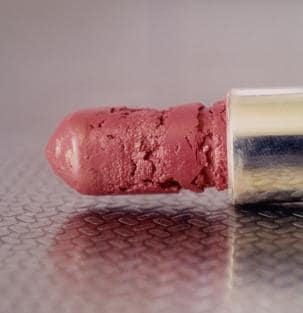
Japan is also the protagonist of another exhibition on the aftermath of Fukushima, which highlights the destructive extent of the cataclysm and the consequences on local people and society, as well as the exhibition of Uraguchi Kusukazu (1922-1988), who for 30 years documented the work of the so-called 'women of the sea', the fisherwomen on the Pacific coast of Shima.
Social inequalities
.Another great protagonist to whom Arles pays tribute is the documentary filmmaker Mary Ellen Mark, "capable of showing another face of America, that of those who live on the margins, beyond the stereotype of success," explains Christoph Wiesner. Her retrospective, which takes place at the Espace Van Gogh, in the former hospital where the Dutch painter was hospitalised after the famous ear cutting, is one of the most visited and popular exhibitions in Arles (at Howard Greenberg Gallery in New York, prices range from $6,000 to $20,000).
Among the emerging artists, however, is the South African Tshepiso Mazibuk, born in 1995 (price range €1,500-2,300 at the artist's), who won the Discovery Louis Roederer Public Award and also shows social inequalities within society. This time the focus is on Johannesburg and the so-called "Born Free Generation", the generation called free because it was born after Apartheid, to which Mazibuko herself belongs, analysing the meaning of this definition today.