
Celebrations for St Francis in Assisi. Zuppi: ‘War is not inevitable’
Eight hundred years since the death of Italia’s patron saint. Meloni: ‘An Italian who shaped the identity of a nation’. Pope Leo also spoke at the Angelus: ‘Let us persistently ask for the gift of peace’.
by the Rome Editorial Staff
 Aggiungi Il Sole 24 Ore
ai preferiti su Google
Key points
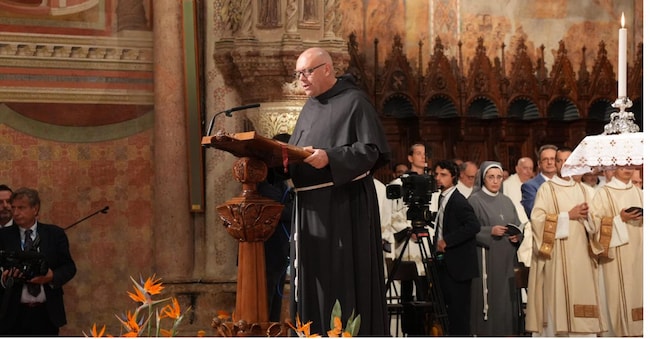
To the festive tolling of the bells of the Basilica of St Francis at 11.59 pm yesterday, 3 October, celebrations began in Assisi for the patron saint of Italia, marking the 800th anniversary of his death. The President of the Republic, Sergio Mattarella, took part and addressed the nation from the Loggia of the Sacro Convento. This year’s guests at the celebrations include all the regions, rather than just one as is traditional. Umbria provided the oil for the lamp on the saint’s tomb, which was lit by the Mayor of Assisi, Mr Stoppini.
Zuppi: ‘War is not inevitable’
‘In this day and age, we are tempted and seduced by a culture of power – vulgar and intrusive, deceptive – born of misplaced emphasis and brazen, colossal economic interests, of nationalisms that ruin nations, and of campaigns that create enemies rather than seeking what unites us.’ Cardinal Matteo Zuppi said: “His world and ours,” he adds, “is a world marked by terrible wars,” but “Francis reminds us that war is not our destiny. There is no time to lose; the divider deceives us into believing that we find peace through weapons rather than through dialogue and the rule of law.”
Mattarella: ‘May the world be illuminated and point the way to peace’
The Head of State, Sergio Mattarella, echoed this sentiment: ‘In these times marked by senseless and cruel wars, by so much violence, manipulation and arrogance – as Pope Leo XIV said a few days ago, the hope is that the sun of Francis may illuminate the world, convert minds hardened by hatred, and point the way to peace, hope and serene, fraternal coexistence’. Mattarella added: “Today, terrible conflicts are causing bloodshed in many parts of the world, and in some quarters there is even a return to blessing weapons and placing armies under religious banners: Francis teaches us that there is no greater sin than killing other people in the name of God. We would not do justice to the saint of Assisi if we were to reduce his figure to that of an ecologist, a pacifist and a charitable worker ahead of his time’. ‘His poverty, so sought after and desired, was a concrete break with the idolatry of money; his humility was in no way naive; it sprang from a demanding thirst for truth; his obedience was not submissiveness, but a laborious, thoughtful search for the higher reasons behind the unity of the Christian people and of the Church’.
Meloni: an Italian who shaped the identity of a nation
Prime Minister Meloni said: ‘Today we celebrate our patron saint, St Francis, the most lovable, the most poetic and the most Italian of our saints. Today we remember a man who left everything behind to find everything, a saint who taught the world the joyful simplicity of love, an Italian who shaped the identity of an entire nation.”
Tajani: Francesco highlights the importance of building bridges
“800 years after the death of St Francis of Assisi, his message of faith, peace, brotherhood and respect continues to resonate throughout Italy and the world. At a time still marked by wars, conflicts and divisions, his example reminds us of the importance of building bridges, promoting dialogue and looking after one another,” writes Deputy Prime Minister Antonio Tajani in a post on X.

