Stories

In Australia where Vitale Barberis Canonico protects the most precious wools

Journey to the farms to discover the 'Wool Excellence Club' project of the Piedmontese wool mill, which has been supporting the rare production of Saxon Merino for 10 years

by Chiara Beghelli

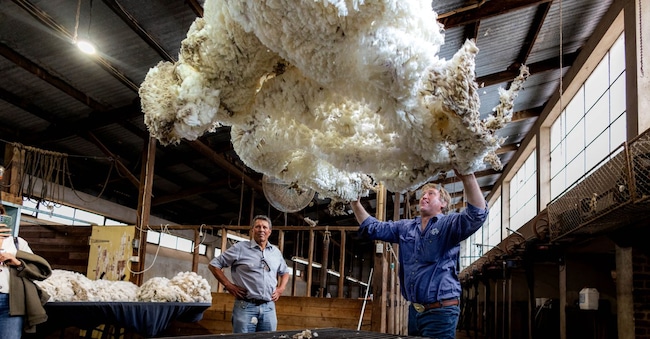
Duncan Barber esamina un vello appena tosato nella sua fattoria di Coliban Park, nello stato del Victoria

6' min read

6' min read

On the large table in the living room of the Taylors' villa on the Winton estate in Tasmania, memories of the first family to have bred Merino sheep in Australia crowd in. Among the countless prizes received in almost 200 years of history is the silver platter of the Wool Excellence Award received a year ago by Vitale Barberis Canonico, the historic Biella textile company with which the Taylors have long collaborated. Linking the mountains of Piedmont and the green paddocks of Tasmania is the fleece of the Saxon Merino sheep, a special breed that gives a wool of great fineness and value, and that the Taylors have been producing since 1835, when they bought the flocks from the family of Eliza Furlong: the Scottish entrepreneur had imported them in a whirlwind from Saxony, as the name reveals, realising first of all that Australia was the ideal land for raising them. With their small size, the lower wool yield compared to other breeds (3.5-4 kg of wool per head, compared to the 6 of the more modern ones), with the price of wool falling compared to that of meat, a more complex management that requires constant care, due to their less robustness, breeding Saxon Merino is done more out of philosophy, for the sake of refinement and excellence, than for economic convenience.
The Roles of Vitale Barberis Canon

Loading...

This is why 10 years ago Vitale Barberis Canonico decided to support these breeders by bringing them together in a special Wool Excellence Club and rewarding each year the farm with the best production, in terms of quality and sustainability, with a cheque for 50,000 Australian dollars and a trip to Italy to get to know the company and the processes that transform a greasy fleece into precious fabrics. 'It is a way to support this production, to encourage people to invest in quality,' explains Alessandro Barberis Canonico, managing director of the family business and representative of its 13th generation. 'It is about building a long-lasting relationship over time and promoting an ongoing dialogue, both between us and the breeders and among the club's breeders themselves, to constantly improve production and make it more sustainable. In addition to organising annual workshops dedicated to breeders, Vitale Barberis Canonico adds a margin to the price based on the international market quotation, to reward dedicated efforts to achieve the highest quality. But in order to enter the Club, strict requirements must be met, which the Biella-based company sums up as 'quality, training, loyalty and sustainability', which means, for example, adherence to at least one protocol concerning Animal Welfare.
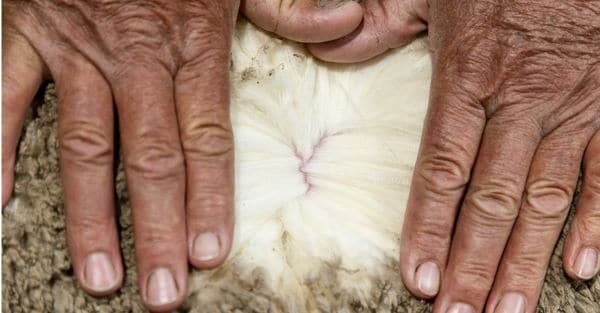
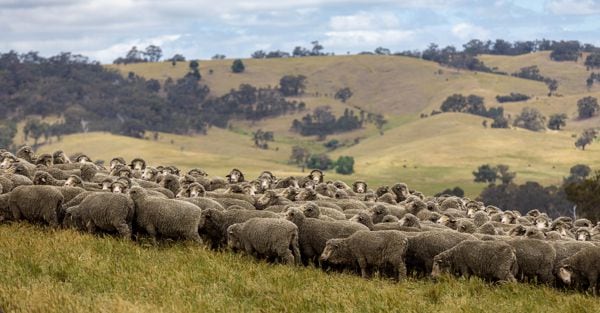
Il particolare vello della pecora Saxon Merino

The preciousness of Saxon Merino

What makes Saxon Merino wool particularly precious is its fineness, between 13 and 17.5 microns, and its special crimp, i.e. the zigzag curling of the sheep's hair: its elasticity and resistance to compression give life to fabrics with a consistent and soft hand that always remain in shape, and its structure gives a special insulation that makes the garments suitable for both winter and summer seasons. This precious, niche production, suitable for amateurs and tailors, represents about 8% of the entire production of the company from Pratrivero, which at the last edition of Milano Unica presented The Saxon Club capsule, two types of fabrics for autumn-winter 25-26 made of pure Saxon wool. A strategy that aims to strengthen the highest segment of the range, the most resistant to consumer fluctuations and nervousness, crucial for the company that in 2023 celebrated 360 years of history and had a turnover of 166 million euros, 81% of which was generated abroad.
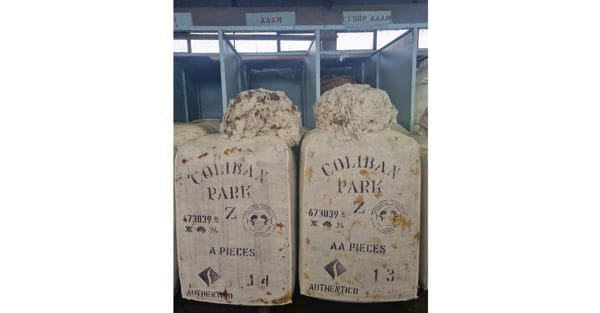
Balle di lana a Coliban Park

The 'club' expands.

The formula works, as in the last ten years the number of breeders included in the Club has almost doubled from 15 to 29. But in the other hemisphere of the planet, the challenges and problems of those who dedicate themselves to animals are the same: the fluctuations in the price of wool, which will not include 2024 as a year to remember, even if the prospects for the next one already seem better; furthermore, in Australia, a country that produces about 50% of the world's total Merino wool, despite having only 10% of its sheep, for the last ten years it has been more profitable to focus on meat than on wool (which Saxon, moreover, does not produce). Farming is hard and all-consuming work that does not attract the younger generation and has to contend with the inscrutable effects of climate change, which can affect the yield and quality of wool. As a result, farms close or are sold, increasingly to Chinese investors.

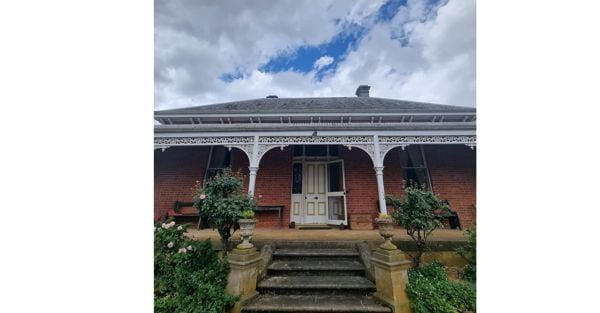
Il portico della ottocentesca villa dei Taylor a Winton Estate, Tasmania

The growing presence of China

Last April, in collaboration with the University of Sydney, Kpmg published the 20th edition of the report 'Demystifying Chinese Investment in Australia', according to which in 2023 agribusiness overtook mining as the number one industry of interest in the country for Chinese investors, garnering as much as 40 per cent of deals. Also last year, with the purchase of a 1,660-hectare farm in the Wimmera region of Victoria, the Chinese tycoon Qingnan Wen extended his holdings to 62 square kilometres (one more than the surface area of the Republic of San Marino) and with 60 thousand sheep, through his Tianyu Wool Industry, he is now the largest exporter of Australian wool to China. His latest acquisition also includes a magnificent 1908 villa, Nerrinyerie, to be used as a private villa for old-fashioned holidays.

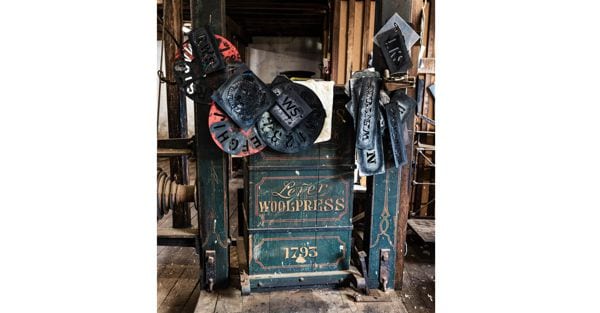
Un antico macchinario nel woolshed di Winton Estate in Tasmania

Passionate breeders

Few holidays, on the other hand, are taken on the farms where farmers endure and weave their centuries-old family stories with those of their communities, from which they are sometimes tens of kilometres away. At one of the woolshed, the shearing stations, in Winton, shearers have written in pencil on a wall 'proud to serve the Taylors for 100 years'. John Taylor VI, the seventh generation of the family, who now runs the 6500-hectare, 12,000-sheep Saxon farm, smiles as his sons, James and John VII, who are still small and love to climb into the wool bales, play in the rose garden planted in the late 19th century by his ancestors. "We are the custodians of this history and this land," says Jess Barber, wife of Duncan, owner of the Coliban Park farm in Metcalfe, Victoria, an hour and a half's drive from Melbourne's skyscrapers, equally smiling. His great-grandparents settled here in 1917, taking over the farm which dates back to 1859, and again Saxon's cattle are descended from Eliza Furlong's famous herd. The Barbers, in the Club since 2016, won the Vitale Barberis Canonico Wool Excellence Award in 2019, but due to the pandemic were only able to leave for the Biella region last spring. "When at the Vi-Bi-Ci spinning mill in Romagnano Sesia (one of the company's two mills in the Biella region, where some 20,000 bales of wool arrive each year, nda) he saw his bales with Coliban's name printed on them, he was moved," Jess continues.

Duncan is one of the most skilled experts in breeding, those crossbreeds between animals that allow production to be directed and improved. He does not need algorithms, he just observes the fleece of his animals, a technique he is teaching his 21-year-old son Jack. After acquiring another farm two years ago, they are looking to expand again, convinced of the goodness of get bigger or get out, but at the moment the costs are too high.

The link between Italy and Australia

If the gates marking the entrances to the immense farms that are part of the Club proudly bear the plaque attesting to membership, it is also because in this complex process of selection and development the breeders are supported by the long experience and vision of Vitale Barberis Canonico. It was the 1970s, precisely those of the synthetic fibres boom, when Alberto Barberis Canonico - Alessandro's father - began to explore and learn more about the Australian wool industry, laying the foundations for those relationships that led to the birth of the Club. 'We also wanted to have our own farms, in order to understand production even better,' Alessandro Barberis Canonico continues, referring to the three properties acquired since the early 1980s in New South Wales, in the area between Pyramul and Mudgee, where around 17 thousand sheep, strictly Saxon, now live.

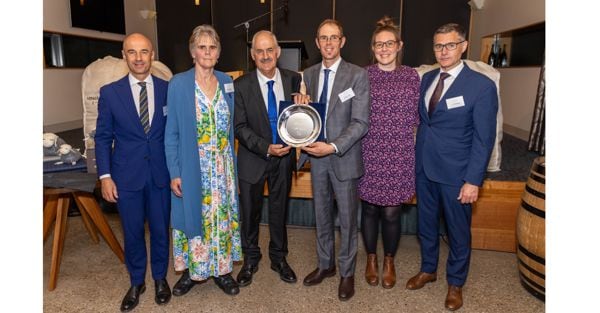
Da sinistra, l’ad Alessandro Barberis Canonico, la famiglia Linke, premiata con il Wool Excellence Award 2024, e Davide Fontaneto, responsabile acquisti materie prime di Vbc

This year, marking the tenth since the project was launched, the award was presented to the Linke family, owners of the Glenholme farm in south-west Victoria, where some 2,400 Saxon cattle are bred. Taking the stage, with reserved emotion, was Matthew, a member of the fifth generation of the family, with his father Everard, who thanked, saying only 'we will continue to do what we have always done'. Few words, but full of meaning for someone who dedicates his life to a philosophy. The Taylors and Barbers listened, knew it well, and applauded.

Copyright reserved ©
Loading...

Brand connect

Loading...

Newsletter

Notizie e approfondimenti sugli avvenimenti politici, economici e finanziari.

Iscriviti