
In Basilicata, the first supply chain that recovers silicon from photovoltaic waste
Sipow and Sogemont Raee have adopted an innovative model for recycling end-of-life modules

3' min read
Key points
- photovoltaics
3' min read
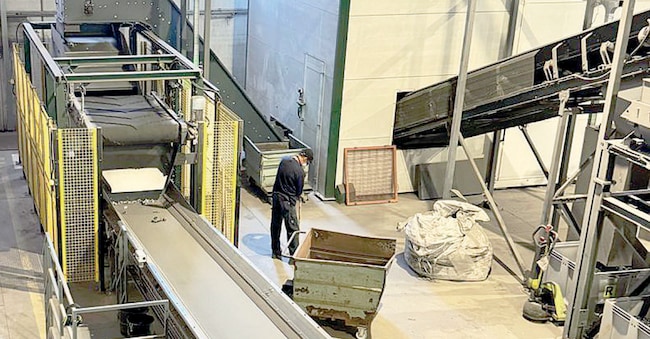
The first circular supply chain for the recovery of silicon from photovoltaic WEEE, scalable and replicable in Italy and Europe, starts in Basilicata. Thanks to the national pilot project Sipow - Sogemont Raee, with other partners, complex waste is transformed into a strategic resource for industry. From the collection of end-of-life photovoltaic modules, to the separation of materials and the quantification and purification of silicon, an innovative model is being tested in Basilicata that turns an environmental problem into an economic and strategic opportunity.
The consolidated experience in the management of WEEE and the implementation of treatment plants of Sogemont Raee, which operates in the industrial area of Pisticci (Matera), combined with the technological and scientific know-how of Sipow, the Norwegian-born company engaged in the construction of its own pilot plant, has made it possible to create Italy's first urban mining supply chain dedicated to pure silicon. The project won the Basilicata Open Lab Co-Innovation Award, promoted by Eni with the support of Shell Italia E&P through Joule, the school for enterprise.
"It is a virtuous model of circular economy and connection between companies located in Basilicata and national and international companies that make their know-how available. Once the experimentation and validation is over,' explained Mauro Bitondo, external project manager for Sogemont Raee, 'we will start the operational phase of localising the production activities of the supply chain. A total investment of about 50 M€ is planned, with at least 100 employees, which, for Basilicata, could be an example of localisation of a company with high technological content and capable of attracting other operators linked to the supply chain".
Worldwide, no initiative for the recovery of materials from WEEE has succeeded in truly valorising silicon on an industrial scale. Italy is leading the way in Europe with a technology that makes it possible to obtain levels of silicon purity that make it suitable for high value-added applications, such as new-generation lithium batteries and high-efficiency photovoltaic modules. Not only raw material recovery, but also a strategic asset, certified and competitive with respect to international markets, capable of attracting investment.
"This project marks the birth of the first Italian supply chain of pure silicon from urban mining. This is not just about recycling,' reiterated Francescantonio Della Rosa, CEO of Sipow. 'We are building a strategic industrial pillar for Europe, which will require over 5 million tonnes of silicon by 2030. The pilot in Basilicata is concrete proof that the future of European silicon can start from disused photovoltaic panels, turning a waste into a resource'.

