
Protest inspires art at the Biennale
The Pro-Pal demonstration against Israel, the choice of dozens of pavilions to join the protest, and Minister Salvini's visit to friendly countries
by Marilena Pirrelli
 Aggiungi Il Sole 24 Ore
ai preferiti su Google

Key points
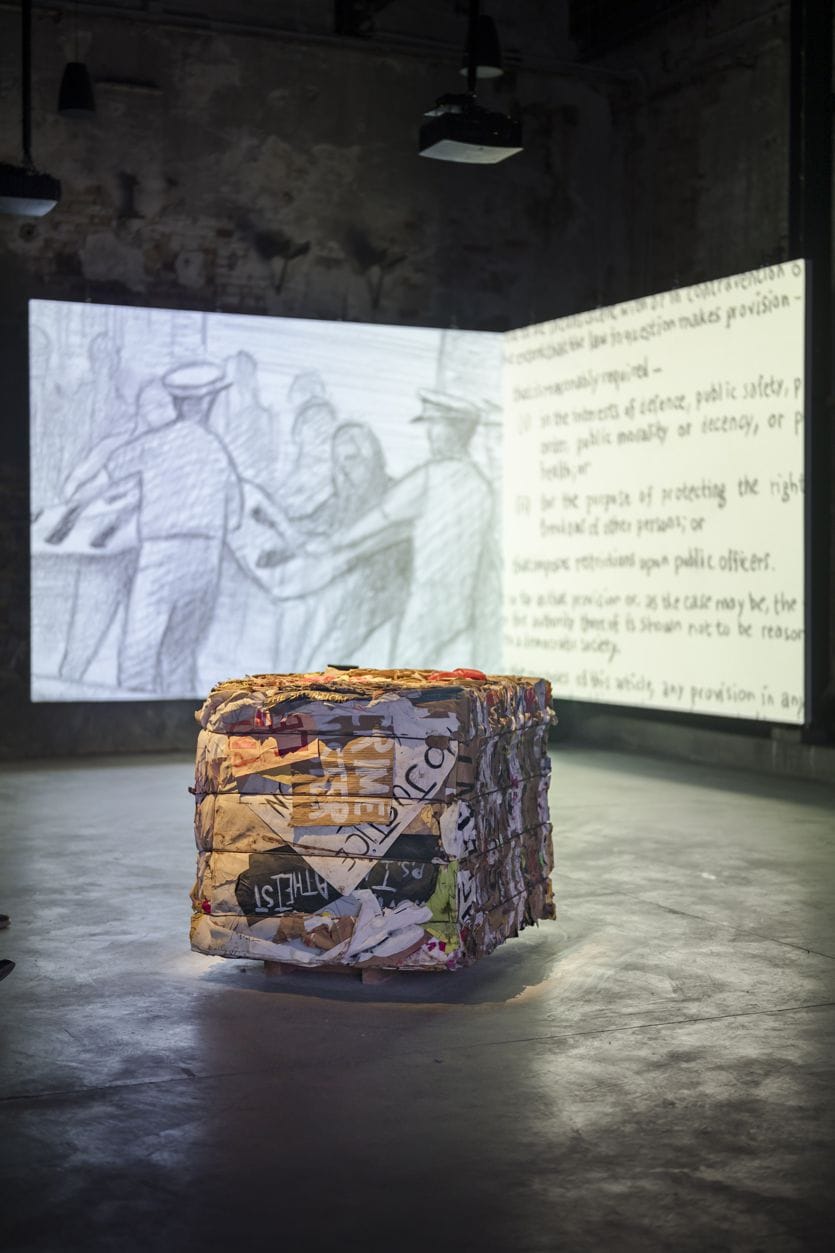
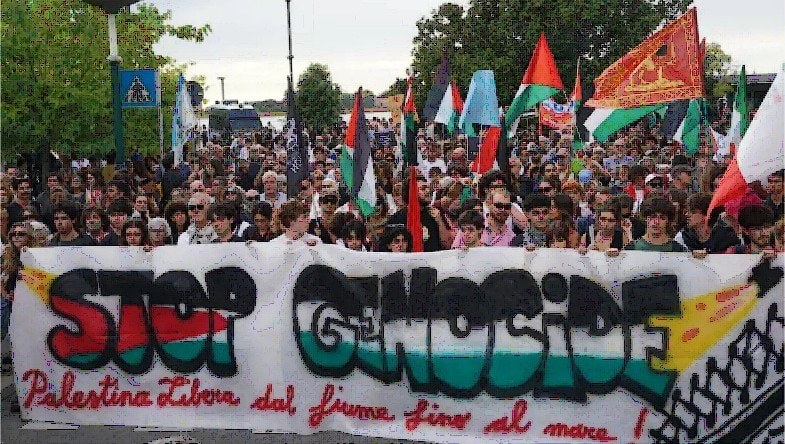
Malta Pavilion at the Arsenale seems to have foreseen the protest with the collection 'No Need to Sparkle; Experiments in Love and Revolution' signed by Adrian MM Abela, Charlie Cauchi and Raphael Vella and curated by Margerita Pulè. We imagined the Pavilion "as an antidote to our extreme and fragmented times, offering a space of resistance through reflection, dialogue and estrangement". In one of the three videos of the Pavilion the story of the protests in Malta runs, meanwhile outside on the day of the pre-opening and of Minister Salvini's visit to the American, Russian, Israeli and Chinese Pavilions (underlining perhaps the friendly countries?), without passing through the Ukrainian one from which he did not receive an invitation, the Pro-Pal event promoted, among others, by the collective Anga - Art Not Genocide Alliance, which has gathered the signatures of 236 artists, curators and practitioners of artists for the direction of the Venice Biennale, demanding the exclusion of the Israeli Pavilion from the current edition, which is perched inside the Arsenale (moved from its more exposed location in the Giardini). Protests also took place inside the Biennale, where dozens of pavilions were closed due to the strike of cultural workers against the presence of the Israeli Pavilion and the ongoing genocide in Palestine, in solidarity also with the activists of the Global Sumud Flotilla Thiago and Saif. Since the morning, the most performative pavilions such as those of Japan, Austria, the Netherlands, Belgium and the United Kingdom were closed. Then the list grew longer with hiccup closures, according to protest organisers Egypt, Lithuania, Luxembourg, Poland, Slovenia, Spain, Switzerland, Turkey, Finland, Ireland, Cyprus and Ecuador. Many pavilions displayed Pro-Pal posters, instead, the Italia Pavilion followed its schedule with the opening in the afternoon without any reference to what was going on around it.
The protest matter of art
The theme of protest runs through many exhibitions this year. Raphael Vella's "Praying For A Revolution That Will Never Come" at the Malta Pavilion drew on 20th and 21st century archival materials related to the island's struggles for autonomy and self-determination, observing a century of collective dissent in Malta. The historical images inspired Vella's drawings, coming alive and becoming acts of resistance to any bullying far from their original contexts. Unfortunately, all the certainties and the sense of justice claimed in the Maltese news events recalled by the artist dissolve, leaving only the act of denunciation and the pervasiveness of doubt to emerge, which also persists in Adrian MM Abela's work "Declaration of Dependence", which through digital technologies video, drawings and sculptures questions our history since antiquity, just as Charlie Cauchi taking inspiration from Fellini's film La Dolce Vita addresses the themes of authenticity and identity, between reality and function on a big screen. And it is precisely Malta, at the centre of the Mediterranean that, in an era characterised by fragmented realities, continuous flows of news, rising temperatures and dramatically changing global order, questions the search for 'truth' that can appear vain, generating cynicism and inaction.
Ukraine and the others
There are many pavilions where the sense of oppression and injustice emerges, first and foremost in that of Ukraine at the Arsenale: "Security Guarantees" curated by Ksenia Malykh and Leonid Marushchak, showcases Zhanna Kadyrova who in 2019 created the concrete sculpture "Deer" from the "Origami" series, a symbol of the dismantling of nuclear weapons, for the city of Pokrovsk, Donec'k Oblast, a city evacuated by the approach of the front line in the war against Russia. The sculpture was removed and has since travelled to other cities to set out in 2025 for Venice, where with a video installation it tells of the uncertain state of security in which we live, the weight of history, the fragility of peace and the resilience of the Ukrainian people.
Many other pavilions addressed the mystification and falsification of truth in a still direct way, such as the Greek Pavilion at the Giardini with the installation "ESCAPE ROOM" by Andreas Angelidakis, curated by George Bekirakis: one enters a contemporary cave where the shadows of Plato's myth narrate post-truths and populisms, where nationalisms and patriotic identities are constructed ad hoc for the marketing of politics. A time capsule where the history of fascisms is intertwined with the dystopia of the present.
Also at the Giardini, the Netherlands Pavilion with "The Fortress" by Dries Verhoeven, curated by Rieke Vos, stages the perception of the oppression of late-capitalist society, ethical questions are brought to the fore by making the public participate in the contradictions inherent in the Biennial itself, still an expression of national participations, where Western powers occupy a central position: the public participates in the performative action of closure and isolation of the Pavilion, abounding in Enlightenment and democratic certainties.

