
The fifth edition of the Respighi Festival in Bologna
In Florence, the acclaimed London production of *Wozzeck*; in Milan, Nordic jazz takes centre stage at the Teatro Filodrammatici

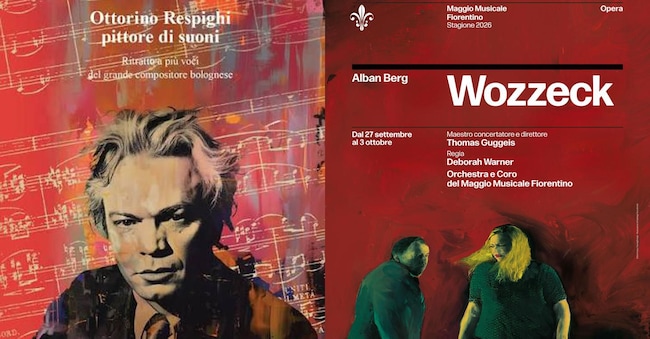
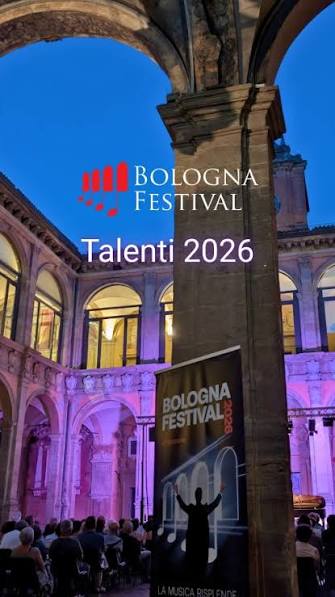
There’s a real buzz in Bologna at the start of autumn. The Festival dedicated to our fellow citizen Ottorino Respighi is going from strength to strength in its fifth edition, presenting a well-conceived programme that highlights the stature of this great composer of the early 20th century, who until now has usually been confined to two symphonic poems, ‘Fontane di Roma’ and ‘Pini di Roma’ – which are, incidentally, very beautiful. But for years now, September in Bologna has signalled the start of the second part of the Bologna Festival. Across the Apennines, in Florence, we hear one of the new talents of the conducting world, Thomas Guggeis, tackle one of the great works of the twentieth century, Alban Berg’s *Wozzeck*. In Milan, however, we change the atmosphere, with Nordic jazz at the Teatro Filodrammatici.
Bologna
On 21 September, the fifth edition of the Respighi Festival opens at the Manzoni Auditorium, presenting a programme of great interest that allows us to discover this great musician, of whom we are familiar only with ‘Fontane di Roma’ and ‘Pini di Roma’. The festival will be opened by the Orchestra del Comunale di Bologna, conducted by Noseda, with a very well-structured programme featuring Rimsky-Korsakov and his two pupils, Stravinsky (with the unjustly neglected ‘Baiser de la fée’) and, indeed, Respighi (who draws on Rossini in ‘La boutique fantasque’) – both of which, incidentally, were written for dance. The orchestra will also bring the festival to a close on 21 October at the Conservatoire, with a tribute to Ermanno Wolf-Ferrari on the 150th anniversary of his birth, featuring little-known works by the Venetian composer – a contemporary of Respighi – such as the Serenade for Strings, the Concertino for Oboe, and the monumental Concerto for Organ. Particular attention will also be paid to chamber music, drawing parallels between Respighi and the other great composers of his time. On 25 September at the Teatro del Baraccano, the Baraccano Orchestra will present a programme centred on Respighi’s lyric poem ‘La Sensitiva’, paired with two works: Schönberg’s Kammersymphonie Op. 9 and Milhaud’s ‘La Création du Monde’. On 7 October, the Solisti Aquilani ensemble will take centre stage at the Auditorium Manzoni, in a programme that will pair Respighi’s “Trittico Botticelliano” with Casella’s Concerto for Piano, Strings and Percussion, Op. 8. On 12 October, at the Oratorio di San Filippo Neri, violinist Gabriele Pieranunzi, cellist Silvia Chiesa and pianist Maurizio Baglini will present a programme spanning works by Busoni, Wolf-Ferrari and Respighi, culminating in Mario Castelnuovo-Tedesco’s Trio No. 2, capturing the richness and variety of a creative period that has left a profound mark on Italian musical history.
And then there are the operas composed by Respighi, with ‘Respighi elettrico’ on the 29th at S. Filippo Neri. On 14 October at the Teatro Duse, ‘La pentola magica’ will be staged – a choreographed performance set to music composed by Respighi.
Florence
27–30 September and 3 October at the Teatro del Maggio ‘Wozzeck’ by Berg, conducted by Thomas Guggeis and directed by Deborah Warner (a production from the Royal Opera House, London), featuring a fine cast – including Anja Kampe (as Marie) and Wolfgang Ablinger-Sperrhacke (as Hauptmann). The young Guggeis is the music director in Frankfurt and has already undertaken serious work on Berg (we recall *Lulu*, also in Frankfurt). Warner transposes the action to a vaguely contemporary/late 20th-century military setting, but essentially tells Büchner and Berg’s story. Dramaturgically, Warner brings together two interpretations that are often treated separately: the social and the psychological. Wozzeck is crushed by poverty, the military hierarchy, the Doctor’s experiments and humiliation; yet the production does not reduce the Captain and the Doctor to mere caricatured monsters and, above all, does not absolve Wozzeck of Marie’s murder. The violence against her remains a terrible act and not some sort of ‘liberation’ for the protagonist.

