
Green light for the Education Decree at the Council of Ministers: fines of up to €1,000 for wearing the burqa and niqab, and a 30 per cent cap on first-year class sizes
Cabinet gives the go-ahead to the government’s crackdown: children will no longer be removed from their families if their parents do not study Italian

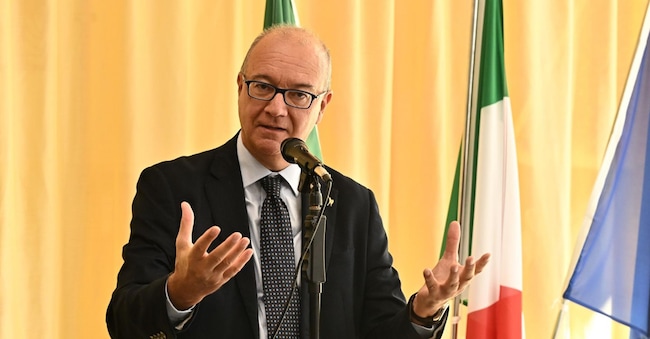
Tighter restrictions on the wearing of full-face veils in schools. As a result of a decree-law approved by the Council of Ministers – the same measure that will enshrine in law the 30 per cent cap on foreign pupils in Year 1 classes who do not yet speak Italian – both the niqab and the burqa will be banned. And the fine, which can be imposed by the prefect following a report from the headteacher, could reach €1,000. This is set out in a draft of the measure that was circulated shortly before the start of the meeting at Palazzo Chigi.
The 30 per cent cap
The text, which *Il Sole 24 Ore* has been able to review, confirms what was reported in this newspaper in recent days. Starting with the 30 per cent threshold for foreign pupils in class composition, which will be based on whether or not they speak Italian; this will apply to pupils from abroad (without distinguishing between EU and non-EU) enrolling in Year 1 in 2027/28, as well as this year’s new arrivals, without, however, disrupting classes that have already been formed. This provision, together with the additional funding already allocated for 2027 (3.5 million plus 14 for 2028, totalling 17.5), serves to ensure that the criteria of necessity and urgency essential for a Decree-Law are met, thereby addressing the concerns raised by the Quirinale during the numerous meetings held in recent days between officials from the Ministry of the Interior, Palazzo Chigi and the Quirinale.
Exemptions
Alongside the cap, the Decree-Law will also introduce a number of exemptions. To begin with, the two years already spent in nursery school for those enrolling in primary school will become three for the other levels of education (lower secondary or upper secondary). But that is not all. The same mechanism for applying the cap provides for a further exemption. If the school, as a first resort, or the Regional School Office (USR), as a second resort, is unable to find a nearby school (as is already the case for excess enrolments) or if organisational solutions compatible with the exercise of the right to education cannot be put in place, the new rules will not apply. There is a further addition here: to help precisely these schools, the Decree-Law, as we have seen, allocates 17.5 million euros to fund language enhancement courses or an increase in the number of Italian teachers on the staff.
This decision follows the measure already in force since 2025/26, which provides for the deployment of around a thousand teachers (of whom over 750 will be in the first cycle) dedicated to strengthening Italian language provision for foreign nationals in classes where new arrivals in Italia account for 20 per cent or more (or who do not possess basic language skills equivalent to at least level A2).
The two measures, in fact, overlap. If the existing limit of 20 per cent of newly arrived foreign pupils is exceeded, an additional teacher is allocated immediately; if, on the other hand, the additional threshold of 30 per cent of non-Italian pupils with limited knowledge of our language is exceeded (and it is not feasible to transfer them to other classes or schools, ed.), language support programmes funded by the incoming resources will be launched.


Brand connect


Newsletter Scuola+
La newsletter premium dedicata al mondo della scuola con approfondimenti normativi, analisi e guide operative
Abbonati