
In China, Nvidia chips are selling at record prices on the black market
FT: This is a sign of the growing difficulty in circumventing the restrictions imposed by the United States and, at the same time, of strong demand

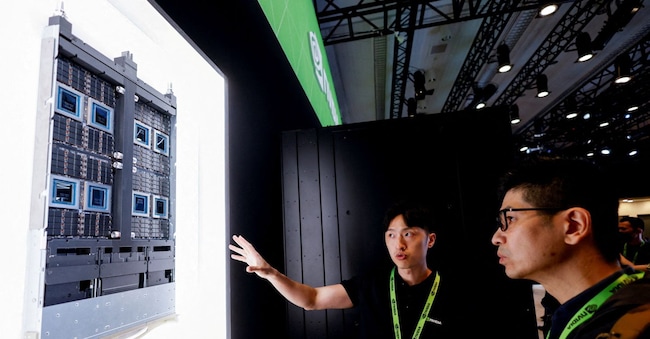
Artificial intelligence chips from Nvidia are fetching record prices on the Chinese black market, a sign of the growing difficulty in circumventing US restrictions and, at the same time, of the persistent demand from technology companies in the People’s Republic.
The Financial Times scoop
This is reported by the Financial Times, citing industry insiders and traders active in the grey market. According to the British newspaper, the price of Nvidia’s DGX B300 server – which incorporates eight Blackwell graphics processors and is subject to Washington’s export controls – has risen in six months from around 4 million to over 8 million yuan (over 1.1 million dollars), well above the retail price in the United States. The RTX 6000 Pro chip, widely used by start-ups developing large language models, is also reported to have risen from around 50,000 yuan to a maximum of 130,000 yuan.
The Trump Effect
According to the Financial Times, the surge in prices reflects the impact of increasing pressure from the US authorities to curb the smuggling of advanced semiconductors to China. Several traders have reported that supplies have dwindled following the intensification of investigations launched by Washington at the end of last year. Stricter controls are also said to have been introduced by Taiwan and Malaysia, traditional transit points for re-exports to the Chinese market. “The loopholes have narrowed and it is becoming increasingly risky for intermediaries to deal in these chips,” one of the traders interviewed told the FT.
Nvidia, for its part, has described the construction of data centres using illegally imported products as “a dead end”, emphasising that it does not provide support or repairs for restricted hardware. Despite Beijing’s push for domestic alternatives, such as those developed by Huawei, demand for Nvidia processors remains high.

