
In company fleets stop thermal as early as 2030
The European Commission is reportedly considering bringing forward the ban on petrol and diesel by five years

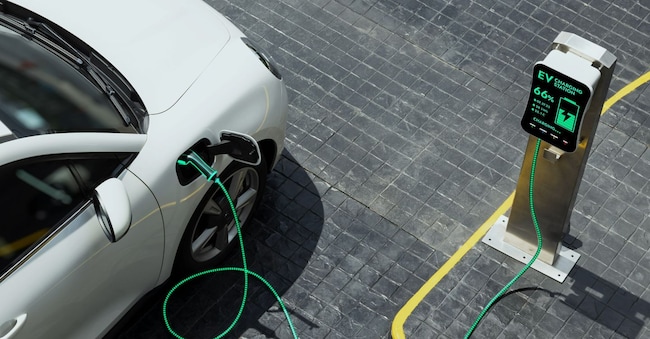
In Europe, around 60 per cent of all cars registered in a year are used in the corporate sector. These are cars that, on average, cover twice as many kilometres as personal cars and arrive on the second-hand market after just three or four years. These premises suffice to understand why this channel is being watched very closely by analysts and operators in the sector, but also by political decision-makers, starting with the European Commission, which would like to exploit it to stimulate the hitherto slow and uneven spread of electric cars on the Continent and reduce transport emissions.
As is well known, the European Union has long since set 2035 as the year in which the sale of new vehicles with internal combustion engines (petrol and diesel) should be stopped, despite pressure from industry, which is calling for more flexibility and a path to electrification more in line with real market needs. In the case of corporate mobility, the goal is even more ambitious. According to leaks reported over the past few months by the German tabloid Bild, Brussels could bring forward the stop to the internal combustion engine for rental companies and fleets to as early as 2030 (i.e. five years ahead of the fateful year of the general ban). A decisive turnaround on a significant part of the market, which as mentioned is worth almost two-thirds of the registered car market. Some environmentalists and those involved in the promotion of electric mobility have clearly welcomed this possibility, while in other circles the alarm has gone off. Aniasa, the association that represents the mobility services sector within Confindustria, has firmly rejected this hypothesis, and is at the forefront of efforts to ensure that it does not materialise.
Transport & Environment (T&E), an independent European organisation for the decarbonisation of transport, emphasises that the potential of the electric transition in corporate fleets 'is huge, but still under-exploited'. In fact, companies in Europe are electrifying at a slightly higher rate than private individuals, while in some markets, such as France and Germany, 100% electric cars are becoming more widespread among private individuals. For Italy, Bev's market share in the corporate channel in 2024 was lower than in 2021 (4.7 per cent, compared to 6.1 per cent three years earlier): for both channels (corporate and private), Italian percentages in terms of Bev sales are among the lowest in Europe.
Recently, Mario Draghi, in a speech in Brussels one year after presenting his Competitiveness Report, stated that the 2035 target is now less realistic. "The 2035 deadline for zero tailpipe emissions was meant to trigger a virtuous circle: clear targets would stimulate investment in charging infrastructure, expand the internal market, spur innovation in Europe and make electric models cheaper," said the former ECB and Council president. "It was expected that adjacent industries would develop in parallel, supported by targeted industrial policies. But this did not happen'. In other words, sticking too rigidly to the 2035 horizon may simply be unfeasible, as well as detrimental to the European automotive industry. The question now is whether the assumed 2030 deadline should also be revised in the fleet sector.
A glimmer of greater flexibility and prudence had in fact already arrived in recent months, with the European Parliament loosening the CO2 emission regulations for cars and vans, allowing more leeway for manufacturers, who were concerned about the hefty penalties in the event of non-compliance. Previously, they would have had to meet a reduction in emissions on an annual basis, whereas now they will be based on an average of emissions over the three-year period 2025-2027, thus avoiding immediate penalties and gaining more time to make the transition.

