Men’s fashion in Paris/2

In the face of extreme entertainment, fashion is seeking a new leading role

Celine is the standout brand of the season. Givenchy showcases a new approach to tailoring, Lanvin offers elegant, flowing silhouettes, and Magliano impresses with his vision

by Angelo Flaccavento

4' min read

Translated by AI
Versione italiana

4' min read

Translated by AI
Versione italiana

Despite the ever-high expectations, Paris Men’s Fashion Week, which ended on Sunday, also seemed rather lacklustre, much like Milan. The unbearable heatwave didn’t help, but it is the whole system that seems to have ground to a halt. The production of pure entertainment is illusory and highly detrimental: if we do not focus on the clothes themselves, everything collapses – first and foremost, consumers’ ultimate interest. It is only by starting with the garments, in fact, that a message with real impact can be crafted.

It is no coincidence that, from this perspective, the real winner of the season was Michael Rider with Celine. Here, it all starts with the clothes, which are used to play with and tell a story, branching off in endless directions without fear of being accused of inconsistency. On the contrary: the idea is precisely to tell a story and encompass a multitude of identities, recognising that a single person can be many, and consequently so can a brand.

Loading...

The collection possesses an indescribable lightness and energy, and captures in its own unique way almost all the season’s themes – lightness, decoration, feminine indulgences – transforming them into elements of a narrative that can be adapted at will.

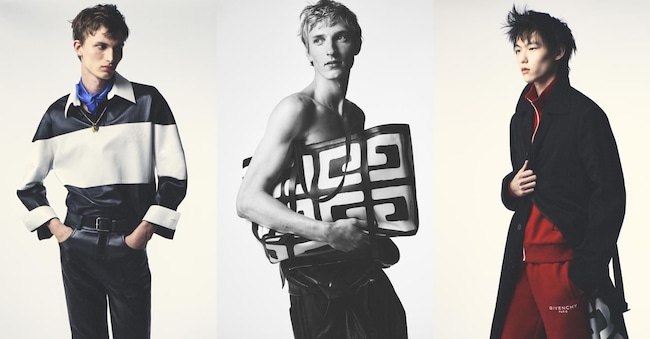
Givenchy, la collezione per la PE 2027

Photogallery30 foto

From Magliano, the idea of a life lived to the full – wearing clothes that bear the scuffs, creases and stains of a thousand adventures – is a defining feature. For his second season in Paris, Luca Magliano transports his unmistakable outcasts from the Emilia-Romagna countryside into the decadent splendour of Chez Maxime, staging a tableau vivant that depicts the final moments of a sumptuous banquet. The staging, accompanied by a pungent scent, is evocative, though somewhat at odds with the spirit of the brand. As for the garments, it is interesting to observe how Magliano manages to express himself whilst remaining true to his own stylistic code, effectively establishing himself as a classic in a class of his own.

The designs by Willy Chavarria exude the proud attitude typical of Chicana culture. This season’s show is less theatrical, yet still permeated by a fervent ecumenism which, at this point, means little, whilst the clothes say even less. At Junya Watanabe, it’s all about tracksuits, pearls and chains, whilst at Amiri, sequins and austerity come together in highly personal ways.

At Sacai, classic garments are deconstructed and reassembled with speed and agility, playing with preppy and industrial styles. The festive atmosphere at Comme des Garçons is accompanied by a message — “What if the war ended?” — which translates into vibrant colours, shapes fluttering like flags and a sense of psychedelic lightness.

KML, the Saudi project by siblings Ahmad and Razan Hassan, is rapidly establishing itself as a brand worthy of attention. It is characterised by a minimalist reinterpretation of Bedouin clothing, translated into an androgynous and ancestral aesthetic that bridges eras and cultures. Soft tailoring, originally pioneered by the irreplaceable Giorgio Armani, remains relevant in this era of gentle masculinity.

Soshiotsuki is a devoted – and at times overly zealous – follower of King Giorgio, whose outfits, as seen on businessmen in 1990s Japan, left an indelible mark on him. However, his creative vision also reveals a delicate touch, a poetic use of colour and a softness that is entirely his own. This season, Ozuki explores the idea of relaxed formality, embracing a style that evokes the atmosphere of holidays or resorts. Whilst the pairing of tailored suits with trainers may seem somewhat predictable in this context, the fluidity of the ultra-light layering, the harmony of delicate shades and the very sensation of garments that seem to float in the air hit the mark perfectly. Also worthy of note is Ozuki’s ability to create poetic details that speak for themselves: a ruffled collar, a twisted belt.

Always a proponent of extreme volumes, this season Hed Mayner has once again created a sculptural silhouette, albeit one that is more form-fitting. This minimalist approach, combined with a particular focus on textures, results in a compelling collection. However, one is left with the feeling that Mayner could make an even greater impact if he were to step outside his comfort zone.

It is interesting to observe how masculine identity is defined by the haute couture houses, which are now paying renewed attention to their menswear collections. Sarah Burton’s vision for Givenchy is rooted in tailoring, embellishment and texture. The collection evokes what Burton masterfully achieved at McQueen – a positive development, given that McQueen has now taken a different direction.

From Lanvin, on the other hand, Peter Copping is translating the house’s elegant simplicity and decorative flair into a vision of menswear that is at once distant and accessible. In a season characterised by softness and an ethereal aesthetic, decoration takes on a new meaning.

It’s thrilling to see what Takuya Morikawa of Taakk manages to create through his work with textures: a style that is powerful yet gentle, complex yet immediate, and utterly desirable. Finally, the way Julian Louie blends delicate embellishments with soft, relaxed shapes – typical of the surfing world – is truly unique; his brand Aubero – small but impeccable – is a real gem.

Copyright reserved ©
Loading...

Brand connect

Loading...

Newsletter

Notizie e approfondimenti sugli avvenimenti politici, economici e finanziari.

Iscriviti